
The UAE’s healthcare sector is stepping into a new era, one shaped by digital innovation, intelligent systems, and deeply connected care. By 2026, the shift toward AI-driven ecosystems, integrated health platforms, and patient-centric models is no longer just emerging; it’s becoming the backbone of how modern healthcare operates. Technologies like telemedicine, remote monitoring, predictive analytics, and automated workflows are helping providers make faster decisions, improve diagnostic accuracy, and deliver more seamless patient experiences.
At the heart of this transformation are healthcare IT companies ranging from global leaders to specialised regional players, each contributing in different ways. Some bring large-scale system integration and enterprise expertise, while others focus on cloud-native development, localised compliance, or cost-effective innovation. Together, they are enabling healthcare providers to move beyond reactive treatment models toward proactive, continuous, and data-driven care.
The Rise of Digital Healthcare in the UAE (2026)
The UAE has rapidly positioned itself as a global leader in healthcare technology, driven by strong government initiatives, growing private investment, and widespread digital adoption. By 2026, the healthcare ecosystem is expected to be highly integrated and intelligent, where seamless data exchange, virtual care, and personalised treatment journeys become the norm rather than the exception.
Healthcare applications, in particular, have evolved far beyond basic functionality. Today, they act as intelligent platforms combining teleconsultation, remote monitoring, AI-assisted diagnostics, and personalised care pathways. This shift is making healthcare more accessible, efficient, and proactive, ultimately improving outcomes while enhancing patient engagement.
Leading Healthcare IT Companies in the UAE
A diverse mix of global enterprises and regional specialists is powering this transformation. Each company brings its own strengths, depending on the scale, complexity, and specific needs of healthcare organisations.
Quad One Technologies
Quad One Technologies is steadily emerging as a strong player in the UAE’s healthcare IT space, known for its AI-first approach and automation-led solutions. With over two decades of experience, the company focuses on building intelligent, future-ready systems by blending artificial intelligence, machine learning, and data analytics with real-world clinical workflows.
- AI-first approach with 20+ years of industry experience
- Combines AI, machine learning, and data analytics with clinical workflows
- Focuses on proactive, data-driven care delivery
- Streamlines patient engagement and operational efficiency
- Optimizes clinical data management for healthcare providers
- Positioned as a long-term digital health partner in the UAE
Build AI-powered healthcare IT solutions with Quad One Technologies.
Zymr
Zymr stands out for its expertise in cloud-native development and digital health product engineering. The company builds scalable, secure, and compliant healthcare solutions, including patient engagement platforms, clinical data systems, and AI-powered applications.
- Specialises in cloud-native healthcare product engineering
- Builds scalable, secure, and compliance-ready solutions
- Covers patient engagement platforms and clinical data systems
- Delivers AI-powered applications tailored to health tech needs
- Flexible delivery model suited for both startups and established providers
- Strong fit for organisations scaling across the GCC market
Cerner (Oracle Health)
Now part of Oracle Health, Cerner has a well-established presence in the UAE healthcare ecosystem. Its Millennium platform is widely adopted across large hospital networks and government health systems.
- Part of Oracle Health with a strong UAE market presence
- The Millennium platform was widely adopted across hospitals and government systems
- Robust EHR capabilities with high interoperability standards
- Integrates with national health exchanges — Malaffi and Nabidh
- Supports data standardisation across multi-facility organisations
- Best suited for large-scale healthcare networks requiring enterprise-grade solutions
Intelhealth
IntelHealth differentiates itself with a strong regional focus. Its healthcare information systems and clinical software are designed specifically for Gulf environments, featuring Arabic-first interfaces and built-in compliance with UAE regulations.
- Deep regional focus tailored for Gulf healthcare environments
- Arabic-first interfaces designed for local usability
- Built-in compliance with UAE regulatory standards
- Strong familiarity with DHA and HAAD requirements
- Ideal for organisations seeking locally adapted, not generic, solutions
- Reliable choice for navigating UAE-specific healthcare regulations
Accenture
Accenture brings a powerful mix of strategic consulting and large-scale execution capabilities. In the UAE, it plays a key role in driving digital transformation across both public and private healthcare sectors.
- Combines strategic consulting with large-scale digital execution
- Active across both public and private UAE healthcare sectors
- Expertise in AI integration, cloud migration, and system modernisation
- Capable of managing complex, long-term transformation programs
- Delivers end-to-end solutions from vision to implementation
- Best suited for organisations undertaking enterprise-wide transformation
Warba Systems
Warba Systems offers a strong regional advantage with solutions designed specifically for the Gulf healthcare landscape. Its platforms support Arabic-language workflows, local insurance integration, and regulatory compliance.
- Purpose-built solutions for the Gulf healthcare market
- Supports Arabic-language workflows and local insurance integration
- Ensures regulatory compliance across the UAE health authorities
- Hands-on understanding of regional operational challenges
- Practical and dependable partner for localised healthcare needs
- Strong track record with providers that value regional expertise
Cognizant
Cognizant has expanded its healthcare footprint in the Middle East with a comprehensive suite of services spanning payer systems, provider operations, analytics, and revenue cycle management.
- Comprehensive healthcare services across payer and provider systems
- Expertise in analytics and revenue cycle management
- Manages complex, multi-stakeholder healthcare environments
- Expanding Middle East presence with proven delivery capabilities
- Valuable for large hospital groups and insurance providers
- Suited for end-to-end digital transformation at scale
Philips Healthcare
Philips Healthcare occupies a unique space by bridging medical hardware and digital health software. Its offerings include imaging systems, patient monitoring, and AI-powered diagnostics, all connected within a unified ecosystem.
- Uniquely bridges medical hardware and digital health software
- Offers imaging systems, patient monitoring, and AI diagnostics
- All solutions operate within a connected, unified ecosystem
- Enables seamless integration between clinical equipment and IT
- AI-powered tools enhance diagnostic accuracy and clinical decision-making
- Preferred partner for hospitals seeking hardware-software integration
Innowise
Innowise is gaining traction for its strong engineering capabilities and cost-effective delivery models. The company specialises in custom healthcare application development, including telemedicine platforms, analytics tools, and AI-driven solutions.
- Strong engineering capabilities with cost-effective delivery
- Specialises in custom healthcare application development
- Builds telemedicine platforms, analytics tools, and AI solutions
- Ideal for startups and mid-sized healthcare organisations
- Delivers high-quality solutions without enterprise-level costs
- Growing reputation for flexible and scalable development models
Wipro
Wipro has established itself as a reliable partner for large-scale healthcare IT initiatives in the UAE. Its expertise spans hospital information systems, data management, and digital transformation programs.
- Reliable partner for large-scale healthcare IT in the UAE
- Expertise across hospital information systems and data management
- Proven digital transformation methodologies and frameworks
- Backed by strong regional teams with local market knowledge
- Solid choice for government entities and large healthcare providers
- Experienced in managing complex, multi-year IT implementation programs
AI and automation are also playing a critical role. From assisting in diagnostics to automating administrative workflows, these technologies are reducing the burden on healthcare professionals while improving efficiency. This allows clinicians to spend more time focusing on what truly matters: patient care.
Ultimately, healthcare is shifting from a reactive model to a continuous, personalised care journey where prevention, early detection, and long-term engagement take priority.
How to Choose the Right Healthcare IT Services Company
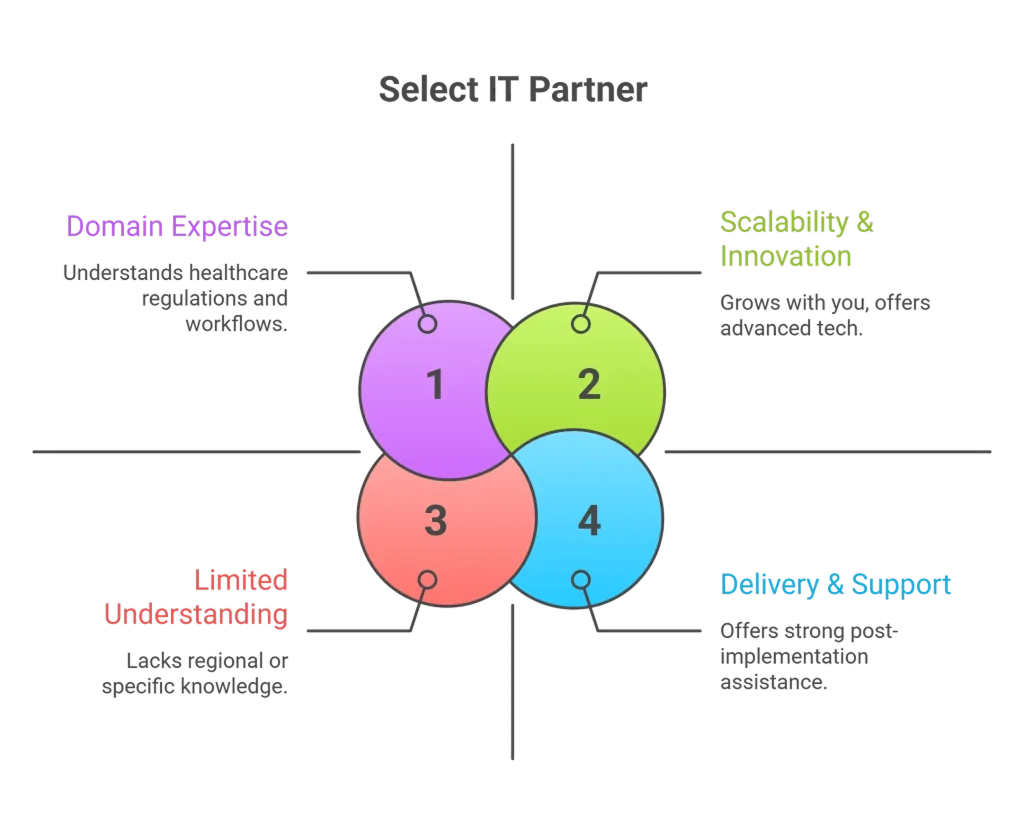
Choosing the right healthcare IT partner is a strategic decision that directly impacts efficiency, scalability, and patient outcomes.
Start by evaluating domain expertise. Healthcare is highly regulated, so it’s essential to work with a partner that understands compliance requirements, data security, and clinical workflows.
Next, consider scalability and technology capabilities. Your partner should be able to grow with your organisation while offering expertise in areas like cloud computing, AI, data analytics, and system integration.
Regional understanding is especially important in the UAE. Companies familiar with local regulations, insurance systems, and language requirements can significantly reduce implementation challenges.
It’s also important to assess their delivery model and support structure. Strong post-implementation support, transparent communication, and a collaborative approach are key indicators of a reliable partner.
Finally, think beyond cost. The goal is to find a partner that offers long-term value, a balance of quality, innovation, and cost-efficiency.
What’s Actually Shifting in Care Delivery
Healthcare IT companies are fundamentally transforming how care is delivered, experienced, and managed. What was once a fragmented, reactive system is now becoming proactive, connected, and patient-centric.
One of the biggest shifts is the move toward real-time, data-driven care. With integrated systems and health information exchanges, providers can access patient records instantly, enabling faster and more accurate decision-making. This reduces delays, minimises errors, and improves overall care quality.
Another major transformation is the rise of virtual care and remote monitoring. Patients no longer need to rely solely on in-person visits. Through teleconsultations, wearable integrations, and mobile health apps, care can now happen anytime and anywhere, improving accessibility, especially for chronic disease management.
AI and automation are also playing a crucial role. From AI-powered diagnostics to automated administrative workflows, healthcare IT is reducing the burden on medical staff while improving efficiency. This allows healthcare professionals to focus more on patient care rather than operational tasks.
Ultimately, these advancements are shifting healthcare from a reactive model to a continuous, personalised care journey, where prevention, early detection, and long-term engagement take centre stage.
Post-implementation support, clear communication, and a collaborative approach are key indicators of a strong partnership.
Finally, align on budget and long-term value. The cheapest option isn’t always the best. Focus on partners who offer a balance of quality, innovation, and cost-efficiency.
Why Partnering with a Top Healthcare IT Services Company Matters
Working with a leading healthcare IT company is no longer just about technology; it’s about strategy and long-term growth.
Top-tier providers bring proven frameworks, deep industry expertise, and access to advanced technologies that can accelerate digital transformation. Instead of building everything from scratch, organisations can leverage established platforms and best practices.
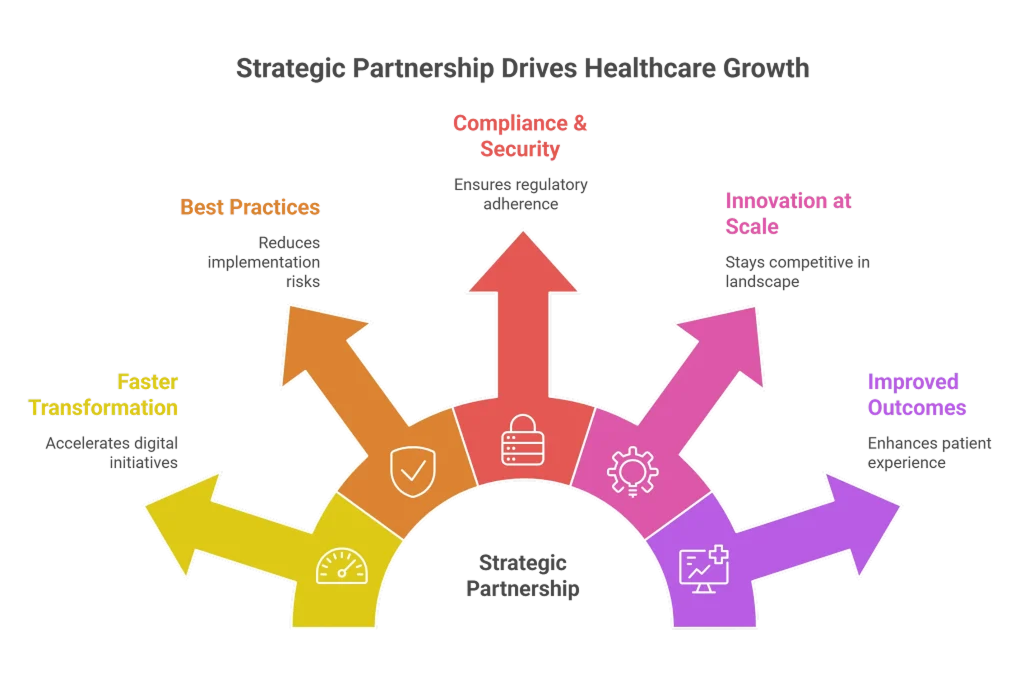
Strategic Impact:
Partnering with a leading healthcare IT company is not just a technical choice. It’s a strategic decision that shapes long-term growth and innovation.
Faster Digital Transformation:
Top-tier providers bring proven frameworks, industry expertise, and advanced technologies, helping organisations accelerate transformation without building from scratch.
Access to Best Practices:
Established platforms and tested methodologies reduce risk and ensure smoother implementation.
Regulatory Compliance & Security:
Experienced partners ensure adherence to healthcare regulations and strong data security, protecting sensitive patient information and maintaining trust.
Innovation at Scale:
Continuous investment in AI, predictive analytics, and interoperability helps organisations stay competitive in a rapidly evolving landscape.
Improved Patient Outcomes:
The right partner enables faster diagnoses, personalised treatment plans, and seamless communication, enhancing overall patient experience and care quality.
Healthcare IT Companies Comparison: Core Strengths & Best Fit.
| Company | Best For | Core Strength | Unique Edge |
|---|---|---|---|
| Quad One | AI-driven providers | AI-first healthcare systems | 20+ yrs clinical + AI expertise |
| Zymr | GCC startups | Cloud-native engineering | Fast scaling delivery |
| Cerner | Enterprise hospitals | Deep EHR systems | Malaffi + Nabidh integration |
| Intelhealth | UAE providers | Arabic-first healthcare software | UAE regulation-ready |
| Accenture | Large transformation projects | Strategy + execution | Enterprise consulting depth |
| Warba Systems | Local Gulf rollout | Regional healthcare expertise | Gulf-native workflows |
| Cognizant | Hospitals + insurers | End-to-end healthcare ops | Payer + provider expertise |
| Philips Healthcare | Device-heavy hospitals | Hardware + software integration | Imaging + diagnostics |
| Innowise | Budget-conscious teams | Custom development | Cost-effective engineering |
| Wipro | Government + enterprise | Reliable implementation | Strong regional delivery |
Conclusion
The future of healthcare in the UAE is being built right now, and technology is leading the way. Healthcare IT services companies are at the centre of this transformation, driving a shift toward more connected, efficient, and patient-focused systems. From global technology leaders to specialised regional players, each brings unique strengths that are helping shape a smarter, more integrated healthcare ecosystem.
As healthcare continues to evolve in 2026 and beyond, choosing the right IT partner will become increasingly critical for organisations aiming to stay competitive. Those who invest in the right technologies and partnerships today will be better positioned to deliver smarter care, improve patient outcomes, and meet the rising expectations of modern healthcare consumers.
External references
Top Healthcare Software Development Companies in Dubai
HealthTech SaaS Startups in United Arab Emirates
Telemedicine is booming in the healthcare industry, rapidly transforming how care is delivered, accessed, and experienced. What started as a convenient alternative has now become a core part of modern healthcare systems. With continuous advancements in digital technology, improved internet connectivity, and the growing demand for faster, more accessible care, telemedicine is reaching new heights in 2026. Patients today expect quick consultations, minimal waiting times, and the ability to connect with healthcare providers from the comfort of their homes, and telemedicine is making all of this possible.
These shifts highlight the future of telemedicine and key trends shaping healthcare, where virtual care becomes a default option rather than an exception.
Below are ten key telemedicine trends that are currently shaping the healthcare industry and redefining how care is delivered, making it more accessible and efficient
How Telemedicine Works
The rise of telemedicine and e-consultation has made virtual visits a routine part of care. A standard online doctor consultation typically involves:
- Booking via a virtual care platform or app
- Secure audio/video communication with the clinician
- e-Prescription and digital documentation
- Follow-up or referral, sometimes aided by AI-powered diagnostics
- Data capture via wearables or remote devices for RPM
Behind the scenes, virtual care platforms integrate with EHRs, billing systems, and real-time information access APIs, ensuring seamless interoperability across the care ecosystem.
1. Real Patient Monitor ( RPM )
Remote Patient Monitoring (RPM) refers to the use of connected digital devices that allow healthcare providers to track a patient’s health data in real time, without requiring frequent hospital visits. These devices are especially helpful for managing chronic conditions such as heart disease, diabetes, and hypertension, where continuous observation is important.
2. AI Virtual Consultations
With AI becoming a part of almost every aspect of healthcare, it is simplifying the entire consultation process from initial interactions to symptom detection and even treatment guidance. Patients can now access care more easily, while doctors benefit from quicker insights and streamlined workflows.
3. Integration with Electronic Health Record ( EHR)
Electronic Health Records (EHRs) are now being integrated with telemedicine platforms, creating a unified system that maintains comprehensive patient data securely and intact across virtual and in-person care. This integration ensures all patient information from visit notes and vitals to prescriptions is centralized, eliminating fragmented records and enabling real-time access for providers.
4. Expansion of Mental Health Services
Telemedicine extends beyond routine patient appointments and guidance into specialized sectors like mental health services. In this field, patients receive professional counseling through virtual platforms with timely scheduled sessions, demonstrating measurable improvements in accessibility, engagement, and overall mental well-being.
5. Mobile Health Applications
Mobile health applications bring healthcare directly into the hands of patients, making it more accessible and convenient than ever. These apps allow users to book consultations, track their health metrics, and access medical reports all in one place.
Many of these apps also integrate voice assistants, streamlining appointment booking and allowing patients to schedule or reschedule visits using simple voice commands.
6. Cloud-Based Telemedicine Platforms
Cloud-based technology is used in Telemedicine for the storage and security of data, enabling healthcare providers to manage patient information efficiently and securely. It allows medical records like patient histories, reports, and prescriptions to be stored in a centralized digital system instead of traditional methods.
7. AR/VR for Training & Remote Care
AR/VR for Training & Remote Care is a growing telemedicine trend where immersive technologies help healthcare professionals learn, practice, and deliver care remotely. By combining real-world views with digital guidance or simulated environments, these tools improve accuracy, enhance training, and enable expert support from anywhere, making healthcare more interactive and accessible.
8. Advancing Regulations in Digital Healthcare
Advancing Regulations in Digital Healthcare refers to the ongoing updates in policies that support safe and effective telemedicine use. With clearer guidelines, better data protection, and improved insurance coverage, these regulations help make digital healthcare more accessible and widely accepted.
9. Personalised and Predictive Care
Telemedicine is increasingly moving toward personalized care by using patient data, AI, and analytics to provide treatments to individual needs. Predictive insights help identify potential health risks early, enabling preventive care rather than reactive treatment. This approach enhances patient outcomes and reduces frequent hospital visits.
10. 5G-Enabled Telemedicine Services
5G-enabled telemedicine services use high-speed internet to deliver faster, more reliable, and seamless healthcare experiences. They support services such as smooth video consultations, quick sharing of patient data, and real-time communication between doctors and patients without delays. With its low latency and high data capacity, 5G also enables continuous remote monitoring through connected devices and improves the accuracy and speed of diagnoses.
How Telemedicine Improves Patient Care
Telemedicine is making healthcare more accessible, efficient, and convenient for both patients and providers. It removes barriers like distance and long wait times, allowing people to receive care from the comfort of their homes, especially in rural or underserved areas. It also helps reduce costs, enables quicker consultations, and makes it easier to connect with specialists. With features like remote monitoring and digital records, patients can better manage chronic conditions while staying more engaged in their healthcare, while also reducing the risk of infections from in-person visits.
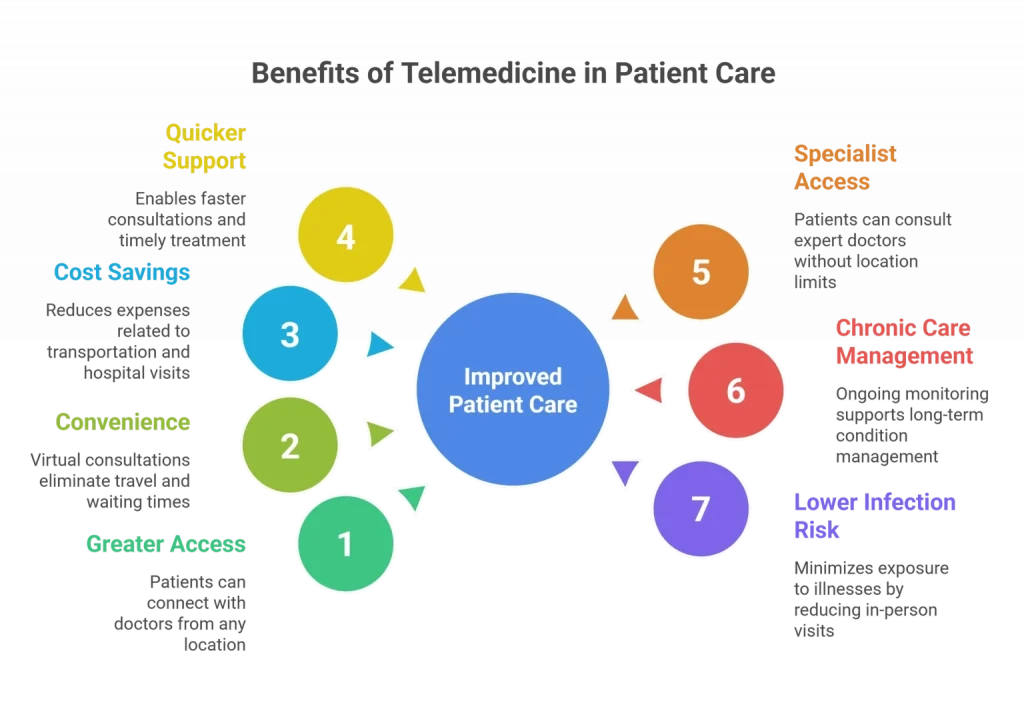
Greater Access to Care: Patients can connect with doctors from any location, which is especially beneficial for those in rural or underserved areas.
Convenience & Time Efficiency: Virtual consultations eliminate the need for travel and reduce waiting times.
Cost Savings: Helps cut down expenses related to transportation, hospital visits, and infrastructure.
Quicker Medical Support: Enables faster consultations, leading to early diagnosis and timely treatment.
Easy Access to Specialists: Patients can consult expert doctors without being limited by location.
Improved Chronic Care Management: Ongoing monitoring supports better management of long-term conditions like diabetes and heart disease.
Lower Risk of Infection: Reduces the need for in-person visits, minimizing exposure to illnesses.
Telemedicine Technology Challenges
As telemedicine continues to grow in adoption, it brings along several technological challenges that need to be addressed. Issues such as data security, limited digital access, technical reliability, and integration with existing systems can impact the effectiveness of virtual care. Addressing these concerns is essential to ensure telemedicine remains accessible, efficient, and trustworthy for both patients and healthcare providers.
System Fragmentation and Lack of Standardization
One of the biggest challenges in telemedicine is system fragmentation and the lack of standardization. As digital health solutions have grown rapidly, many healthcare providers use different platforms that don’t always work well together. This leads to disconnected systems where patient data is stored in various formats, making it difficult to share, access, and maintain consistent records. Without common standards, it becomes harder to deliver seamless and coordinated care.
Security and Platform Integration
Protecting patient data is a major concern in telemedicine. Healthcare platforms must ensure strong data privacy and security while also integrating smoothly with systems like Electronic Health Records (EHRs). Building secure and well-connected systems requires advanced cybersecurity measures and reliable technical frameworks to prevent data breaches and ensure safe information exchange.
Meeting Consumer Expectations for a Digital-First Experience
Today’s patients expect healthcare services to be as smooth and convenient as other digital experiences, like online banking or shopping. They look for easy-to-use platforms, quick access to doctors, and minimal technical issues. However, consistently delivering such a seamless and user-friendly experience across different devices and networks can be challenging for healthcare providers.
Identifying Telehealth Use Cases
Not every medical condition can be effectively managed through telemedicine. It is important for healthcare providers to clearly identify which cases are suitable for virtual care and which require in-person visits. Defining these use cases helps ensure patients receive the right type of care at the right time without compromising quality.
Telehealth Staffing Challenges
Adopting telemedicine also requires healthcare professionals to adapt to new technologies and workflows. This can be challenging without proper training and support. Providers need to become comfortable with digital tools, remote consultations, and virtual patient management to deliver effective care in a telehealth environment.
Conclusion
Telemedicine has quickly become a key part of modern healthcare, changing how care is delivered and experienced. Technologies like AI, remote monitoring, and digital platforms are making healthcare more accessible, efficient, and convenient for both patients and providers.
At the same time, challenges such as data security, system integration, and staffing need to be managed carefully. As technology continues to evolve and regulations improve, telemedicine is set to grow even further, making healthcare more connected, patient-focused, and easier to access in the future.
Patient engagement has become a strategic priority for hospitals and healthcare providers in the digital-first healthcare ecosystem. With the growing expectations for real-time communication, personalized care, and seamless access to services, healthcare organizations are leveraging advanced technologies to bridge communication gaps. Among these innovations, the AI WhatsApp Chatbot for Healthcare, powered by Natural Language Processing (NLP), is revolutionizing how hospitals interact with patients, providing 24/7 support and enhancing patient-centric care.
What is an AI WhatsApp Chatbot for Healthcare?
An AI WhatsApp Chatbot for Healthcare is an intelligent virtual assistant integrated within the WhatsApp platform, specifically designed to automate and personalize communication between healthcare providers and patients. Powered by AI and NLP technologies, these chatbots facilitate human-like conversations, enabling hospitals to offer real-time assistance, appointment booking, medication reminders, and health information dissemination through an accessible messaging platform.
Role of NLP in Chatbot Communication
Natural Language Processing (NLP) enables chatbots to understand patient queries in multiple languages, interpret context, and provide accurate responses. NLP in Chatbot systems is crucial in healthcare, where patients may use non-technical language or regional dialects to communicate their concerns.
Benefits of AI WhatsApp Chatbots in Enhancing Patient Engagement
Real-Time Patient Communication
With instant communication capabilities, AI WhatsApp Chatbots ensure that patients receive timely responses to their queries without waiting for human intervention. Whether it’s scheduling an appointment, getting lab results, or accessing post-discharge instructions, the chatbot operates 24/7, significantly improving patient satisfaction.
Personalized Patient Experience
AI WhatsApp Chatbots use Hospital CRM systems to access patient history, preferences, and previous interactions. This data-driven healthcare approach allows the chatbot to deliver personalized health tips, medication schedules, and preventive care reminders, enhancing the overall patient experience.
Automation for Operational Efficiency
Automating repetitive administrative tasks through AI chatbots reduces the burden on hospital staff, enabling them to focus on clinical care. Functions like appointment management, feedback collection, and FAQs can be fully automated, leading to operational efficiency and cost savings.
Automation for Operational Efficiency
24/7 Availability for Patients
AI WhatsApp Chatbots provide round-the-clock support, making healthcare services accessible anytime, especially beneficial for emergency queries or remote patients in different time zones.
Scalability and Cost-Effectiveness
Hospitals can easily scale their chatbot operations without increasing human resource costs. A single chatbot can handle thousands of patient queries simultaneously, reducing dependency on call centers.
Consistent Patient Communication
AI chatbots ensure that all patients receive uniform and accurate information, reducing the risk of misinformation and maintaining healthcare service quality standards.
Improved Patient Education
Chatbots can be programmed to share educational content about diseases, treatment plans, healthy habits, and preventive care, helping patients stay informed about their health conditions.
Reduced Appointment No-Shows
By sending automated appointment reminders and follow-up messages, chatbots help minimize patient no-shows, ensuring better utilization of healthcare resources.
Real-World Use Cases of AI WhatsApp Chatbots in Healthcare
Chronic Disease Management
Hospitals are deploying AI WhatsApp Chatbots to support chronic disease management programs by sending automated medication reminders, lifestyle modification tips, and follow-up appointment alerts, promoting better patient compliance.
COVID-19 Information Dissemination
During the pandemic, AI in healthcare saw increased adoption of WhatsApp chatbots for disseminating critical information related to testing centers, vaccination appointments, and COVID-19 guidelines, ensuring accurate information reached patients instantly.
Mental Health Support
Some healthcare providers have integrated NLP in Chatbots to offer emotional support and preliminary mental health assessments, ensuring patients have a confidential platform for expressing their concerns before consulting a professional.
Key Features that Set AI WhatsApp Chatbots Apart
Predictive Analytics for Proactive Care
Using Hospital CRM data, AI chatbots can identify high-risk patients and provide them with proactive care suggestions, improving preventive care strategies.
Multilingual Support
NLP-driven chatbots can engage patients in their preferred language, breaking communication barriers in multilingual regions.
Integration with Hospital CRM
The seamless integration of AI WhatsApp Chatbots with existing Hospital CRM systems ensures that all patient interactions are captured, analyzed, and utilized for continuous improvement in care delivery.
Challenges in Implementing AI WhatsApp Chatbots
Data Privacy and Security
Patient data confidentiality is a top concern. Healthcare providers must ensure that AI chatbots comply with data protection regulations such as HIPAA and GDPR, implementing end-to-end encryption and secure data storage practices.
Maintaining Accuracy in NLP Responses
AI Chatbots require continuous learning and updates to handle new medical terminologies, patient behaviors, and healthcare scenarios effectively. Regular training and monitoring are essential to maintain accuracy and relevance.
The Future of AI WhatsApp Chatbots in Healthcare
The future of AI WhatsApp Chatbots is promising, with advancements expected in AI-driven virtual health assistants, telemedicine integrations, wearable device connectivity, and predictive patient engagement models. These technologies will further enhance the role of chatbots in delivering personalized, accessible, and efficient patient care.
Key Takeaways
AI WhatsApp Chatbots for Healthcare, powered by NLP, are transforming patient engagement by enabling real-time communication, personalized care, and operational efficiency. As healthcare providers continue to embrace digital transformation, these chatbots will play a vital role in improving patient-centric care delivery.
Experience Smarter Patient Engagement with AI
Subscribe to get expert insights, use cases, and practical tips on how AI WhatsApp Chatbots are reshaping healthcare communication and patient care. and want to know how the implementation works, read this blog: Healthcare WhatsApp chatbot implementation
The healthcare sector has seen a decisive shift toward value-based care, where reimbursement hinges on patient outcomes rather than the volume of services delivered. At the centre of this shift is the AI hospital CRM, a system that goes beyond traditional patient relationship management by embedding predictive analytics, risk stratification, and automated care coordination directly into hospital workflows. For hospitals operating under value-based payment models, bundled payments, or Accountable Care Organisation (ACO) contracts, an AI-driven CRM is no longer a nice-to-have; it is operational infrastructure.
Quad One’s AI-powered hospital CRM is purpose-built for this environment, connecting clinical data, engagement workflows, and outcome measurement in a single platform. It also acts as an AI healthcare compliance guide in practice, helping hospitals align clinical workflows, reporting, and data usage with regulatory expectations. This guide covers how AI hospital CRM improves outcomes in value-based care settings
This guide covers how AI hospital CRM improves outcomes in value-based care settings, from risk stratification and readmission reduction to personalised care plans, care coordination, ACO reporting, and measurable ROI.
Key Takeaways
- AI-driven risk stratification identifies high-risk patients before they become high-cost patients.
- Hospitals using AI hospital CRM for readmission prevention have reported up to 25% fewer chronic-disease readmissions.
- Personalised AI care plans increase patient satisfaction scores by up to 30% compared to non-personalised approaches.
- ACO and bundled-payment reporting becomes automated, not manual, when the CRM tracks outcomes natively.
- ROI materialises through lower readmission penalties, reduced administrative labour, and improved quality-incentive payments.
What Is Value-Based Care and Why Does AI Hospital CRM Matter?
Value-based care (VBC) is a reimbursement model that rewards hospitals for the quality and efficiency of care delivered, not the number of procedures performed. Under VBC contracts, including Medicare’s Hospital Value-Based Purchasing (VBP) program, bundled payments, and ACO shared-savings arrangements, hospitals earn or lose revenue based on clinical outcomes, patient satisfaction, and cost reduction.
Traditional hospital CRMs were designed for scheduling and marketing. They lack the predictive intelligence required to manage risk, coordinate multidisciplinary care, and report outcomes at the granularity VBC demands. An AI hospital CRM closes this gap. It ingests clinical, demographic, and behavioural data; applies machine learning models for risk prediction; automates outreach and follow-up workflows; and generates audit-ready outcome reports for payer contracts.
The result: hospitals can shift from reactive care delivery to proactive population health management, which is the operational foundation of every successful VBC programme.
AI-Powered Risk Stratification: Identifying High-Risk Patients Early
Integrating AI in healthcare CRMs enhances predictive analytics capabilities, allowing providers to identify at-risk patient populations proactively. This enables timely intervention, essential in preventive care strategies, and significantly reduces hospital readmissions while improving long-term outcomes.
AI-driven algorithms analyse extensive patient data, including medical history, lifestyle factors, lab trends, social determinants, and previous hospital utilisation patterns, to predict health risks accurately. Unlike static scoring models, AI risk stratification updates dynamically as new data flows in: a patient whose blood pressure trends upward over three consecutive visits gets flagged before they present at the emergency department.
With these insights, healthcare providers can focus resources more efficiently, ensuring that the right patients receive timely preventive measures. One notable healthcare institution implemented AI-driven risk stratification through their hospital CRM, resulting in a 25% decrease in hospital readmissions for chronic diseases. This improvement was achieved by identifying high-risk patients early, delivering personalised interventions, and closely monitoring patient progress.
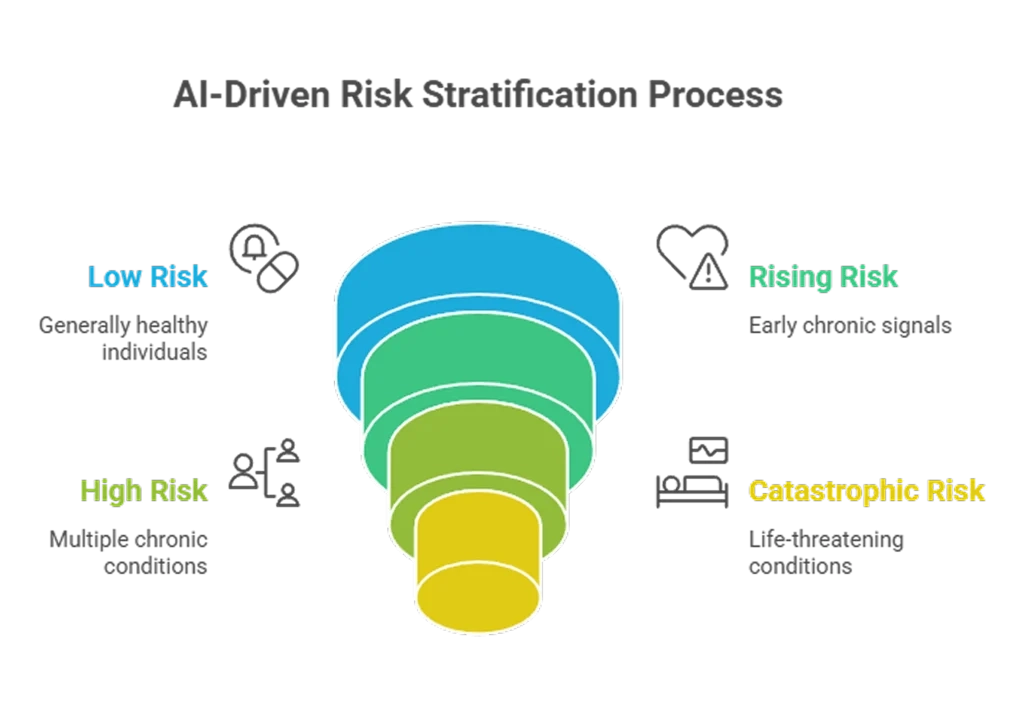
Risk tiers typically break into four groups: low-risk (healthy, preventive care focus), rising-risk (early chronic signals, early intervention), high-risk (multiple chronic conditions, coordinated ongoing care), and catastrophic-risk (life-threatening conditions, intensive specialised management). The CRM assigns care pathways and outreach cadences based on each tier.
How Does AI Hospital CRM Reduce Readmissions?
Readmission penalties under Medicare’s Hospital Readmissions Reduction Program (HRRP) cost US hospitals hundreds of millions of dollars annually. For VBC-contracted hospitals, every avoided readmission directly improves shared-savings calculations and
quality scores. AI hospital CRM attacks readmissions at three points: before discharge, during the transition window, and in the weeks that follow.
Pre-Discharge: Structured Handoff Workflows
The CRM ensures that discharge instructions, medication reconciliation summaries, and follow-up appointment details are delivered through the patient’s preferred channel before they leave the facility. Teach-back confirmation prompts verify the patient understood the plan. If confirmation is not received, the system escalates to a care coordinator.
Transition Window (0–72 Hours)
An automated 48-hour post-discharge call or message checks symptom status, medication access, and home-care setup. AI models flag patients whose responses indicate elevated re-hospitalisation risk, such as reported difficulty obtaining medications or worsening symptoms, and route them to a nurse callback queue.
Ongoing Follow-Up (7–30 Days)
Weekly automated check-ins, refill reminders, and referral-to-appointment tracking keep the patient on track. The CRM monitors whether scheduled follow-ups are attended and, if not, triggers escalation. For chronic-disease patients, the system tracks lab values and vital trends, alerting care teams to intervening deterioration before it leads to an ED visit.
For a broader view of how CRM-powered workflows operate across the full patient journey, see our guide on hospital CRM patient experience improvements.
How Do AI-Driven Personalised Care Plans Improve Outcomes?
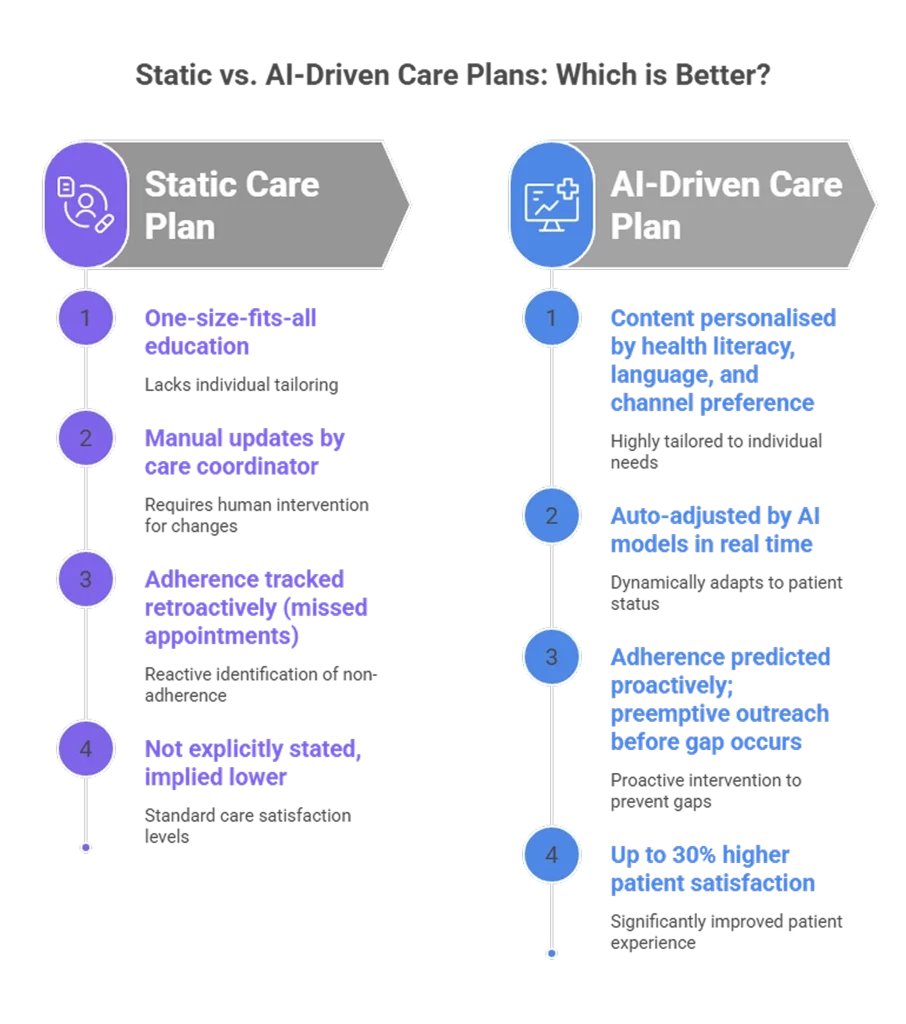
Personalised patient care plans are becoming an essential component of value-based care. By leveraging AI insights from CRM data, hospitals can create highly tailored care plans that address individual patient needs, preferences, and health goals. These AI-driven personalised care plans enhance patient engagement, treatment adherence, and ultimately improve healthcare outcomes.
Here is how the AI layer adds value beyond what traditional care planning delivers:
Dynamic plan adjustment. Unlike static care plans written at discharge, AI-driven plans update continuously as new data arrives. A patient’s A1C result worsens? The CRM automatically adjusts outreach frequency, adds dietary education content, and alerts the endocrinologist.
Behavioural and preference modelling. The AI analyses which communication channels, message times, and content types drive the highest engagement for each patient segment. A patient who consistently ignores emails but responds to WhatsApp messages gets routed to WhatsApp automatically.
Adherence prediction. Machine learning models predict which patients are likely to fall off their care plan based on historical patterns, enabling preemptive outreach before a gap occurs rather than reactive follow-up after one.
Research indicates that personalised patient care significantly improves both satisfaction and clinical outcomes. Hospitals implementing AI-enhanced personalised care have reported up to 30% higher patient satisfaction scores compared to those without such systems.
AI-Enhanced Care Coordination Across Multidisciplinary Teams
Care coordination is critical in value-based healthcare delivery. Hospital CRMs enhanced with AI facilitate better communication and collaboration among multidisciplinary healthcare teams. Real-time data access, automated workflows, and predictive insights help reduce errors, minimise redundant tasks, and improve overall patient care quality.
In practice, this means the primary care physician, specialist, social worker, pharmacist, and care manager all see the same real-time patient dashboard. When a cardiologist updates a medication, the CRM notifies the PCP and adjusts the patient’s refill reminder sequence. When a social worker logs a housing instability flag, the system adds social-determinant-aware outreach to the care plan. No manual handoffs. No missed signals.
A leading healthcare provider utilising AI-driven CRM technology observed significant cost savings and improved patient outcomes through enhanced care coordination. With real-time updates accessible to all healthcare providers involved, redundancies were drastically reduced, patient safety improved, and costs associated with unnecessary interventions were notably diminished.
Data Analytics and Outcome Measurement in Value-Based Care
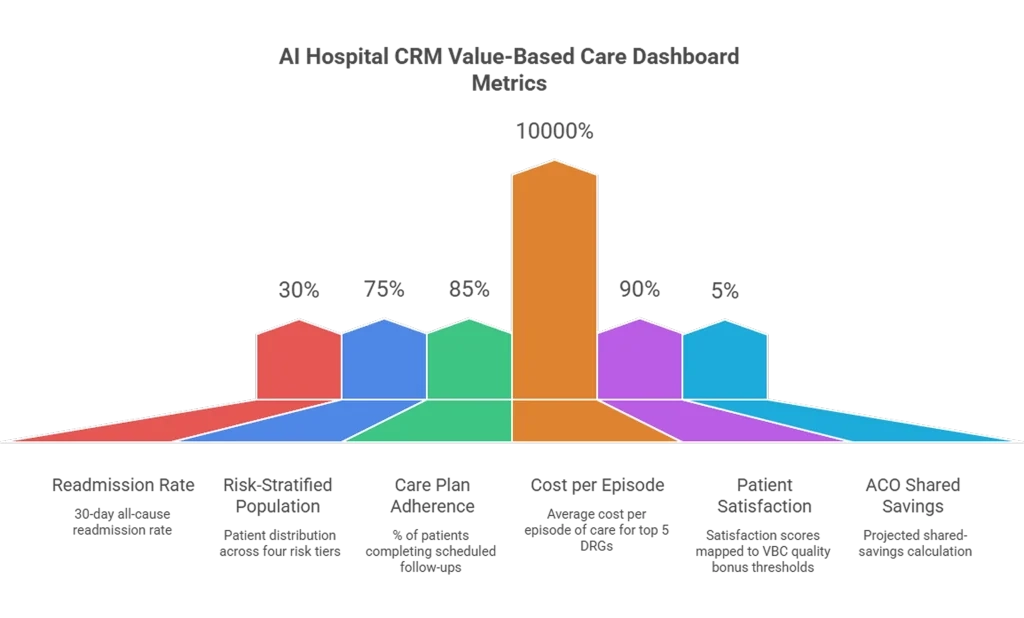
AI-enabled hospital CRMs offer robust data analytics and outcome measurement capabilities. Providers can track critical metrics such as hospital readmission rates, patient satisfaction scores, and preventive care effectiveness. This ability to systematically analyse outcomes enables continuous, data-driven improvements, aligning closely with the principles of value-based care.
Hospitals adopting AI analytics within their CRM platforms have reported substantial improvements in clinical outcomes and patient satisfaction. One healthcare network experienced a 15% improvement in clinical quality metrics within a year of AI-driven CRM implementation. Data-driven insights allowed for targeted interventions, optimised resource allocation, and improved preventive care strategies.
The dashboard should connect interventions to results: risk-stratified outreach volumes mapped to readmission-rate changes; care-plan adherence scores mapped to cost-per-episode trends; and referral completion rates mapped to specialist utilisation. Without this closed loop, VBC reporting is guesswork.
How AI CRM Supports ACO and Bundled Payment Reporting
Accountable Care Organisations (ACOs) and bundled-payment programmes require hospitals to report granular outcome data to CMS and commercial payers. This includes quality measures (often drawn from CMS’s ACO quality measure set), cost benchmarks, and patient-reported outcomes. Manually compiling these reports is labour-intensive, error-prone, and typically months behind the data.
An AI hospital CRM automates this process. It continuously aggregates clinical, engagement, and cost data against the specific measures required by each contract. Quality measure numerators and denominators are calculated in real time. Gaps in care that would drag down a quality score are flagged immediately, giving care teams time to intervene before the reporting period closes.
For bundled-payment programmes, the CRM tracks cost-per-episode against the target price, alerts administrators when an episode is trending over budget, and identifies the cost drivers (unplanned readmission, extended length of stay, post-acute care utilisation). This turns VBC reporting from a retrospective compliance exercise into a prospective management tool.
Overcoming Implementation Challenges
Despite clear benefits, integrating AI into existing hospital CRM systems presents several challenges that healthcare decision-makers should address proactively.
Data integration complexity. AI models require clean, normalised data from multiple sources: EHR, claims, pharmacy, and sometimes wearables. Hospitals with fragmented IT ecosystems need an interoperability layer (FHIR-based APIs are the industry standard) to unify data before AI can deliver value.
Staff adoption. Clinicians and care coordinators need to trust AI recommendations. A phased rollout, beginning with a single high-impact use case like readmission prediction, builds confidence through visible results before expanding to broader population-health workflows.
ROI clarity. Hospital decision-makers may hesitate without a clear understanding of financial returns. Frame ROI around avoided readmission penalties, reduced administrative FTEs for manual outreach and reporting, and improved quality-incentive payments from payer contracts.
Data security. Data security. AI-driven CRM systems store vast amounts of patient data. HIPAA-compliant encryption, role-based access controls, and continuous audit logging are non-negotiable, making hospital CRM privacy and compliance a core design requirement, not an afterthought. The CRM vendor must sign a Business Associate Agreement (BAA) and demonstrate SOC 2 or equivalent security certification.
For a deeper look at where AI-driven CRM is heading, explore our piece on the future of AI in hospital CRM.
What ROI Can Hospitals Expect from AI CRM in Value-Based Care?
The financial case for AI hospital CRM in VBC environments rests on four pillars:
1. Avoided readmission penalties. Medicare’s HRRP penalises hospitals up to 3% of base DRG payments for excess readmissions. An AI CRM that reduces chronic-disease readmissions by 25% can translate to hundreds of thousands of dollars in avoided penalties for mid-sized hospitals.
2. Quality-incentive payments. Under the VBP program and ACO contracts, hospitals that hit quality thresholds earn bonus payments. AI-driven outreach that improves care-plan adherence and patient satisfaction directly boosts the quality scores that determine these payments.
3. Administrative labour savings. Automating post-discharge calls, referral follow-ups, care-gap outreach, and VBC reporting reduces the FTE burden on care coordination and quality teams. Hospitals report 20–30% better utilisation of clinical staff time after CRM automation.
4. Reduced cost per episode. Better risk stratification and proactive management keep patients out of high-cost settings (ED, inpatient). For bundled-payment contracts, lower cost-per-episode means a higher margin.
AI automation reduces labour costs, minimises appointment no-shows, and increases overall hospital efficiency, leading to substantial financial returns. Hospitals should expect to see measurable ROI within 12–18 months of full deployment, with the strongest early returns in readmission avoidance and reporting automation.
Conclusion
The integration of AI in hospital CRM systems represents a transformative opportunity to enhance value-based care outcomes significantly. By improving risk stratification, delivering personalised patient care, optimising care coordination, and automating VBC reporting, hospitals can achieve better clinical outcomes, higher patient satisfaction, and greater operational efficiency.
Healthcare decision-makers must proactively embrace AI-driven CRM solutions to fully realise these benefits and meet evolving patient expectations and payer requirements.
AI-powered hospital CRM from Quad One delivers advanced patient engagement, streamlined workflows, and powerful analytics to improve healthcare outcomes in value-based care environments.
Book an AI Hospital CRM Demo to see how Quad One’s platform connects risk stratification, care coordination, and outcome reporting into one system built for value-based care.
