
Prompts play a critical role in healthcare because they directly shape how AI interprets information and delivers results. In a field where accuracy, clarity, and safety are essential, even small changes in how a prompt is written can significantly influence the outcome.
A well-designed prompt helps AI generate precise and clinically relevant responses whether it’s summarizing patient records, drafting medical documentation, or supporting decision-making. By clearly defining the context, intent, and expected format, prompts reduce ambiguity and ensure the output aligns with clinical needs.and it changes everything.
Prompt Engineering in Healthcare: Best Practices, Strategies and Trends
With technology becoming a bigger part of healthcare, giving clear instructions to systems is more important than ever. Prompt engineering helps doctors and staff get accurate answers for tasks like diagnosis, documentation, and patient data. By framing the right questions, healthcare professionals can reduce errors, save time, and make better-informed decisions.
It also supports smoother workflows by simplifying complex processes and improving communication between teams and digital tools. As new trends and tools continue to evolve, adopting effective prompt strategies can help healthcare organizations stay efficient, deliver more personalized care, and achieve better patient outcomes.
The Rise of AI in Healthcare: A New Frontier
Healthcare is stepping into a new era where artificial intelligence is not just supporting care — it’s actively shaping how it’s delivered, reflecting AI in healthcare 2026 top trends that are redefining clinical practice and operations.
This shift marks a new frontier, where technology and human expertise work side by side to improve outcomes, reduce inefficiencies, and create more personalized patient experiences. As AI continues to evolve, it’s redefining the boundaries of what healthcare systems can achieve.
How Generative AI is Transforming Modern Care
In recent years, healthcare has witnessed rapid advancements in artificial intelligence. Models like GPT-4 have demonstrated near expert-level performance in medical assessments, while Med-PaLM 2 has shown high accuracy in clinical reasoning tasks. These developments highlight how natural language processing is reshaping both clinical and operational aspects of healthcare, with generative AI in healthcare explored across diagnostics, documentation, and patient communication.
From enabling personalized treatment approaches to improving operational efficiency, AI is helping providers make more informed and timely decisions. Today, healthcare organizations are integrating large language models (LLMs) into workflows to summarize electronic health records (EHRs), assist with patient communication, and generate clinical documentation all guided by well-crafted prompts.
What Is Prompt Engineering in Healthcare?
Prompt engineering in healthcare refers to the practice of designing structured and precise instructions that guide AI systems to produce accurate, safe, and clinically relevant outputs.
In a high-stakes environment like healthcare, prompts act as a control layer between human intent and AI response. Whether it’s generating diagnostic suggestions, drafting reports, or assisting in patient interactions, the quality of the prompt directly influences the reliability of the outcome.
Well-designed prompts help reduce ambiguity, ensure alignment with clinical standards, and support compliance with regulatory requirements. As AI adoption grows, prompt engineering is becoming essential for integrating AI safely and effectively into healthcare workflows.
Clinical Applications of Prompt Engineering
Prompt engineering is increasingly important in clinical settings as it helps healthcare professionals use AI tools more effectively. By giving clear instructions, clinicians can get accurate information for diagnosis, patient data analysis, and treatment planning. This makes AI more reliable and helps improve overall efficiency in healthcare workflows.
Enhancing Diagnostic Accuracy with Medical AI Prompts
Structured prompts can significantly improve clinical decision support. For instance:
A 60-year-old male with chest pain and shortness of breath. Provide possible causes, recommended diagnostic tests, and an initial treatment plan.
Such prompts enable AI to generate organized and clinically relevant outputs, supporting faster and more accurate decision-making.
Domain-Specific Prompting in Clinical Practice
Specialty-focused prompts enhance precision and usability:
- Oncology: Analyze imaging for tumor size, location, and stage
- Mental Health: Guide patient conversations with empathetic follow-ups
- Cardiology: Interpret ECGs and flag abnormalities
Tailored prompts align AI outputs with clinical workflows, improving both efficiency and accuracy.
Personalized Treatment Planning
AI models can assist in developing treatment plans by incorporating patient history, co-morbidities, and clinical guidelines.
Prompt Format:
[Patient Summary] + [Clinical Goal] + [Guideline Constraints]
This approach ensures recommendations remain evidence-based while allowing clinicians to validate and refine outputs.
Streamlining Administrative Workflows with Prompt Engineering
Managing administrative tasks in healthcare can often be time-consuming and complex. Prompt engineering helps simplify these processes by guiding AI systems with clear instructions, making tasks like documentation, scheduling, and data handling faster and more accurate. This not only improves efficiency but also reduces workload, allowing healthcare staff to focus more on patient care.
Automating Clinical Documentation
Prompt-driven AI can reduce administrative workload by:
- Drafting clinical notes and summaries
- Generating referral letters
- Preparing discharge instructions
Prompt Format:
[Task] + [Document Type] + [Formatting Requirements]
Enhancing Operational Efficiency
Enhancing operational efficiency in healthcare focuses on improving how daily tasks and processes are managed. By optimizing workflows, reducing delays, and using technology effectively, organizations can save time, lower costs, and improve accuracy. This ultimately helps deliver faster, more reliable care and a better experience for both patients and staff.
AI prompts are also used for:
- AI is transforming medical coding and billing support
- Prior authorization documentation
- Insurance communication
Standardized prompts improve turnaround time and ensure consistency across administrative processes.
Improving Patient Experience with Healthcare Chatbots
Integration strategies in hospitals aim to link different systems, technologies, and workflows for smoother operations. By bringing together tools like health records, AI, and clinical processes, hospitals can improve communication, minimize errors, and deliver better patient care. This leads to a more organized and efficient healthcare system.
Prompt Design in Virtual Health Assistants
AI-powered chatbots rely on structured prompts to:
- Conduct symptom checks
- Provide pre-visit guidance
- Offer follow-up care instructions
Empathetic and Clear Communication
Prompts that guide AI to respond in simple, patient-friendly language improve trust and engagement. They help translate complex medical information into understandable insights, enhancing the overall patient experience.
Integration Strategies for Hospitals
Hospitals often use many different systems that don’t always work well together. Integration strategies help connect these tools and processes so information flows smoothly across departments. This improves coordination, reduces errors, and makes overall hospital operations more efficient while supporting better patient care.
Embedding in EHR Systems
AI tools are increasingly integrated into platforms like EHR systems, where prompts are automatically triggered based on clinical context, enabling seamless workflow integration.
Training Clinical Teams
Educating healthcare professionals on prompt usage ensures:
- More effective AI interaction
- Reduced errors
- Consistent and reliable outputs
What Are Key Best Practices for AI Prompt Engineering in Healthcare?
Strong prompt engineering is key to generating accurate, safe, and context-relevant outputs from AI in healthcare. Following best practices helps organizations improve reliability, stay compliant, and support better clinical decisions while reducing potential risks.
Prompts Must Be Specific
Clear and detailed prompts lead to more accurate and relevant outputs. Vague instructions often result in incomplete or unreliable responses.
Provide Relevant Context With Follow-Up Prompts
Including patient history, clinical background, and additional clarifications helps AI generate more precise insights. Follow-up prompts can refine and improve responses further.
Give Examples of Desired Outputs
Providing sample outputs or formats helps guide AI in structuring responses correctly, ensuring consistency and usability in clinical settings.
Challenges and Ethical Considerations
The growing use of AI in healthcare brings both new possibilities and important challenges that cannot be overlooked. Factors such as accuracy, data privacy, bias, and overdependence on technology must be carefully addressed to protect patient safety and maintain trust. Ensuring responsible use through clear guidelines, ethical practices, and human oversight is essential for effective implementation.
Managing AI Hallucinations and Clinical Risk
AI systems may generate incorrect yet plausible responses. Structured prompts and human oversight are essential to minimize such risks.
Ensuring Data Privacy
Sensitive patient data must be protected through secure systems, de-identification, and compliance with healthcare regulations.
Responsible AI Use
Healthcare organizations must prioritize transparency, informed consent, and human involvement in critical decisions.
Future Outlook: Scaling Prompt Engineering in Healthcare
As AI evolves, prompt engineering will play a central role in enabling. As these systems grow more interconnected, using a model context protocol for AI communication will help agents share context reliably across tools and workflows.
- Multimodal AI applications (text, images, and data integration)
- Advanced clinical decision support
- Personalized and scalable patient care
Investing in prompt libraries, governance frameworks, and continuous optimization will be key to unlocking long-term value.
Conclusion
Prompt engineering is rapidly becoming a foundational element in healthcare AI. By structuring inputs effectively and refining them over time, organizations can ensure AI delivers accurate, safe, and meaningful outcomes.
From improving diagnostics and automating documentation to enhancing patient engagement, prompt engineering is shaping a smarter, more efficient, and patient-centric healthcare ecosystem.
Advance Healthcare with Intelligent Innovation
Explore how prompt engineering and AI are shaping the future of healthcare delivery. Stay informed with expert-led insights and practical strategies. Subscribe for updates.
The rise of telemedicine has significantly transformed healthcare by making care more accessible, efficient, and patient-centered. What began as a supplementary service has now become a core part of modern healthcare, especially accelerated by the COVID-19 pandemic. With the integration of artificial intelligence, e-consultation platforms have evolved into intelligent systems that support real-time patient interaction, symptom triage, appointment scheduling, and follow-ups.
AI-powered telemedicine enhances both patient experience and clinical efficiency. It reduces administrative workload, enables better data management, and allows healthcare providers to focus on high-value tasks. These platforms also improve accessibility by supporting multiple languages, assisting low-tech users, and reaching patients in remote areas. Seamless integration with electronic health records ensures continuity of care and more informed decision-making.
“These ongoing telemedicine trends are making care more accessible, efficient, and patient-centered.”
Telemedicine and the rise of online consultations
Telemedicine and online consultations have rapidly transformed how healthcare is delivered, making medical support more accessible and convenient than ever before. With the help of digital platforms, patients can now connect with doctors remotely for
diagnosis, follow-ups, and even ongoing treatment without the need for in-person visits.
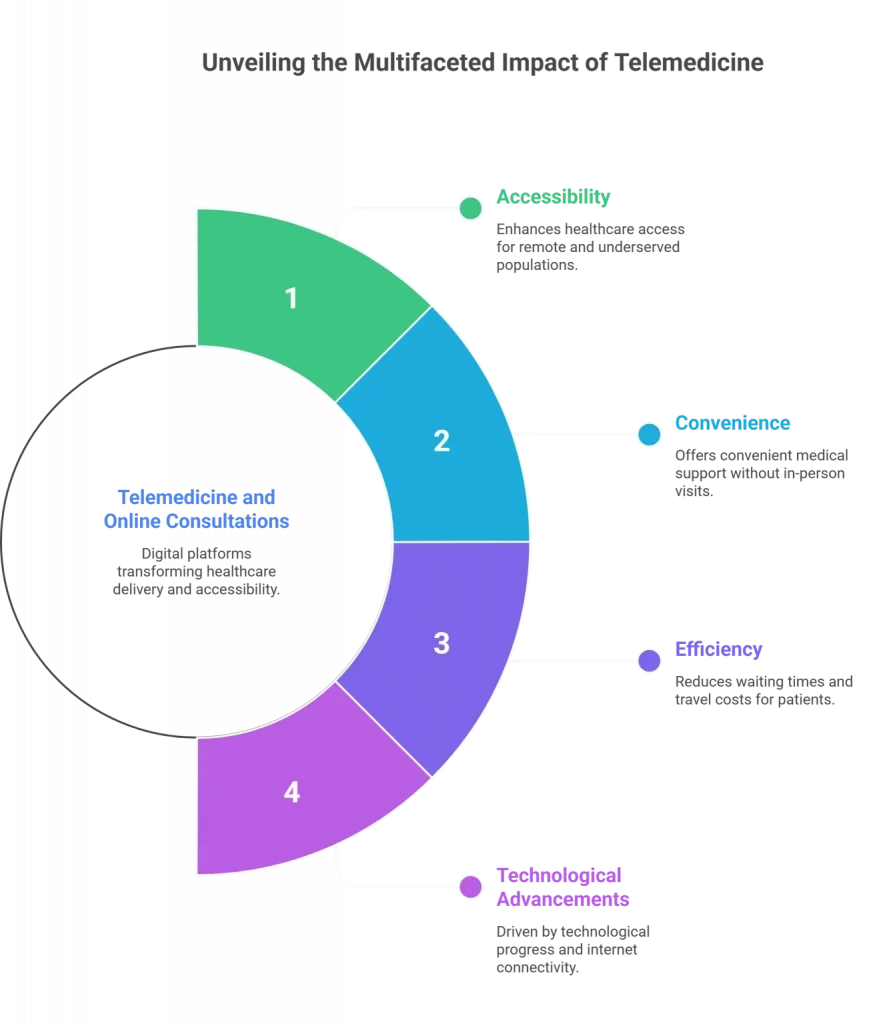
This shift has been driven by advancements in technology, increased internet access, and the growing demand for faster, more flexible care. Telemedicine not only helps reduce waiting times and travel costs but also plays a crucial role in reaching patients in remote or underserved areas. As healthcare continues to evolve, online consultations are becoming an essential part of modern care delivery.
What is Telemedicine?
Telemedicine is a way to get all your medical care needs met using technology such as phone calls, video calls, or mobile apps. It enables patients to connect with healthcare professionals remotely, making it easy to discuss symptoms, seek medical advice, receive diagnoses, and even get prescriptions without needing to visit a hospital or clinic in person.
Beyond basic consultations, telemedicine also supports follow-up care, routine check-ups, mental health services, and the management of chronic conditions like diabetes or hypertension. It helps reduce travel time, lowers healthcare costs, and improves access for people in remote or underserved areas.
Advantages of Telemedicine :
Telemedicine has played a significant role in making healthcare more efficient and convenient for both patients and providers. It helps reduce long waiting hours at hospitals and clinics, allowing patients to connect with doctors quickly and get timely medical advice without the hassle of travel. This not only saves time but also makes it easier for people to fit healthcare into their daily lives.
Patients can reach out to doctors as soon as they notice symptoms, which leads to faster diagnosis and early treatment. This quick access can make a real difference, especially in preventing minor issues from becoming serious health problems.
In many platforms, voice assistants in healthcare appointment booking also make it easier for patients to schedule or reschedule visits using simple voice commands, adding another layer of convenience.
Challenges and Limitations of Online Consultations
Telemedicine has definitely made some remarkable strides, but it also comes with its own set of limitations. One of the main challenges is the lack of physical examination, which can make it difficult for doctors to accurately diagnose certain conditions that require hands-on assessment or diagnostic tests.
Another limitation is the dependence on technology. Not everyone has access to a stable internet connection, smartphones, or the digital skills needed to use telehealth platforms effectively. This can create a gap, especially among elderly patients or those in underserved communities.
There are also concerns around data privacy and security, as sensitive medical information is shared online. In addition, some patients may feel that virtual consultations lack the personal touch and reassurance of face-to-face interactions with their doctors.
| Aspects | Telemedicine (Online Consultations) | In-Person Consultations |
| Accessibility | Easy access from anywhere with internet | Requires travel to the hospital |
| Time Efficiency | Saves time, no waiting in long queues | Often involves waiting time and travel |
| Physical Examination | Not possible or limited | Full physical check-up possible |
| Convenience | Highly convenient, can consult from home | Less convenient, requires scheduling and travel |
| Cost | Usually lower (no travel or related expenses) | Higher due to travel, time, and hospital costs |
| Personal Interaction | Less personal, virtual communication | More direct and personal interaction |
The Role of Online Consultations in the Future of Healthcare
Online consultations are shaping the future of telemedicine and key healthcare trends by making care more connected and patient-focused. People no longer have to depend only on physical visits. People no longer have to depend only on physical visits to get medical help; they can speak to a doctor anytime, from anywhere. This flexibility is especially helpful for those with busy schedules, limited mobility, or living in areas where healthcare facilities are not easily accessible. It brings a sense of comfort and ease, knowing that medical support is just a call or click away.
As healthcare continues to evolve, online consultations will become a natural part of everyday care. They will help doctors stay connected with patients even after treatment, ensuring better follow-ups and ongoing support. While hospitals and clinics will always remain important, virtual care will act as a strong support system, making healthcare faster, more efficient, and more responsive to people’s needs.
Conclusion:
Healthcare delivery has evolved rapidly in recent years, with telemedicine and online consultations playing a key role in making care more accessible and adaptable to modern lifestyles. From quick virtual consultations to AI-powered support systems, this shift has brought care closer to patients, breaking down barriers like distance, time, and availability. It has not only improved patient convenience but also allowed healthcare providers to work more efficiently and focus on delivering quality care.
While there are still challenges such as limited physical examinations, technology gaps, and data security concerns, the overall impact of telemedicine remains highly positive. As technology continues to advance, these limitations are likely to be addressed, making virtual care even more reliable and inclusive. In the coming years, telemedicine will not replace traditional healthcare but will work alongside it, creating a balanced, hybrid model that ensures better access, continuity, and quality of care for everyone.
Healthcare systems worldwide are under immense pressure to balance operational efficiency with delivering timely, personalised patient care. Traditional appointment booking methods, primarily phone calls or online forms, often lead to bottlenecks, staff overload, and suboptimal patient experiences. Voice assistants for healthcare appointment booking are changing this dynamic. These AI-powered systems use natural language processing (NLP) to engage with patients via speech, allowing them to schedule, modify, or cancel appointments using simple spoken commands, 24/7, without call queues.
| Quick Answer : Voice assistants streamline healthcare appointment booking by using natural language processing (NLP) to let patients schedule, modify, or cancel appointments via voice commands — 24/7, without call queues. Integrated with EHR and CRM systems via FHIR APIs, they reduce no-show rates by up to 72%, cut cost-per-booking from $8–15 to $1–3, and free staff from up to 38% of administrative scheduling workload. |
Voice scheduling is one component of a broader AI in healthcare transformation that is reshaping how hospitals operate, engage patients, and deliver care.
Whether it is booking a consultation with a general practitioner or scheduling a specialised diagnostic test, voice assistants offer real-time interaction that mirrors human-like conversation. This guide covers how they work, how they integrate with hospital systems, what results leading hospitals are seeing, and how the technology is evolving.
Traditional vs. AI-Powered Healthcare Appointment Booking: A Full Comparison
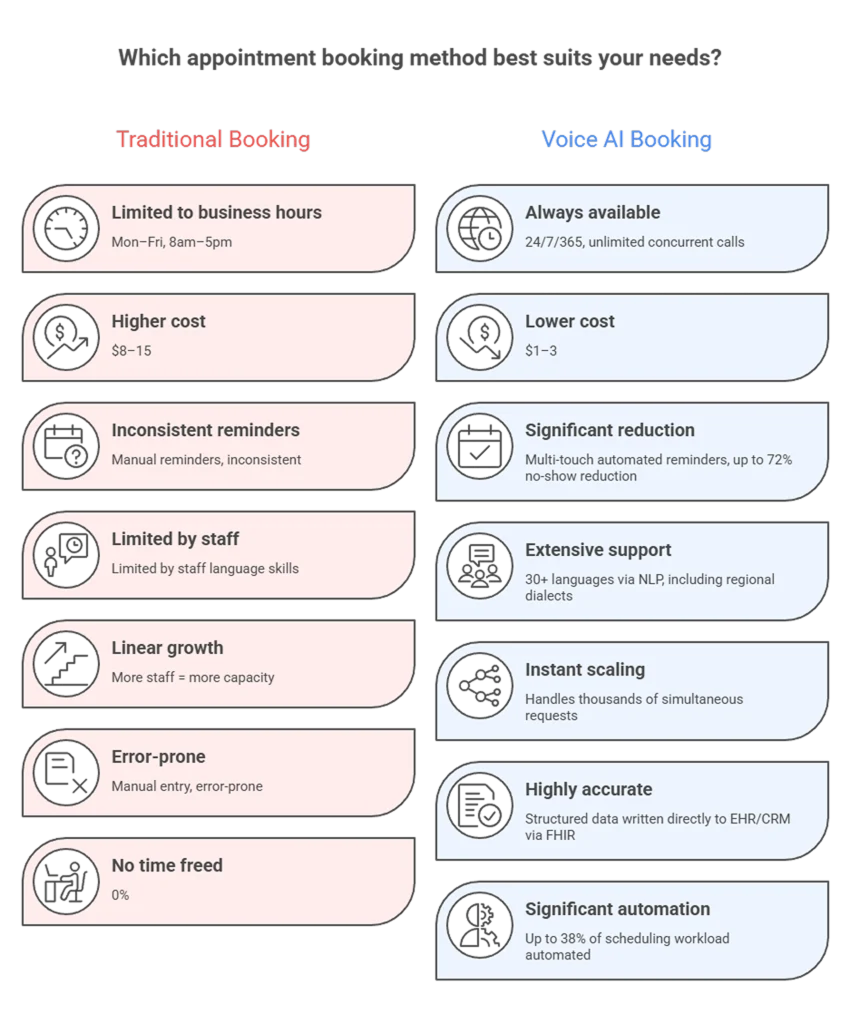
Before evaluating voice assistants, it helps to understand exactly what they replace. The table below compares traditional phone-and-form scheduling against AI-powered voice booking across the dimensions that matter most to hospital operations teams.
Availability. Traditional booking is limited to business hours and staff capacity. Voice assistants operate 24/7, handling simultaneous requests without hold times.
Cost per booking. Manual scheduling typically costs $8–15 per appointment when factoring in staff time, phone infrastructure, and error correction. AI voice agent healthcare reduces this to $1–3 per booking by automating the entire workflow.
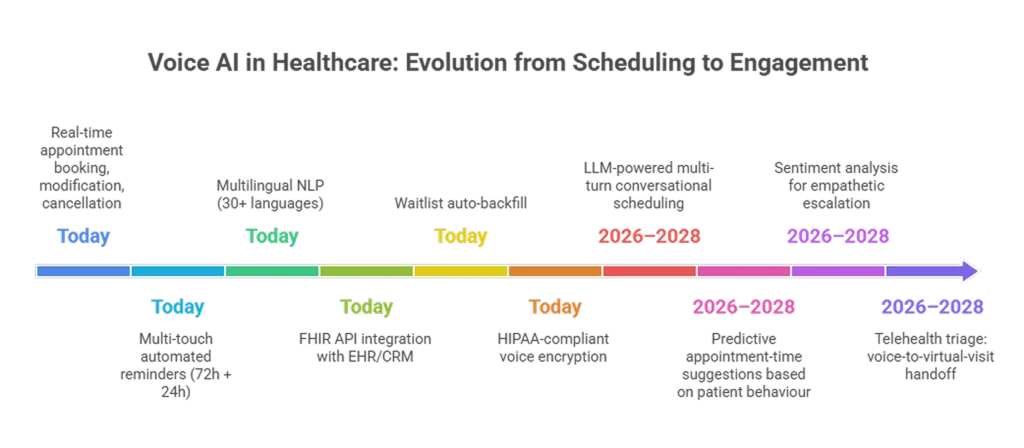
No-show management. Phone-based reminders are inconsistent and resource-intensive. Voice assistants deliver multi-touch, personalised reminders at optimal intervals (72 hours and 24 hours before the appointment), with one-tap confirm or reschedule options, cutting no-show rates by up to 72%.
Language support. Traditional call centres require multilingual staff, which is expensive and hard to scale. Voice assistants handle dozens of languages natively using NLP models, making healthcare access equitable across diverse patient populations.
Scalability. Adding call centre capacity means hiring, training, and managing more staff. voice AI healthcare appointment scheduling scales instantly during peak demand (flu season, vaccination drives, outbreaks) without additional headcount.
Data capture. Manual booking often results in incomplete or inaccurate patient records. Voice assistants capture structured data (patient ID, appointment type, preferred provider, insurance details) and write it directly to the EHR and scheduling system in real time.
How Do Voice Assistants Work for Healthcare Scheduling?
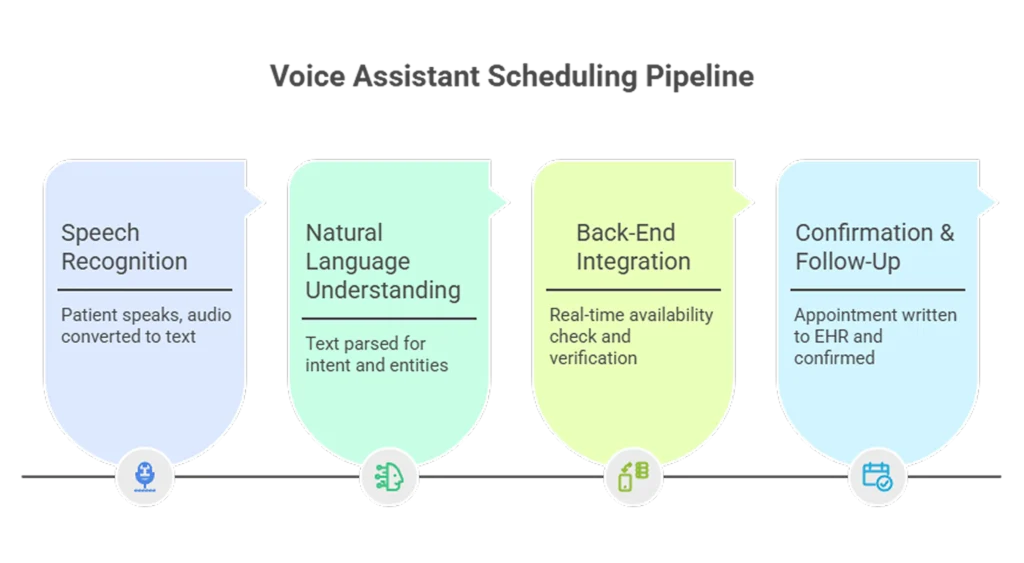
A voice assistant for healthcare scheduling operates through a four-stage pipeline that converts spoken patient input into a confirmed appointment record inside the hospital’s systems.
Stage 1: Speech Recognition. The patient speaks naturally (“I need to see Dr. Patel next Thursday afternoon”). Automatic speech recognition (ASR) converts the audio to text. Modern ASR models handle accents, medical terminology, and background noise with accuracy rates above 95%.
Stage 2: Natural Language Understanding (NLU). The NLU engine extracts intent (book, reschedule, cancel) and entities (provider name, date, time preference, appointment type). It disambiguates: “next Thursday” becomes a specific calendar date; “afternoon” maps to available slots between 12:00 and 17:00.
Stage 3: Back-End Integration. The system queries the scheduling engine via FHIR APIs to check real-time provider availability, patient eligibility, and insurance coverage. If the requested slot is unavailable, the assistant proposes alternatives ranked by proximity to the patient’s preference.
Stage 4: Confirmation and Follow-Up. The assistant confirms the booking, writes the appointment to the EHR, and triggers a confirmation message through the patient’s preferred channel (voice callback, SMS, WhatsApp, email). Automated reminder sequences are scheduled (72h + 24h) with one-tap reschedule links.
Technical Integration: Connecting the Voice agent healthcare to Hospital Systems
For hospital administrators and Health IT professionals, the most significant advantage of voice assistants is their ability to integrate securely and effectively with back-end infrastructure. Successful implementations typically include EHR and scheduling system integration to enable real-time availability checks and booking updates, Natural Language Understanding (NLU) capabilities to support multilingual patient interaction, omni-channel deployment via smart devices, mobile apps, and IVR phone systems, and FHIR-compatible APIs for standardised data exchange.
Voice assistants use FHIR (Fast Healthcare Interoperability Resources) APIs to securely exchange standardised healthcare data. These APIs enable voice systems to access appointment slots, patient records, and provider availability through consistent formats, reducing integration time by 30–40% compared to custom approaches.
When voice scheduling is connected to an AI hospital CRM, the booking data feeds directly into patient engagement workflows: automated pre-visit prep, post-visit follow-ups, and feedback collection all trigger from the same appointment event.
HIPAA compliance is non-negotiable. Voice data must be encrypted during transmission and at rest. Patient identity verification (date of birth, MRN, or biometric voice print) must precede any access to Protected Health Information. Audit logs must record every interaction. Leading implementations use end-to-end encryption and store voice recordings only when explicit patient consent is captured.
Real-World Results: How Leading Hospitals Use Voice Assistants
United States
Leading healthcare systems including Kaiser Permanente, Cleveland Clinic, Providence Health, and Mass General Brigham have implemented voice assistants for scheduling. Key technology providers include Microsoft Healthcare Bot, Google Health AI, and Amazon Comprehend Medical. Northeast Medical Group implemented a voice-first scheduling system and experienced significant improvements in booking completion rates and staff time savings.
Healthcare organisations like Cleveland Clinic and Mayo Clinic are now leveraging advanced voice capabilities to not only schedule appointments but also help prioritise urgent cases and suggest appropriate care levels based on symptom description.
In India, the combination of voice assistants and WhatsApp patient communication offers massive reach, especially in semi-urban and rural areas where voice-first interaction is the natural digital entry point, showing how AI WhatsApp bots are changing patient access by making support available through familiar everyday channels.
India
Apollo Hospitals deployed an Alexa-based voice skill linked to its internal scheduling systems. Later enhanced with multilingual support through WhatsApp and mobile platforms, Apollo reported a 49% increase in appointment bookings, particularly from regions with limited digital literacy. Their latest update added support for 8 regional languages, allowing them to reach over 80% of the Indian population in their native language.
In India, the combination of voice assistants and WhatsApp patient communication offers massive reach, especially in semi-urban and rural areas where voice-first interaction is the natural digital entry point.
Middle East
Medcare Hospitals in the UAE launched an AI assistant capable of handling bookings, cancellations, and rescheduling in real time. With Arabic-English bilingual capabilities and backend system integration, the assistant significantly improved both patient satisfaction and staff productivity. The UAE Ministry of Health has since established new standards for voice assistant implementation, making it part of their 2025 healthcare digitisation initiative.
These regional case studies share a common success factor: seamless integration with existing hospital systems (scheduling engines, CRMs, EHRs) combined with the ability to deliver a responsive, voice-enabled interface localised for the patient population.
How Do Voice Assistants Reduce No-Show Rates?
No-shows are one of healthcare’s most expensive blind spots. In the US alone, missed appointments are estimated to cost providers more than $150 billion annually. Voice assistants attack no-shows through three mechanisms.
Multi-touch, personalised reminders. Unlike generic SMS blasts, voice assistants deliver conversational reminders at optimal intervals. They call the patient, confirm intent, and offer one-tap rescheduling if the patient cannot make it. The conversational format drives higher engagement than text-only reminders.
Predictive no-show identification. AI models analyse historical attendance patterns, demographic factors, and appointment characteristics to flag high-risk patients. These patients receive enhanced engagement: additional reminder touchpoints, transportation assistance information, and proactive outreach from staff.
Instant waitlist backfill. When a patient cancels or reschedules, the voice assistant immediately contacts waitlisted patients with matching availability preferences and books the open slot in real time. This preserves clinic capacity that would otherwise be lost.
The Future of Voice Assistants in Healthcare Scheduling
The latest voice assistants are transcending basic scheduling functionality and are closely tied to the future of telemedicine key trends, where intelligent, always-available virtual front doors become a standard part of care delivery.
Large Language Models (LLMs) that enable more natural, context-aware conversations with patients. Instead of rigid slot-filling dialogues, the assistant can handle complex multi-turn requests (“I need to see my cardiologist sometime next week, but not Tuesday, and I’d prefer morning”) in a single conversational flow.
Predictive analytics that suggest optimal appointment times based on historical data and patient preferences. Systems at MetroHealth and Johns Hopkins are already using this to reduce scheduling friction.
Sentiment analysis that detects patient stress or confusion and adjusts responses accordingly, slowing down, simplifying language, or escalating to a human agent.
Integration with telehealth platforms for seamless virtual care transitions is accelerating. Learn more about Quad One’s AI telemedicine solution and how voice-booked appointments can transition between in-person and virtual modalities based on clinical need.
The next generation of voice solutions will not only streamline bookings but also support triage, medication adherence, and chronic disease management, turning the scheduling touchpoint into a broader patient engagement channel.
Implementation Playbook: Getting Started with Voice Scheduling
For hospital executives, innovation leaders, and health IT professionals looking to implement voice assistants, the following action steps provide a structured path to deployment:
Step 1: Audit current scheduling inefficiencies. Quantify call volumes, average hold times, no-show rates, cost-per-booking, and staff time spent on scheduling. This establishes the baseline for ROI measurement.
Step 2: Define integration requirements. Map the voice assistant’s data needs: which EHR fields, scheduling engine APIs, and patient identity verification methods are required. Confirm FHIR API availability from your EHR vendor.
Step 3: Start with a single high-volume use case. New patient appointments or follow-up scheduling are ideal pilots. Limit scope to one department or clinic to prove value before expanding.
Step 4: Configure multilingual and omni-channel support. Prioritise the languages spoken by your patient population. Deploy across the channels patients already use: phone (IVR), mobile app, smart speakers, and WhatsApp.
Step 5: Measure and iterate. Track booking completion rate, no-show rate delta, cost-per-booking reduction, and patient satisfaction scores. Use A/B testing for reminder timing, channel, and conversational style.
Conclusion
Voice assistants in healthcare do not just enhance operational efficiency. They play a vital role in advancing patient-centric care by removing friction from the first touchpoint most patients have with a hospital: booking an appointment. By automating and personalising the scheduling process, they help healthcare providers reduce administrative burden, cut no-show rates, lower cost-per-booking, and free clinical and front-desk staff to focus on higher-value interactions.
The integration of voice assistants with EHR, CRM, and telehealth platforms means the scheduling interaction becomes the starting point for a connected patient journey, not an isolated transaction.
As these systems evolve alongside conversational tools, hospitals can also leverage how chatbots improve patient engagement by extending the same intelligent, automated experience beyond booking into reminders, education, and ongoing follow-up.
Book a demo to see how Quad One’s AI-powered voice and scheduling solutions connect appointment booking, patient engagement, and clinical workflows in one platform.
Patient engagement has become a strategic priority for hospitals and healthcare providers in the digital-first healthcare ecosystem. With the growing expectations for real-time communication, personalized care, and seamless access to services, healthcare organizations are leveraging advanced technologies to bridge communication gaps. Among these innovations, the AI WhatsApp Chatbot for Healthcare, powered by Natural Language Processing (NLP), is revolutionizing how hospitals interact with patients, providing 24/7 support and enhancing patient-centric care.
What is an AI WhatsApp Chatbot for Healthcare?
An AI WhatsApp Chatbot for Healthcare is an intelligent virtual assistant integrated within the WhatsApp platform, specifically designed to automate and personalize communication between healthcare providers and patients. Powered by AI and NLP technologies, these chatbots facilitate human-like conversations, enabling hospitals to offer real-time assistance, appointment booking, medication reminders, and health information dissemination through an accessible messaging platform.
Role of NLP in Chatbot Communication
Natural Language Processing (NLP) enables chatbots to understand patient queries in multiple languages, interpret context, and provide accurate responses. NLP in Chatbot systems is crucial in healthcare, where patients may use non-technical language or regional dialects to communicate their concerns.
Benefits of AI WhatsApp Chatbots in Enhancing Patient Engagement
Real-Time Patient Communication
With instant communication capabilities, AI WhatsApp Chatbots ensure that patients receive timely responses to their queries without waiting for human intervention. Whether it’s scheduling an appointment, getting lab results, or accessing post-discharge instructions, the chatbot operates 24/7, significantly improving patient satisfaction.
Personalized Patient Experience
AI WhatsApp Chatbots use Hospital CRM systems to access patient history, preferences, and previous interactions. This data-driven healthcare approach allows the chatbot to deliver personalized health tips, medication schedules, and preventive care reminders, enhancing the overall patient experience.
Automation for Operational Efficiency
Automating repetitive administrative tasks through AI chatbots reduces the burden on hospital staff, enabling them to focus on clinical care. Functions like appointment management, feedback collection, and FAQs can be fully automated, leading to operational efficiency and cost savings.
Automation for Operational Efficiency
24/7 Availability for Patients
AI WhatsApp Chatbots provide round-the-clock support, making healthcare services accessible anytime, especially beneficial for emergency queries or remote patients in different time zones.
Scalability and Cost-Effectiveness
Hospitals can easily scale their chatbot operations without increasing human resource costs. A single chatbot can handle thousands of patient queries simultaneously, reducing dependency on call centers.
Consistent Patient Communication
AI chatbots ensure that all patients receive uniform and accurate information, reducing the risk of misinformation and maintaining healthcare service quality standards.
Improved Patient Education
Chatbots can be programmed to share educational content about diseases, treatment plans, healthy habits, and preventive care, helping patients stay informed about their health conditions.
Reduced Appointment No-Shows
By sending automated appointment reminders and follow-up messages, chatbots help minimize patient no-shows, ensuring better utilization of healthcare resources.
Real-World Use Cases of AI WhatsApp Chatbots in Healthcare
Chronic Disease Management
Hospitals are deploying AI WhatsApp Chatbots to support chronic disease management programs by sending automated medication reminders, lifestyle modification tips, and follow-up appointment alerts, promoting better patient compliance.
COVID-19 Information Dissemination
During the pandemic, AI in healthcare saw increased adoption of WhatsApp chatbots for disseminating critical information related to testing centers, vaccination appointments, and COVID-19 guidelines, ensuring accurate information reached patients instantly.
Mental Health Support
Some healthcare providers have integrated NLP in Chatbots to offer emotional support and preliminary mental health assessments, ensuring patients have a confidential platform for expressing their concerns before consulting a professional.
Key Features that Set AI WhatsApp Chatbots Apart
Predictive Analytics for Proactive Care
Using Hospital CRM data, AI chatbots can identify high-risk patients and provide them with proactive care suggestions, improving preventive care strategies.
Multilingual Support
NLP-driven chatbots can engage patients in their preferred language, breaking communication barriers in multilingual regions.
Integration with Hospital CRM
The seamless integration of AI WhatsApp Chatbots with existing Hospital CRM systems ensures that all patient interactions are captured, analyzed, and utilized for continuous improvement in care delivery.
Challenges in Implementing AI WhatsApp Chatbots
Data Privacy and Security
Patient data confidentiality is a top concern. Healthcare providers must ensure that AI chatbots comply with data protection regulations such as HIPAA and GDPR, implementing end-to-end encryption and secure data storage practices.
Maintaining Accuracy in NLP Responses
AI Chatbots require continuous learning and updates to handle new medical terminologies, patient behaviors, and healthcare scenarios effectively. Regular training and monitoring are essential to maintain accuracy and relevance.
The Future of AI WhatsApp Chatbots in Healthcare
The future of AI WhatsApp Chatbots is promising, with advancements expected in AI-driven virtual health assistants, telemedicine integrations, wearable device connectivity, and predictive patient engagement models. These technologies will further enhance the role of chatbots in delivering personalized, accessible, and efficient patient care.
Key Takeaways
AI WhatsApp Chatbots for Healthcare, powered by NLP, are transforming patient engagement by enabling real-time communication, personalized care, and operational efficiency. As healthcare providers continue to embrace digital transformation, these chatbots will play a vital role in improving patient-centric care delivery.
Experience Smarter Patient Engagement with AI
Subscribe to get expert insights, use cases, and practical tips on how AI WhatsApp Chatbots are reshaping healthcare communication and patient care. and want to know how the implementation works, read this blog: Healthcare WhatsApp chatbot implementation
| Quick Answer: AI chatbots improve patient engagement in healthcare by providing 24/7 automated support across triage, appointment scheduling, medication reminders, and post-discharge follow-up. Unlike rule-based bots, AI-powered chatbots use natural language processing to understand context, personalise responses, and integrate with EHR systems — reducing administrative burden while improving patient satisfaction and care continuity. |
AI chatbots in healthcare are no longer futuristic. They are a present-day reality reshaping how patients engage with care providers. Unlike basic rule-based bots that follow pre-programmed scripts, AI-powered chatbots can understand context, respond dynamically, and learn over time to improve interactions. These chatbots are embedded in websites, mobile apps, EHR systems, and messaging platforms, and their core purpose is to assist patients with routine tasks and information without the need for live human intervention.
From real-time support and multilingual communication to personalized follow-ups and streamlined scheduling, these digital assistants are helping hospitals and health systems meet rising patient expectations while easing the load on clinical staff. Systems like UCHealth, Mount Sinai Health System, and Singapore General Hospital are already running live deployments that demonstrate measurable impact.
Chatbots on messaging platforms like WhatsApp extend this reach further. Quad One’s AI WhatsApp Bot lets patients schedule appointments, retrieve reports, and get support in their own language all within a single WhatsApp conversation, with no app downloads required, illustrating how AI WhatsApp bots are changing patient access by removing friction from the first point of contact.
What Is the Difference Between a Rule-Based and AI-Powered Healthcare Chatbot?
Not all healthcare chatbots are created equal. Understanding the distinction between rule-based and AI-powered chatbots is critical for healthcare leaders evaluating solutions.
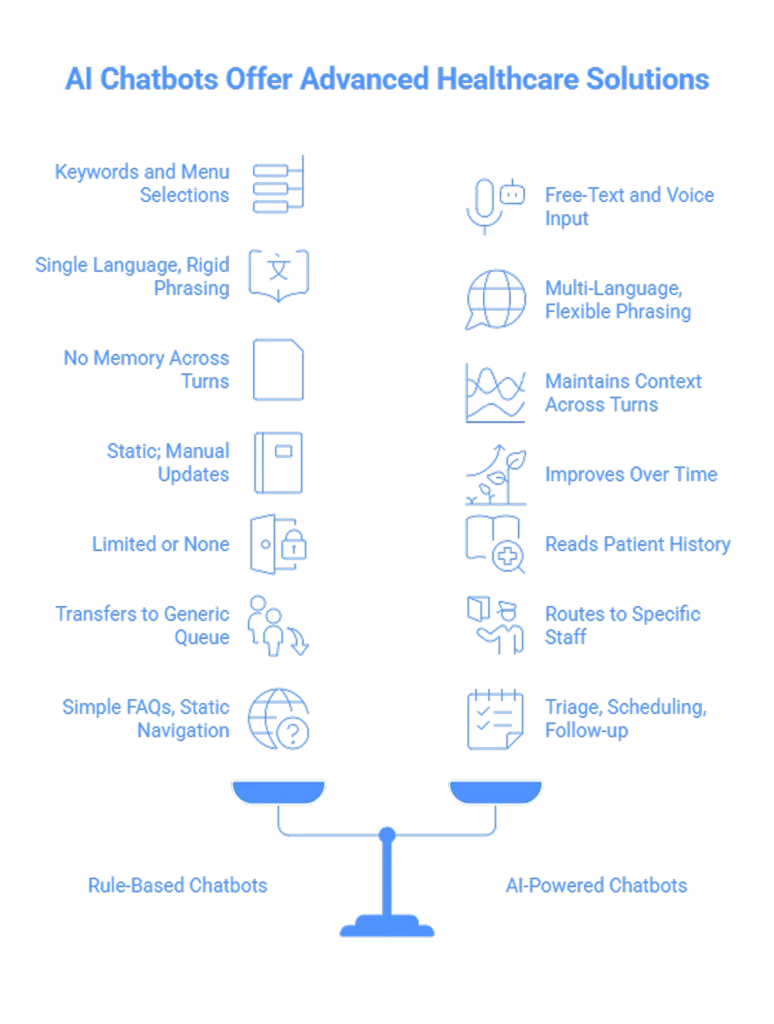
Rule-based chatbots follow pre-programmed decision trees. They respond to specific keywords or menu selections with fixed answers. They work well for simple, predictable tasks (FAQs, basic navigation) but break down when patients phrase questions in unexpected ways. They cannot learn, cannot handle ambiguity, and cannot maintain context across a multi-turn conversation.
AI-powered chatbots use natural language processing (NLP) and machine learning to understand intent, extract entities, and generate contextual responses. They handle free-text input, support multiple languages, improve over time as they process more interactions, and can escalate to human staff when they detect clinical complexity or patient distress. Modern AI chatbots can also integrate with EHR and CRM systems to personalise responses based on a patient’s history.
The practical difference: a rule-based bot might fail if a patient types “I need to see someone about my knee” instead of selecting “Orthopedics” from a menu. An AI chatbot understands the intent, maps it to the right department, checks provider availability, and offers to book.
How Do AI Chatbots Improve Patient Engagement? Core Use Cases
1. 24/7 Instant Support and Triage
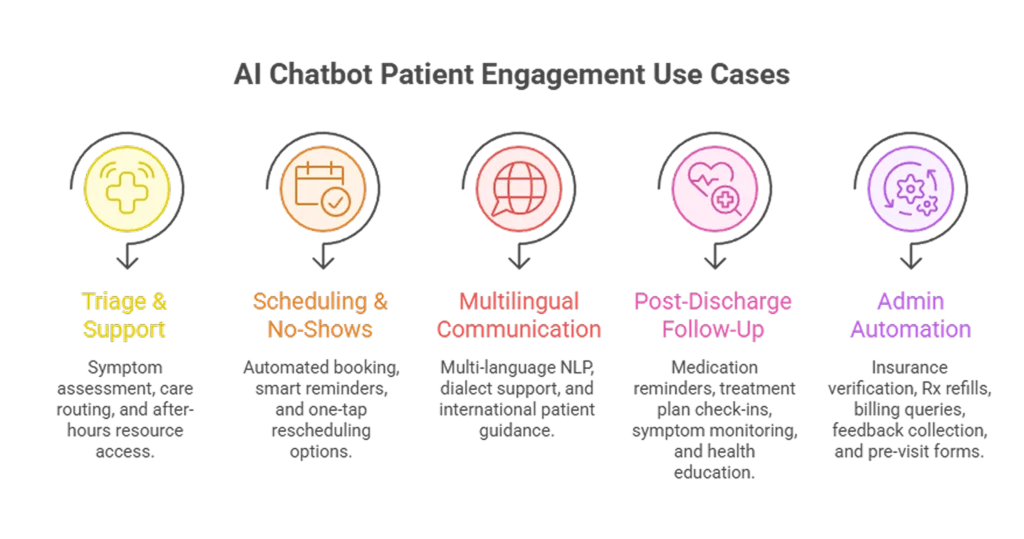
One of the most immediate advantages of AI chatbots is their ability to provide instant, around-the-clock assistance. Patients do not have to wait for business hours or navigate phone trees. A chatbot can answer questions about symptoms, medications, billing, insurance, or hospital services at any hour. For clinical queries, AI chatbots can perform preliminary triage, assessing symptom severity and routing patients to the appropriate care level (self-care guidance, GP appointment, urgent care, or emergency).
Mount Sinai Health System deployed an AI chatbot that handles basic triage questions and connects patients to relevant resources after hours. This reduces the burden on call centres and builds patient trust by ensuring help is always available.
2. Appointment Scheduling and No-Show Reduction
AI chatbots automate appointment bookings, send smart reminders, and help reschedule when needed. UCHealth in Colorado uses a chatbot named Livi, which integrates with their My Health Connection patient portal to streamline the booking process and reduce no-show rates. Livi helps patients schedule appointments, check symptoms, and access educational resources, handling thousands of interactions per month.
3. Multilingual Patient Communication
In regions with linguistic diversity, language is a barrier to effective healthcare. AI chatbots support multiple languages and dialects, making information accessible to a wider audience. Bumrungrad International Hospital in Thailand uses AI chatbots that offer multilingual support for international patients, guiding them through registration, pre-consultation FAQs, and post-visit summaries. This level of inclusivity ensures no patient is left behind due to language limitations.
4. Post-Discharge Follow-Up and Education
Engaging patients does not end when they leave the clinic. AI chatbots can follow up on treatment plans, send personalised medication reminders, and check on symptoms. These ongoing interactions also serve as a powerful tool for education, delivering easy-to-understand information that empowers patients to take charge of their health. Singapore General Hospital employs AI chatbots in its telehealth services to screen symptoms and route patients to appropriate departments before consultations, improving response time and reducing clinical staff workload.
5. Administrative Automation
Beyond patient-facing interactions, chatbots automate high-volume administrative tasks: insurance verification, prescription refill requests, billing queries, feedback collection, and pre-visit form completion. Each of these tasks, when handled manually, consumes staff time and introduces error risk. A single AI chatbot can handle thousands of these interactions simultaneously, freeing clinical and front-desk staff for higher-value work.
Real-World Case Studies: UCHealth, Mount Sinai, and Singapore General Hospital
UCHealth (Colorado, USA)
UCHealth implemented Livi, an AI chatbot integrated with its My Health Connection portal. Originally built to help patients find locations and providers, Livi quickly evolved as patients began asking about test results, doctor messages, and health-specific questions. The chatbot now handles thousands of interactions per month, improving patient access to information and reducing administrative overhead for staff. Livi bridges the gap between patients and their digital health tools, helping them accomplish tasks faster using systems that already exist.
When chatbot interactions feed into an AI hospital CRM, every patient query becomes actionable data: appointment requests route to scheduling, symptom reports trigger care workflows, and satisfaction signals inform service recovery.
Mount Sinai Health System (New York, USA)
Mount Sinai launched a chatbot capable of answering general medical questions, guiding users to care pathways, and connecting them to telemedicine options during non-clinical hours. The chatbot handles basic triage questions and routes patients to the right resources, reducing the burden on after-hours call centres and building patient trust through always-available support.
Singapore General Hospital
Singapore General Hospital employs AI chatbots in its telehealth services to screen symptoms and route patients to appropriate departments before consultations. This method helps prioritise care needs, reduce wait times, and ensure patients are well-prepared before meeting a provider either virtually or in person. The integration of triage chatbots with telehealth has been particularly effective in managing specialist referral workflows.
These case studies share a common pattern: AI chatbots succeed when they are integrated with existing clinical systems (EHR, scheduling engines, patient portals) and when they are designed to escalate to human staff at the right moment, not replace them.
How AI Healthcare Chatbots Work: Technical Architecture
A healthcare AI chatbot operates through a pipeline that converts patient input into an actionable response:
Natural Language Processing (NLP) parses the patient’s input (text or voice-to-text), identifies intent (book, ask, cancel, report symptom), and extracts entities (provider name, date, symptom type, medication name).
Dialogue management maintains conversation context across multiple turns. If a patient asks about a test result and then says “what does that mean?”, the system understands “that” refers to the previously discussed result, not a new query.
Back-end integration connects via APIs (including FHIR where applicable) to EHR systems, scheduling engines, billing platforms, and knowledge bases. The chatbot reads real-time data (appointment availability, lab results, insurance status) and writes actions back (book appointment, create refill request, log triage outcome).
Safety and escalation logic ensure the chatbot knows its limits. When it detects clinical urgency (chest pain, suicidal ideation), ambiguity it cannot resolve, or patient frustration, it transfers to a human agent with the full conversation context attached. No cold handoff.
HIPAA compliance requires end-to-end encryption, patient identity verification before PHI access, audit logging of every interaction, and secure data storage. The chatbot vendor must sign a Business Associate Agreement (BAA).
The Future of AI Chatbots in Patient Engagement
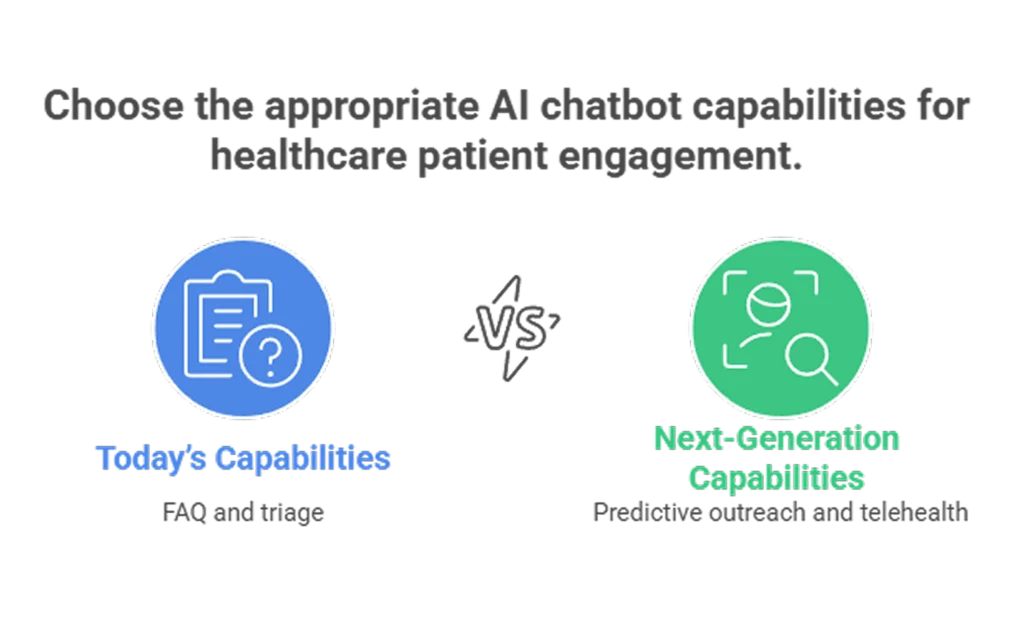
As technology continues to evolve, AI chatbots will become more predictive, more integrated, and more essential to delivering high-quality, patient-centred care. Key developments on the horizon include:
Predictive engagement. Chatbots that proactively reach out to patients based on risk signals (overdue screenings, medication non-adherence patterns, post-surgical recovery milestones) rather than waiting for patients to initiate contact.
Deeper EHR integration. Chatbots that access real-time clinical data to offer personalised, context-aware responses. A patient asking “When is my next appointment?” gets a specific answer, not a generic “Please call our office.”
Telehealth convergence. Chatbots that triage symptoms and smoothly hand off to a live video consultation when clinical assessment is needed. Explore Quad One’s AI telemedicine solution to see how chat-to-video workflows are already operational.
Ambient listening and documentation. AI chatbots that listen to patient-provider conversations (with consent), generate structured clinical notes, and push them to the EHR, reducing documentation burden on clinicians.
Emotional intelligence. Sentiment analysis that detects patient anxiety, confusion, or frustration and adjusts conversational tone, pace, and complexity in real time.
Conclusion
AI chatbots in healthcare are not a single-use tool. They are a versatile patient engagement layer that operates across the full care continuum: from pre-visit triage and scheduling through in-visit support to post-discharge follow-up and chronic disease management. What makes them powerful is their versatility. They are equally effective in busy US health systems like UCHealth as they are in forward-thinking Asian providers like Singapore General Hospital.
For healthcare leaders looking to enhance engagement, improve operational efficiency, and support patient-centered care, the time to invest in AI chatbot solutions is now.
Explore Quad One’s AI Chatbot Solutions. Book a demo to see how our AI-powered chatbot and WhatsApp bot connect triage, scheduling, follow-up, and patient engagement in one platform.
External References
Chatbots in Health Care
The future of patient engagement
AI hospital CRM systems are advanced patient relationship management platforms that use machine learning, predictive analytics, and generative AI to automate patient engagement, personalise care interactions, and reduce administrative burden. Unlike traditional CRMs that simply store patient records, AI-powered systems forecast patient needs, flag at-risk individuals, and continuously adapt communications based on clinical and behavioural data.
Smart healthcare is evolving quickly, and AI-driven CRM systems are changing how hospitals connect with patients. By combining AI with traditional CRM tools, hospitals can offer more personalised and efficient care. These systems make it easier to manage appointments, send reminders, and respond to patient queries in real time. They also help reduce manual work for staff while improving patient engagement. Overall, AI-powered CRM is helping hospitals create a more connected, responsive, and patient-focused healthcare experience.
Smart Healthcare: The Rise of AI-Driven CRM in Hospitals
Healthcare is becoming smarter as hospitals adopt AI-driven CRM systems. By combining automation with patient data, these tools enable more personalized, timely, and efficient care. They simplify appointment management, improve real-time communication, and reduce staff workload while enhancing patient engagement. Overall, AI-powered CRM is helping hospitals deliver more connected and patient-focused experiences.
What Is an AI Hospital CRM?
An AI Hospital CRM is a modern patient relationship management system that uses artificial intelligence to improve how hospitals interact with patients. Unlike traditional CRM platforms that mainly store patient data and track interactions, AI-powered CRMs go a step further by actively analyzing data, automating communication, and supporting smarter decision-making.
At its core, an AI Hospital CRM connects multiple systems such as Electronic Health Records (EHR), appointment scheduling, billing, and communication channels into one unified platform. This allows hospitals to get a complete view of each patient and deliver more personalized, timely, and efficient care.
With AI integrated into the system, hospitals can automate routine processes like appointment reminders, follow-ups, and patient queries. It also helps staff prioritize tasks, identify patient needs, and improve overall engagement. In simple terms, an AI Hospital CRM doesn’t just manage relationships.It enhances them by making every interaction more intelligent and meaningful.
How Does Generative AI Improve Hospital CRM?
Generative AI is reshaping hospital CRM by making patient interactions more natural, responsive, and efficient, while also taking over time-consuming routine tasks.
What Are the Key Benefits of an AI Hospital CRM?
- Personalized patient communication tailored to individual needs and preferences
- Automated responses and follow-ups for faster, consistent engagement
- Intelligent summarisation of medical data for quick insights and better decision-making
It also powers conversational tools like WhatsApp bots, allowing patients to book appointments, ask questions, and receive updates instantly, making healthcare access simpler, faster, and more intuitive.
What Is the Role of Predictive Analytics in Hospital CRM?
Predictive analytics brings a proactive approach to hospital CRM by helping healthcare providers anticipate patient needs rather than simply reacting to them. By analyzing historical and real-time data, AI can identify patterns and predict future outcomes, enabling hospitals to act at the right time.
For example, predictive models can identify patients who are likely to miss appointments, allowing hospitals to send timely reminders or reschedule in advance. It can also flag patients at risk of readmission or complications, helping care teams intervene early and improve outcomes.
Beyond risk prediction, predictive analytics helps personalize patient journeys. It enables hospitals to recommend the right treatments, follow-ups, and communication strategies based on individual patient profiles. This level of personalization not only improves care quality but also enhances patient satisfaction.
How Will IoT and Wearables Transform Hospital CRM?
The integration of IoT devices and wearable technology is taking hospital CRM to the next level by introducing real-time, continuous patient data into the system. Devices such as fitness trackers, heart rate monitors, and glucose sensors can now collect and transmit health data directly to healthcare providers.
This constant flow of information allows hospitals to monitor patients beyond the clinical setting. Instead of relying only on periodic visits, doctors can track patient health in real time and detect early signs of potential issues.
At the centre of this shift is the AI hospital CRM, a system that goes beyond traditional patient relationship management by embedding predictive analytics, risk stratification, and automated care coordination directly into hospital workflows. For hospitals operating under value-based payment models, bundled payments, or Accountable Care Organisation (ACO) contracts, an AI-driven CRM is no longer a nice-to-have; it is operational infrastructure and effectively acts as an AI compliance and regulatory guide for healthcare by aligning workflows with evolving standards.
What Are the Key Challenges of Traditional Hospital CRM?
Traditional hospital CRM systems often struggle to meet the expectations of modern healthcare due to their limited capabilities and lack of flexibility. While they are useful for storing patient data and tracking interactions, they fall short when it comes to delivering personalized and real-time experiences.
One of the biggest challenges is the lack of integration. Many traditional systems operate in silos, making it difficult to access and share data across departments. This can lead to delays, miscommunication, and incomplete patient information.
Another major limitation is the reliance on manual processes. Tasks like appointment scheduling, follow-ups, and data entry often require significant human effort, increasing the risk of errors and inefficiencies.
Personalization is also a weak point. Traditional CRMs typically use generic communication methods that fail to engage patients effectively. In today’s digital world, patients expect timely, relevant, and personalised interactions, which older systems struggle to provide.
The differences between legacy systems and AI-driven platforms make it clear how hospital CRM improves patient experience across every interaction.
How Quad One’s AI Hospital CRM Delivers This Today
While technologies like Generative AI, predictive analytics, and IoT-driven care are often seen as future innovations, Quad One is already bringing these capabilities into everyday hospital operations. Its AI Hospital CRM is designed to make patient engagement more intelligent, proactive, and seamless across every touchpoint.
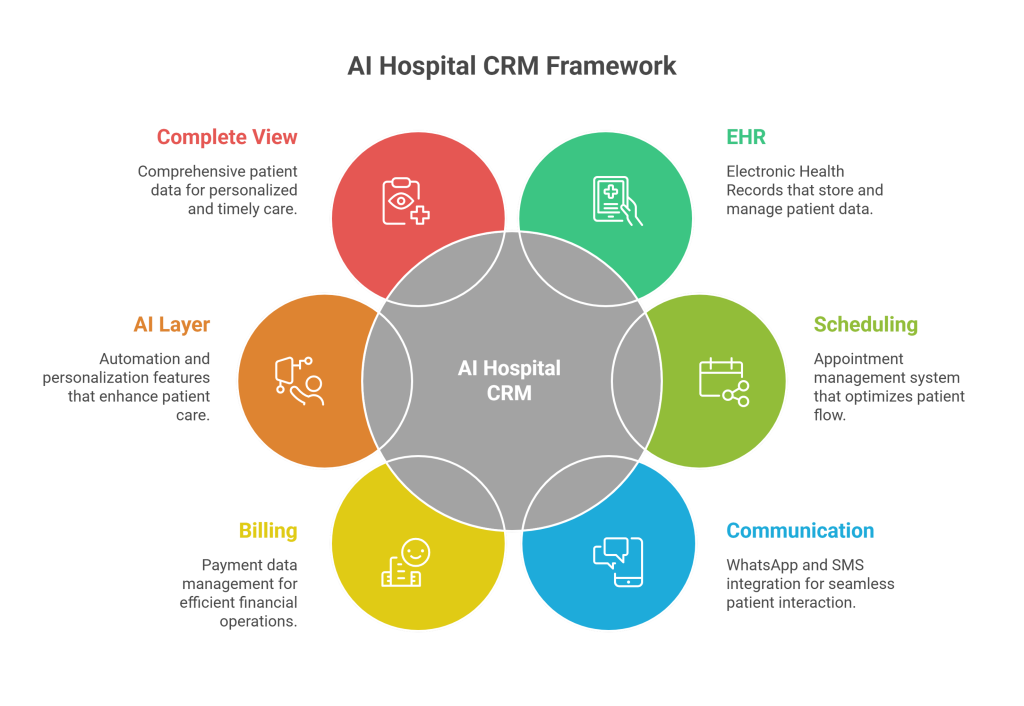
With built-in Generative AI, hospitals can automate conversations, send personalized messages, and respond to patient queries instantly across channels like WhatsApp, SMS, and email. This ensures consistent communication while reducing the workload on staff. At the same time, predictive analytics works in the background to identify trends such as patients likely to miss appointments or those who may require additional care, allowing teams to take timely action.
Quad One also supports integration with connected health systems and wearable devices, enabling real-time data to be part of patient interactions. This helps providers stay informed and deliver more proactive, continuous care. By eliminating manual processes and connecting data across departments, Quad One not only improves efficiency but also enhances the overall patient experience, with hospital CRM patient privacy and compliance built into every workflow rather than treated as an afterthought.
| Aspect | Traditional CRM | AI Hospital CRM |
| Data | Siloed, limited integration | Unified, Integrated data. |
| Communication | Generic, one-way | Personalized, two-way |
| Automation | Mostly manual | AI-driven automation |
| Response Time | Delayed | Instant |
| Personalization | Basic | Advanced |
| Engagement | Reactive | Proactive |
CONCLUSION:
Technologies like Generative AI, predictive analytics, and IoT integration are driving this shift in a meaningful way, and AI in CRM for value-based care is becoming a central enabler of better outcomes and smarter reimbursement.
By adopting intelligent CRM solutions like Quad One, healthcare providers can bring all these capabilities together into a single, unified system. This not only improves patient engagement through more relevant and timely interactions but also simplifies internal workflows and reduces operational strain. Ultimately, it allows hospitals to move beyond basic patient management and deliver truly personalized, connected, and high-quality care experiences that meet the demands of modern healthcare.
External References
Healthcare CRM Software Transformation with AI
AI-Enabled Customer Relationship Management Platforms for Patient Services in Health Care
