
Hospitals and clinics today increasingly rely on healthcare CRM software to manage patient communication, automate appointment reminders, support telehealth workflows, and improve long-term patient engagement.
However, managing patient data, communication, appointments, and internal workflows across multiple systems can quickly become complex and overwhelming. Disconnected platforms often lead to inefficiencies, delays, and missed opportunities to engage patients effectively. For healthcare providers, this not only impacts operational efficiency but also the quality of care delivered.
This is where Healthcare CRM systems come in. These platforms act as a centralized hub, helping providers organize patient information, automate communication, track interactions, and streamline workflows. From sending appointment reminders and managing patient queries to enabling targeted outreach and follow-ups, CRM systems make it easier to deliver consistent and personalized care at scale.
What is Healthcare CRM?
A Healthcare CRM is a software solution designed to manage patient interactions, data, and communication in a centralized platform. Unlike traditional CRMs used in sales, healthcare CRMs focus on improving patient experience, care coordination, and operational efficiency.
It brings together everything from appointment history and medical interactions to follow-ups and engagement to help healthcare providers offer more informed and personalized care.
Benefits of CRM in the Healthcare Industry
Implementing a CRM system in healthcare offers several advantages that directly impact both providers and patients.
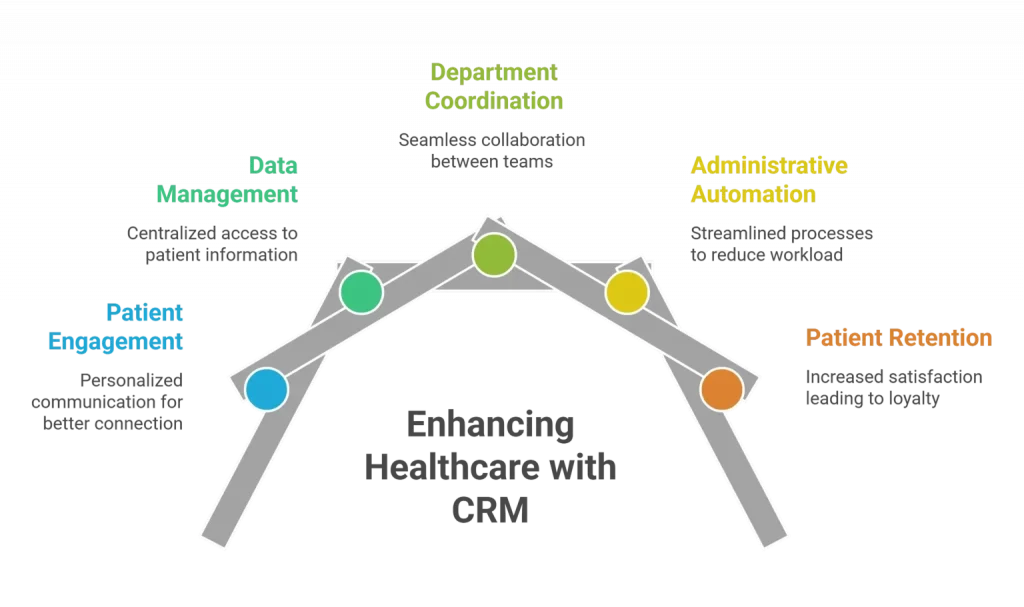
- Improved patient engagement through personalized communication
- Centralized data management for better accessibility
- Enhanced coordination between departments
- Reduced administrative workload through automation
- Higher patient retention and satisfaction
Overall, a CRM helps healthcare providers shift toward proactive and continuous patient care.
What Exactly Does Healthcare CRM Software Do?
Before evaluating any platform, it’s worth being clear on the core functions you should expect:
- Centralized patient records – All contact details, interaction history, appointment records, and notes in one place
- Automated appointment scheduling and reminders – Reduce no-shows with SMS, email, or WhatsApp notifications
- Lead and inquiry management -Capture patient inquiries from multiple channels and route them efficiently
- Post-care follow-ups – Automated check-ins after treatments or procedures
- EHR/EMR integration – Sync clinical data without double entry
- Analytics and reporting – Track engagement metrics, campaign performance, and team productivity
- Multi-channel communication – Email, SMS, WhatsApp, phone, all managed from a single dashboard
- HIPAA-compliant data handling – Non-negotiable for any healthcare organization in regulated markets
Top 10 Healthcare CRM
In today’s digital healthcare landscape, managing patient relationships efficiently is just as important as delivering quality care. A reliable CRM can help streamline communication, improve engagement, and simplify daily operations.
Here’s a curated list of the top healthcare CRM solutions that are making it easier for providers to stay connected, organized, and patient-focused.
1. Quad One Healthcare CRM
Quad One is one of the few CRMs built entirely around the healthcare workflow rather than adapted from a generic sales platform. This makes a meaningful difference in the terminology, the features, and the logic, all of which reflect how healthcare organizations actually operate.
Key Features
• Automated appointment scheduling and multi-channel reminders (SMS, email, WhatsApp)
• End-to-end patient journey tracking from first inquiry to post-treatment follow-up
• Lead management with source tracking for new patient acquisition
• WhatsApp Business integration for real-time patient communication
• Department-wise workflow management
• Customizable reports and engagement dashboards
Strengths
• Healthcare-native design with no need to adapt generic CRM features
Key Features
• Strong automation for routine patient touchpoints
• Suited for both single-specialty clinics and multi-department hospitals
• Shorter implementation time compared to enterprise-grade platforms
2. Salesforce Health Cloud
Salesforce Health Cloud is the gold standard for large healthcare systems that need a highly configurable, feature-rich platform. Built on Salesforce’s CRM infrastructure, it delivers AI-driven insights, unified patient profiles, and sophisticated care coordination tools.
Key Features
• Unified patient profile consolidating clinical and non-clinical data
• AI-powered insights via Salesforce Einstein for predictive care
• Patient journey mapping and milestone tracking
• Care team collaboration tools with role-based access
• HIPAA-compliant data architecture
Strengths
• Unmatched depth of customization and configurability
• Powerful AI and analytics capabilities
• Extensive third-party integration ecosystem
3. Microsoft Dynamics 365
Microsoft Dynamics 365 is a natural choice for providers already using Microsoft 365, Teams, or Azure. The seamless integration across these platforms means your CRM, email, collaboration tools, and cloud infrastructure all work in sync, significantly reducing friction for staff.
Key Features
• Native integration with Outlook, Teams, SharePoint, and Azure
• Patient engagement workflows and automated follow-ups
• Advanced analytics through Power BI
• AI-assisted insights and predictive modeling
• Customizable workflows using Power Automate
• Secure, cloud-based data management with Azure compliance tools
Strengths
• Exceptional interoperability within the Microsoft ecosystem
• Familiar interface reduces staff training time
• Powerful analytics and reporting through Power BI
4. Zoho CRM
Zoho CRM is the go-to choice for healthcare providers who need solid CRM functionality without the enterprise price tag. It’s affordable, easy to set up, and offers a wide range of features that cover most day-to-day patient management needs.
Key Features
• Patient record management and contact tracking
• Automated follow-up sequences and reminders
• Multi-channel communication (email, phone, social)
• Workflow automation for routine administrative tasks
Strengths
• Very competitive pricing, strong value for the feature set
• Intuitive interface with a manageable learning curve
• Wide range of integrations through Zoho Marketplace
5. HubSpot CRM
HubSpot has built its reputation on simplicity. It’s one of the easiest CRMs to get up and running, making it a smart starting point for organizations making their first move away from spreadsheets and scattered inboxes.
Key Features
• Contact and patient record management
• Email marketing and automation sequences
• Appointment scheduling integration
• Live chat and communication tracking
Strengths
• Extremely user-friendly, minimal training required
• Strong free tier makes it accessible for tight budgets
• Excellent library of integrations with third-party tools
6. LeadSquared
LeadSquared positions itself at the intersection of CRM and marketing automation, making it particularly effective for hospitals and specialty clinics actively growing their patient base. It’s built to capture inquiries from every channel and convert them into confirmed appointments efficiently.
Key Features
• Multi-channel lead capture (web forms, ads, phone, social media)
• Automated lead distribution and routing to the right teams
• Patient journey tracking from first touchpoint to appointment
• SMS, email, and WhatsApp automation for follow-ups
• Campaign analytics and ROI reporting
Strengths
• Exceptional lead management and conversion tracking
• Built-in marketing automation reduces dependence on separate tools
• Strong reporting on acquisition channels and campaign performance
7. Freshsales
Freshsales brings AI-driven automation to patient relationship management in a package that doesn’t require a large technical team to operate. It automates the routine so your staff can focus on what actually requires a human touch.
Key Features
• AI-powered lead scoring and contact prioritization
• Built-in phone, email, and chat communication tools
• Automated workflow sequences for follow-ups and reminders
• Visual deal/pipeline management adapted for patient journeys
• Detailed activity tracking and engagement analytics
Strengths
• Strong AI automation that reduces manual workload meaningfully
• Clean, modern interface with good mobile support
• Built-in communication tools mean fewer third-party add-ons are needed
8. Pipedrive
Pipedrive’s defining characteristic is its visual pipeline. This drag-and-drop board makes it easy to see where every patient or lead sits in your workflow at any given moment. Healthcare teams use this logic to track patients through inquiry, consultation, treatment, and follow-up stages.
Key Features
• Visual kanban-style pipeline for tracking patient or lead status
• Customizable stages to match your specific workflow
• Automated activity reminders and follow-up prompts
• Email integration and communication tracking
• Reporting on conversion rates and team performance
Strengths
• Exceptionally easy to use, teams adopt it quickly with minimal training
• Visual pipeline gives immediate clarity on workflow bottlenecks
• Lightweight and fast doesn’t feel bloated or over-complicated
9. Keap
Keap (formerly Infusionsoft) is built for small businesses, combining contact management with marketing automation in a single, cohesive platform. For independent practitioners or small group practices, it helps a lean team punch above its weight.
Key Features
• Contact and patient management with detailed interaction history
• Automated email and SMS sequences for appointment reminders and follow-ups
• Built-in marketing automation with campaign builder
• Payment and invoice integration
• Lead capture forms and landing page builder
• Scheduling integration for appointment booking
Strengths
• Combines CRM and marketing automation, reducing tool sprawl
• Easy to set up automated patient communication campaigns
• Good choice for solo practitioners or small teams without dedicated IT support
10. Creatio CRM
Creatio takes a low-code approach that sets it apart from most CRMs on this list. Instead of adapting a fixed feature set to your processes, you can build and modify workflows directly within the platform, no developer required. This makes it particularly valuable for healthcare organizations with non-standard operational models.
Key Features
• Low-code workflow builder for custom process design
• Case management for complex, multi-step patient interactions
• Omnichannel communication management
• AI-assisted analytics and process recommendations
• Integration capabilities with EHR, billing, and third-party systems
Strengths
• Exceptional flexibility to build workflows that match exactly how your team operates
• Low-code design means customization doesn’t require a development team
• Strong case management tools for complex patient journeys.
Below is the tabular Column, which states the major difference among these Healthcare Companies
Healthcare CRM Software Comparison: Features, AI & Best Use Cases
| Platform | Profile | Best for | Core strength | Automation & AI | Standout advantage | Key limitation |
|---|---|---|---|---|---|---|
| Quad One | Healthcare-native | Clinics and hospitals wanting a no-adaptation CRM | End-to-end patient journey with WhatsApp, SMS, and email reminders | Automates reminders, follow-ups, and department workflows | Only CRM built around healthcare from the ground up | Fewer third-party integrations than enterprise rivals |
| Salesforce Health Cloud | Enterprise | Large health systems needing deep customization | Unified patient profile across clinical and non-clinical data | Einstein AI for predictive care and next-best actions | Most configurable platform available | High cost and admin-heavy |
| Microsoft Dynamics 365 | Microsoft ecosystem | Organizations already using Microsoft tools | Patient workflows synced with Teams and Outlook | Power Automate + Microsoft AI insights | Familiar interface reduces training time | Weak fit outside Microsoft ecosystem |
| Zoho CRM | SMB / budget | Cost-conscious clinics | Records, follow-ups, and communication tools | Workflow automation with lighter AI | Strong value for money | Not healthcare-specific |
| HubSpot CRM | SMB / budget | First-time CRM adopters | Email automation and scheduling | Light AI + email sequences | Easy onboarding and free tier | Gets expensive at scale |
| LeadSquared | Marketing-first | Growing clinics focused on acquisition | Multi-channel lead capture and routing | Built-in WhatsApp, SMS, email automation | Strong lead-to-appointment conversion | Overkill for low-growth clinics |
| Freshsales | AI-led | Automation-focused teams | AI-scored leads and prioritization | Automated sequences and AI scoring | Built-in phone, email and chat | Less advanced than Salesforce |
| Pipedrive | Visual pipeline | Teams needing stage visibility | Drag-and-drop workflow boards | Automated reminders | Very fast adoption | Limited clinical workflow depth |
| Keap | SMB / budget | Independent practitioners | CRM + marketing + billing | Campaign automation | Reduces tool sprawl | Can feel limiting as teams grow |
| Creatio CRM | Low-code | Custom workflow organizations | Low-code process builder | AI recommendations and alerts | Highly customizable | Setup takes time |
Conclusion:
In today’s fast-evolving healthcare environment, adopting a robust CRM system is no longer optional; it’s essential for delivering efficient, patient-centered care. From managing complex patient data and streamlining daily operations to enhancing engagement and enabling personalized services, healthcare CRM solutions play a critical role in improving both clinical and operational outcomes.
The right CRM not only simplifies workflows but also empowers healthcare providers with real-time insights, better communication tools, and stronger marketing capabilities. When combined with evolving digital solutions like telehealth and telemedicine, CRM systems help create a more connected, responsive, and accessible healthcare ecosystem.
External References
Top 5 CRM Software For Healthcare
In today’s healthcare landscape, patient privacy and regulatory compliance are paramount. As hospitals and healthcare providers increasingly adopt digital technologies, the responsibility to protect sensitive patient data grows exponentially. Hospital CRM systems sit at the intersection of operational efficiency and data security: they centralise patient data, streamline communication, and manage engagement workflows, but they also become a primary custodian of Protected Health Information (PHI).
A hospital CRM that cannot demonstrate AES-256 encryption, role-based access control (RBAC), comprehensive audit trails, and automated HIPAA compliance checks is a liability, not an asset. This guide serves as an AI healthcare compliance regulatory guide, explaining the security architecture that separates compliant CRM platforms from the rest, covering HIPAA and GDPR requirements in detail, and walking through real-world deployments where hospitals achieved zero breaches and measurable cost reductions.
Security Architecture at a Glance
A HIPAA-compliant hospital CRM delivers: AES-256 encryption for data at rest and TLS 1.2+ for data in transit; role-based access controls limiting PHI visibility to authorised personnel only; immutable audit trails logging every access, modification, and export; automated compliance checks against HIPAA, GDPR, and state-level regulations; consent management surfacing patient preferences at the point of communication; and a signed Business Associate Agreement (BAA) with the CRM vendor. One US provider achieved zero data breaches and a 25% reduction in administrative compliance costs after deploying a HIPAA-compliant CRM with these capabilities.
How Does Hospital CRM Protect Patient Privacy?
Healthcare CRM systems are specifically designed to help hospitals and clinics manage patient relationships efficiently. But their importance goes beyond operational efficiency. They are vital tools in ensuring patient privacy. Here are the core privacy-protection mechanisms built into a compliant hospital CRM.
AES-256 Data Encryption
One of the most critical features of a healthcare CRM for patient privacy is data encryption. Healthcare CRMs use AES-256 encryption to safeguard sensitive patient information. This encryption ensures that data remains unreadable during transmission (in transit, protected by TLS 1.2 or higher) and when stored on servers (at rest). Even if unauthorised individuals gain access to the data, they cannot decipher it without the correct decryption keys. AES-256 is the industry gold standard, providing a level of protection that is practically unbreakable with current computing technology.
Role-Based Access Control (RBAC)
RBAC ensures that only authorised personnel can view or modify specific categories of patient data. A front-desk coordinator sees scheduling information but not clinical notes. A billing specialist accesses financial records but not diagnostic reports. A physician sees the full clinical record. This “minimum necessary” principle, mandated by HIPAA, is enforced at the system level, not left to individual judgment.
RBAC also extends to communication: a CRM should surface consent status at the moment of send, preventing a staff member from messaging a patient who has opted out of a specific channel. This mechanism not only supports patient privacy but also facilitates better compliance with HIPAA requirements.
Strong access controls are also foundational to improving patient experience through hospital CRM — patients who trust that their data is secure are more willing to engage with digital communication channels, complete pre-visit forms, and share feedback.
Audit Trails and Continuous Monitoring
Hospital CRM maintains audit trails that record every access or modification made to patient data. These logs capture who accessed the data, when they did it, what changes were made, and from which device or location. Continuous monitoring helps identify unauthorised access, misuse, or potential threats, ensuring that healthcare organisations can respond quickly to resolve security issues.
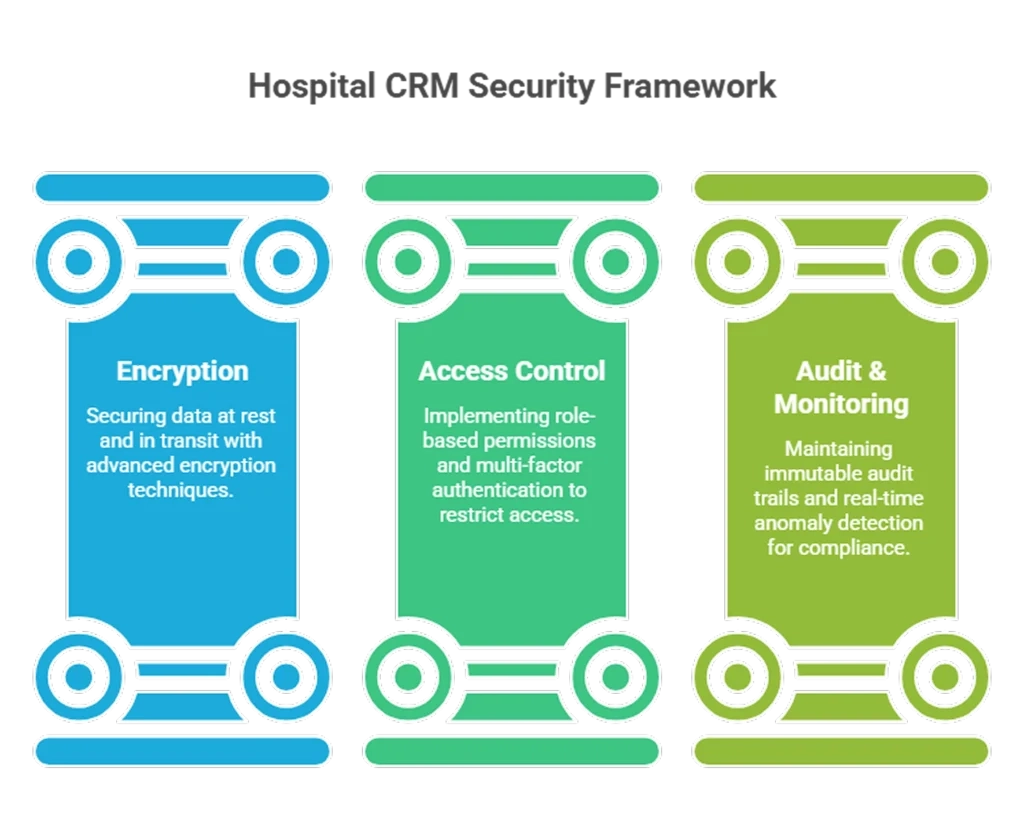
Audit logs also provide a transparent and traceable record for compliance purposes. Hospitals can produce these logs during HIPAA audits to demonstrate adherence to regulatory standards and protect against fines. Under the 2026 HIPAA rule updates, the Office for Civil Rights (OCR) will focus on verifiable technical implementation rather than policy documentation, making functioning audit systems more important than ever.
How Does Hospital CRM Ensure HIPAA Compliance?
The Health Insurance Portability and Accountability Act (HIPAA) is one of the most stringent regulations governing patient privacy and data protection in the US. A hospital CRM ensures HIPAA compliance through several integrated mechanisms.
Automated Compliance Checks
A HIPAA-compliant CRM automates the verification of regulatory requirements across every patient interaction. Before a message is sent, the system checks consent status, communication channel permissions, and PHI exposure levels. Non-compliant actions are blocked before they happen, not flagged after the fact. This is automated policy enforcement, not manual checklist management.
Business Associate Agreement (BAA)
Any CRM vendor that stores, processes, or transmits PHI on behalf of a hospital must sign a BAA. This legally binding agreement defines the vendor’s responsibilities for safeguarding patient data, specifies permissible uses and disclosures, sets breach notification timelines, and establishes subcontractor obligations. Without a signed BAA, the CRM platform is not legally permitted to handle PHI. This is a non-negotiable threshold in vendor selection.
HIPAA Privacy, Security, and Breach Notification Rules
The CRM must address all three HIPAA rule categories. The Privacy Rule governs how PHI can be used and disclosed, requiring minimum-necessary data access and patient rights management. The Security Rule mandates technical safeguards (encryption, authentication, audit controls, integrity controls, transmission security) for electronic PHI. The Breach Notification Rule requires timely notification to affected individuals and HHS if a breach occurs, making detection and incident response capabilities essential CRM features.
2026 HIPAA Rule Updates
Starting in late 2026, all healthcare organisations must implement verifiable technical safeguards rather than simply documenting policies. Encryption at rest and in transit becomes explicitly mandatory (not just “addressable”). MFA becomes required for all systems accessing ePHI. Annual penetration testing, biannual vulnerability scans, and quarterly backup restoration tests are now required compliance activities. Hospital CRMs must be built to meet these enhanced standards.
How Does Hospital CRM Ensure GDPR Compliance?
For hospitals operating in or serving patients from the European Union, the General Data Protection Regulation (GDPR) adds a second compliance layer on top of HIPAA. A GDPR-compliant hospital CRM must address explicit consent management, data subject rights (access, rectification, erasure, portability), data processing agreements with all third-party processors, privacy-by-design architecture, and Data Protection Impact Assessments (DPIAs) for high-risk processing activities.
In practice, this means the CRM must capture and store explicit patient consent for each category of data processing, allow patients to view, export, or request deletion of their data through self-service or staff-assisted workflows, and maintain records of processing activities that demonstrate compliance to supervisory authorities.
For hospitals using messaging platforms to communicate with patients, GDPR and HIPAA compliance extend to every channel. See how patient data privacy in WhatsApp-based healthcare communication is managed through end-to-end encryption, consent tracking, and dual-layer protection systems.
How Does Hospital CRM Improve Efficiency While Maintaining Security?
Security and operational efficiency are not trade-offs in a well-architected hospital CRM. They are mutually reinforcing.
Automated appointment scheduling and reminders operate through encrypted channels, reducing missed appointments while maintaining HIPAA-compliant communication. The CRM checks consent and channel preference before every send.
Centralised patient data means clinical, scheduling, billing, and communication records are stored in a single, encrypted repository with RBAC. Staff spend less time searching across disconnected systems, and every access is logged.
EHR integration via FHIR APIs ensures that data flows securely between clinical and engagement systems without manual re-entry or unencrypted exports. The CRM reads from and writes to the EHR through standardised, auditable interfaces.
AI-powered anomaly detection identifies unusual patterns in patient data access (after-hours queries, bulk exports, access from unfamiliar devices) and alerts IT teams in real time. Machine learning algorithms continuously learn from past security events, improving the system’s ability to predict and prevent future threats.
Telehealth integration extends these security controls to remote consultations. Hospital CRM systems ensure that voice, video, and messaging interactions remain encrypted and compliant whether the patient is in the facility, at home, or on a mobile device.
What Do Real-World Hospital CRM Compliance Deployments Look Like?
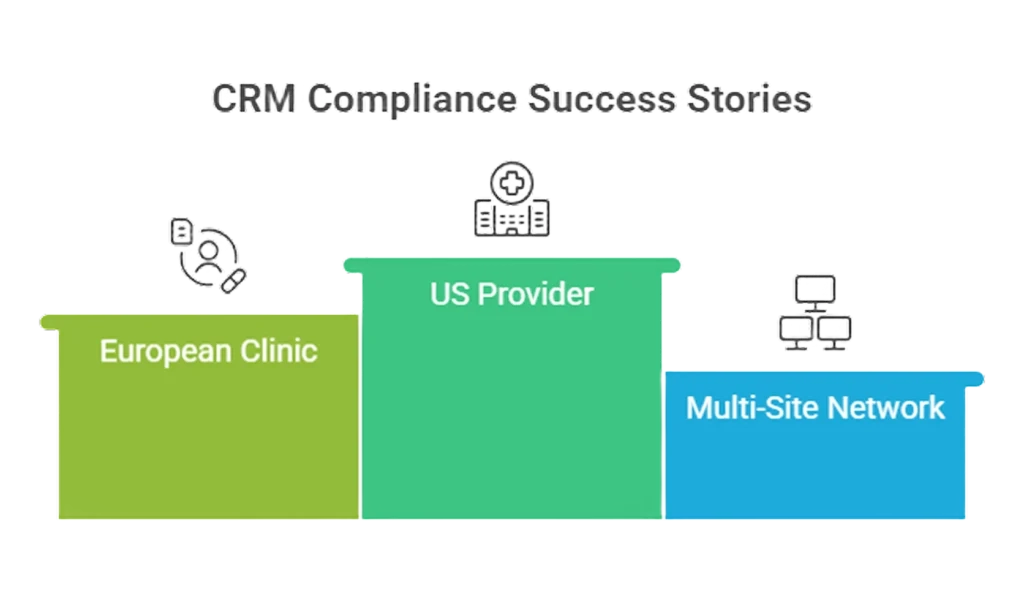
US Healthcare Provider: Zero Breaches, 25% Cost Reduction
A US-based healthcare provider implemented a HIPAA-compliant CRM to centralise patient data, streamline communication, and automate compliance checks. The CRM’s automated compliance engine ensured that every patient interaction adhered to HIPAA standards without manual review. Audit trails provided full transparency during regulatory audits. The result: zero data breaches since deployment and a 25% reduction in administrative compliance costs.
European Clinic: GDPR-Compliant Patient Data Management
A European clinic integrated a healthcare CRM for patient privacy, ensuring compliance with GDPR. The CRM allowed the clinic to store patient data securely while managing explicit consent forms for data processing. Patients could access, modify, or request deletion of their data through a self-service portal. The clinic passed its GDPR supervisory authority audit with no findings.
Multi-Site Hospital Network: Telehealth + CRM Security
Hospital CRM is increasingly integrated with telemedicine platforms and remote monitoring technologies, enabling healthcare providers to securely manage patient interactions and data remotely. One multi-site network deployed a CRM that maintained HIPAA-compliant security across in-person, phone, and virtual consultation channels. Encrypted communication, consent verification, and audit logging operated identically regardless of modality.
How Does Hospital CRM Manage Patient Consent?
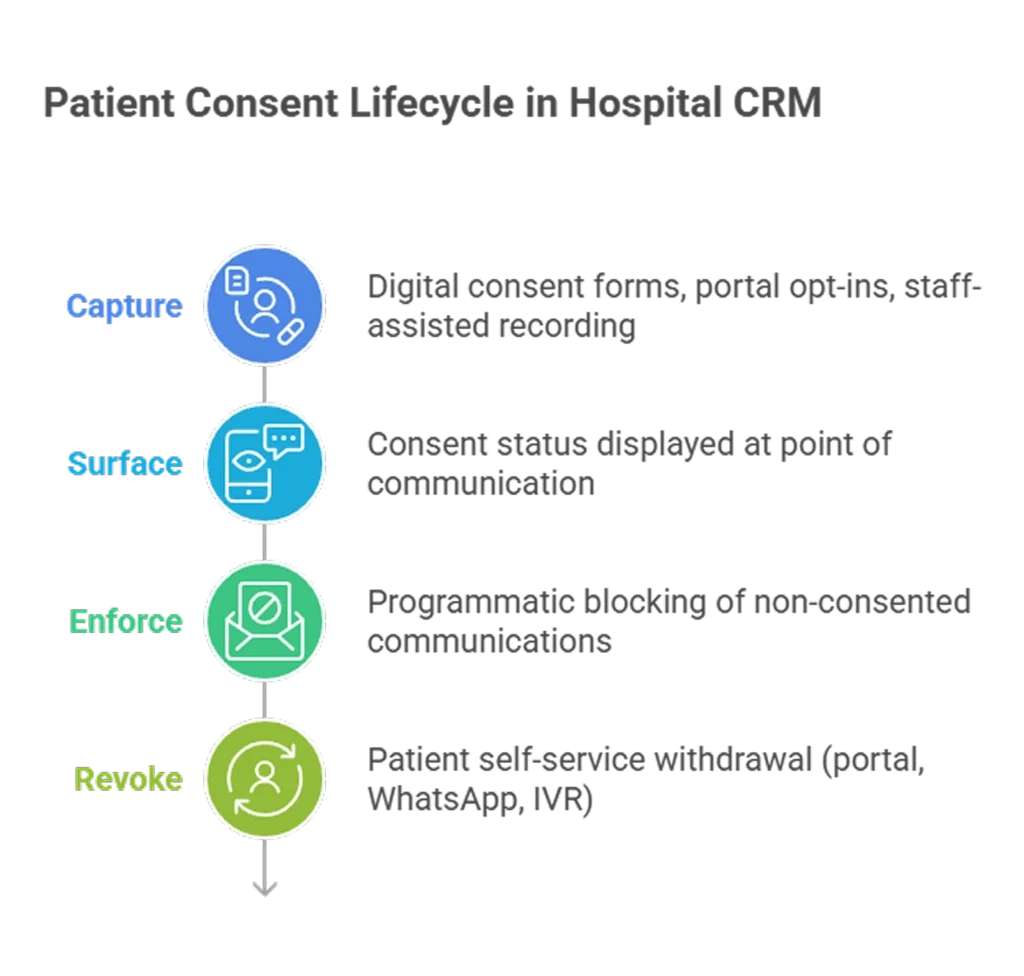
Patient consent management is a critical but often under-architected capability. A compliant hospital CRM must capture, store, surface, and enforce consent preferences across every communication channel and data processing activity.
Capture: The CRM records explicit consent for each category (appointment reminders, marketing, research, data sharing) through digital forms, patient portal opt-ins, or staff-assisted workflows. Consent records include timestamp, method, and scope.
Surface: At the moment a staff member or automated workflow initiates a patient communication, the CRM displays the patient’s current consent status for that specific channel and purpose. Non-consented sends are blocked.
Enforce: The system enforces consent rules programmatically. A patient who has consented to SMS appointment reminders but opted out of email marketing will only receive SMS, and only for appointment purposes. No manual override is permitted without a documented clinical justification.
Revoke: Patients can withdraw consent at any time through self-service (patient portal, WhatsApp, IVR) or staff-assisted channels. Revocation takes effect immediately and is logged in the audit trail.
The Future of AI in Hospital CRM: Privacy and Compliance
As technology continues to evolve, healthcare CRM will remain a cornerstone of secure, compliant patient care. Emerging developments include:
AI-powered threat detection that moves beyond rule-based monitoring to behavioural analysis, identifying insider threats and sophisticated attack patterns before a breach occurs.
Zero-trust architecture where every access request is verified regardless of network location, replacing perimeter-based security with continuous authentication.
Privacy-enhancing technologies (PETs) such as differential privacy and federated learning allow AI models to train on patient data without exposing individual records.
Automated regulatory tracking that updates compliance rules in real time as HIPAA, GDPR, and state-level regulations evolve, ensuring the CRM never falls behind current requirements.
Conclusion
By integrating advanced security features such as AES-256 encryption, role-based access controls, immutable audit trails, and automated compliance checks, healthcare organisations can safeguard sensitive patient data while enhancing operational efficiency. For hospital administrators, compliance officers, and IT managers, investing in a robust, HIPAA-compliant CRM is no longer optional. It is a necessity to protect both patient data and the organisation’s reputation.
As reimbursement models shift, AI in CRM is driving better value-based care outcomes by aligning secure patient engagement with measurable clinical and financial performance.
Explore Quad One’s AI-powered Hospital CRM — purpose-built for healthcare with HIPAA compliance, AES-256 encryption, RBAC, and audit-ready reporting out of the box.
Book a compliance demo to see how the security architecture works in practice
The healthcare sector has seen a decisive shift toward value-based care, where reimbursement hinges on patient outcomes rather than the volume of services delivered. At the centre of this shift is the AI hospital CRM, a system that goes beyond traditional patient relationship management by embedding predictive analytics, risk stratification, and automated care coordination directly into hospital workflows. For hospitals operating under value-based payment models, bundled payments, or Accountable Care Organisation (ACO) contracts, an AI-driven CRM is no longer a nice-to-have; it is operational infrastructure.
Quad One’s AI-powered hospital CRM is purpose-built for this environment, connecting clinical data, engagement workflows, and outcome measurement in a single platform. It also acts as an AI healthcare compliance guide in practice, helping hospitals align clinical workflows, reporting, and data usage with regulatory expectations. This guide covers how AI hospital CRM improves outcomes in value-based care settings
This guide covers how AI hospital CRM improves outcomes in value-based care settings, from risk stratification and readmission reduction to personalised care plans, care coordination, ACO reporting, and measurable ROI.
Key Takeaways
- AI-driven risk stratification identifies high-risk patients before they become high-cost patients.
- Hospitals using AI hospital CRM for readmission prevention have reported up to 25% fewer chronic-disease readmissions.
- Personalised AI care plans increase patient satisfaction scores by up to 30% compared to non-personalised approaches.
- ACO and bundled-payment reporting becomes automated, not manual, when the CRM tracks outcomes natively.
- ROI materialises through lower readmission penalties, reduced administrative labour, and improved quality-incentive payments.
What Is Value-Based Care and Why Does AI Hospital CRM Matter?
Value-based care (VBC) is a reimbursement model that rewards hospitals for the quality and efficiency of care delivered, not the number of procedures performed. Under VBC contracts, including Medicare’s Hospital Value-Based Purchasing (VBP) program, bundled payments, and ACO shared-savings arrangements, hospitals earn or lose revenue based on clinical outcomes, patient satisfaction, and cost reduction.
Traditional hospital CRMs were designed for scheduling and marketing. They lack the predictive intelligence required to manage risk, coordinate multidisciplinary care, and report outcomes at the granularity VBC demands. An AI hospital CRM closes this gap. It ingests clinical, demographic, and behavioural data; applies machine learning models for risk prediction; automates outreach and follow-up workflows; and generates audit-ready outcome reports for payer contracts.
The result: hospitals can shift from reactive care delivery to proactive population health management, which is the operational foundation of every successful VBC programme.
AI-Powered Risk Stratification: Identifying High-Risk Patients Early
Integrating AI in healthcare CRMs enhances predictive analytics capabilities, allowing providers to identify at-risk patient populations proactively. This enables timely intervention, essential in preventive care strategies, and significantly reduces hospital readmissions while improving long-term outcomes.
AI-driven algorithms analyse extensive patient data, including medical history, lifestyle factors, lab trends, social determinants, and previous hospital utilisation patterns, to predict health risks accurately. Unlike static scoring models, AI risk stratification updates dynamically as new data flows in: a patient whose blood pressure trends upward over three consecutive visits gets flagged before they present at the emergency department.
With these insights, healthcare providers can focus resources more efficiently, ensuring that the right patients receive timely preventive measures. One notable healthcare institution implemented AI-driven risk stratification through their hospital CRM, resulting in a 25% decrease in hospital readmissions for chronic diseases. This improvement was achieved by identifying high-risk patients early, delivering personalised interventions, and closely monitoring patient progress.
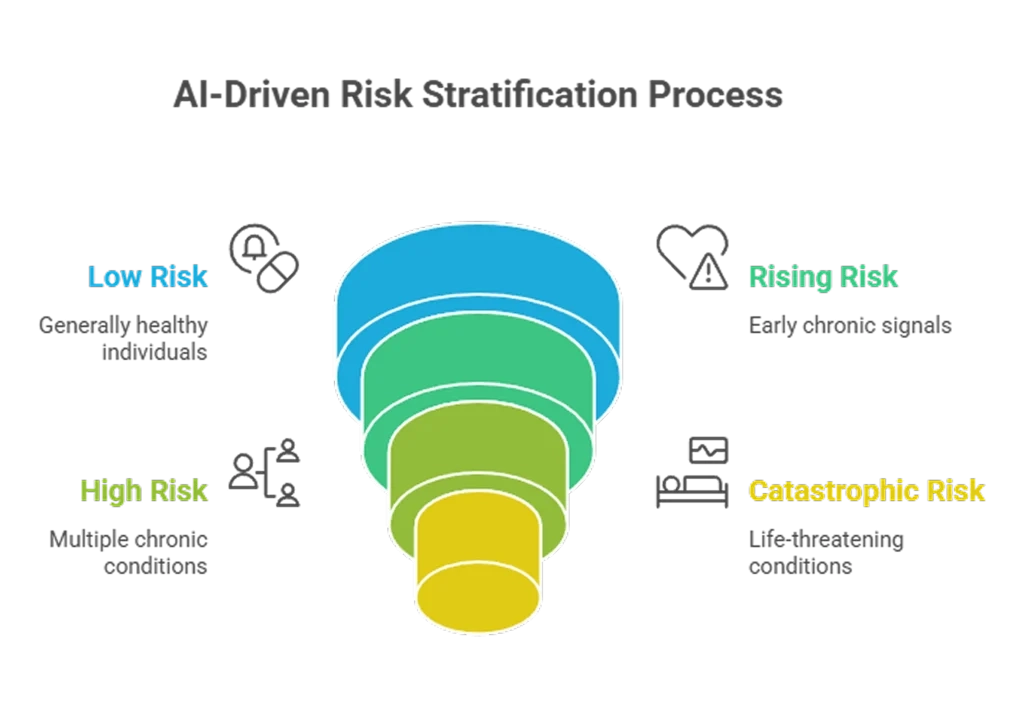
Risk tiers typically break into four groups: low-risk (healthy, preventive care focus), rising-risk (early chronic signals, early intervention), high-risk (multiple chronic conditions, coordinated ongoing care), and catastrophic-risk (life-threatening conditions, intensive specialised management). The CRM assigns care pathways and outreach cadences based on each tier.
How Does AI Hospital CRM Reduce Readmissions?
Readmission penalties under Medicare’s Hospital Readmissions Reduction Program (HRRP) cost US hospitals hundreds of millions of dollars annually. For VBC-contracted hospitals, every avoided readmission directly improves shared-savings calculations and
quality scores. AI hospital CRM attacks readmissions at three points: before discharge, during the transition window, and in the weeks that follow.
Pre-Discharge: Structured Handoff Workflows
The CRM ensures that discharge instructions, medication reconciliation summaries, and follow-up appointment details are delivered through the patient’s preferred channel before they leave the facility. Teach-back confirmation prompts verify the patient understood the plan. If confirmation is not received, the system escalates to a care coordinator.
Transition Window (0–72 Hours)
An automated 48-hour post-discharge call or message checks symptom status, medication access, and home-care setup. AI models flag patients whose responses indicate elevated re-hospitalisation risk, such as reported difficulty obtaining medications or worsening symptoms, and route them to a nurse callback queue.
Ongoing Follow-Up (7–30 Days)
Weekly automated check-ins, refill reminders, and referral-to-appointment tracking keep the patient on track. The CRM monitors whether scheduled follow-ups are attended and, if not, triggers escalation. For chronic-disease patients, the system tracks lab values and vital trends, alerting care teams to intervening deterioration before it leads to an ED visit.
For a broader view of how CRM-powered workflows operate across the full patient journey, see our guide on hospital CRM patient experience improvements.
How Do AI-Driven Personalised Care Plans Improve Outcomes?
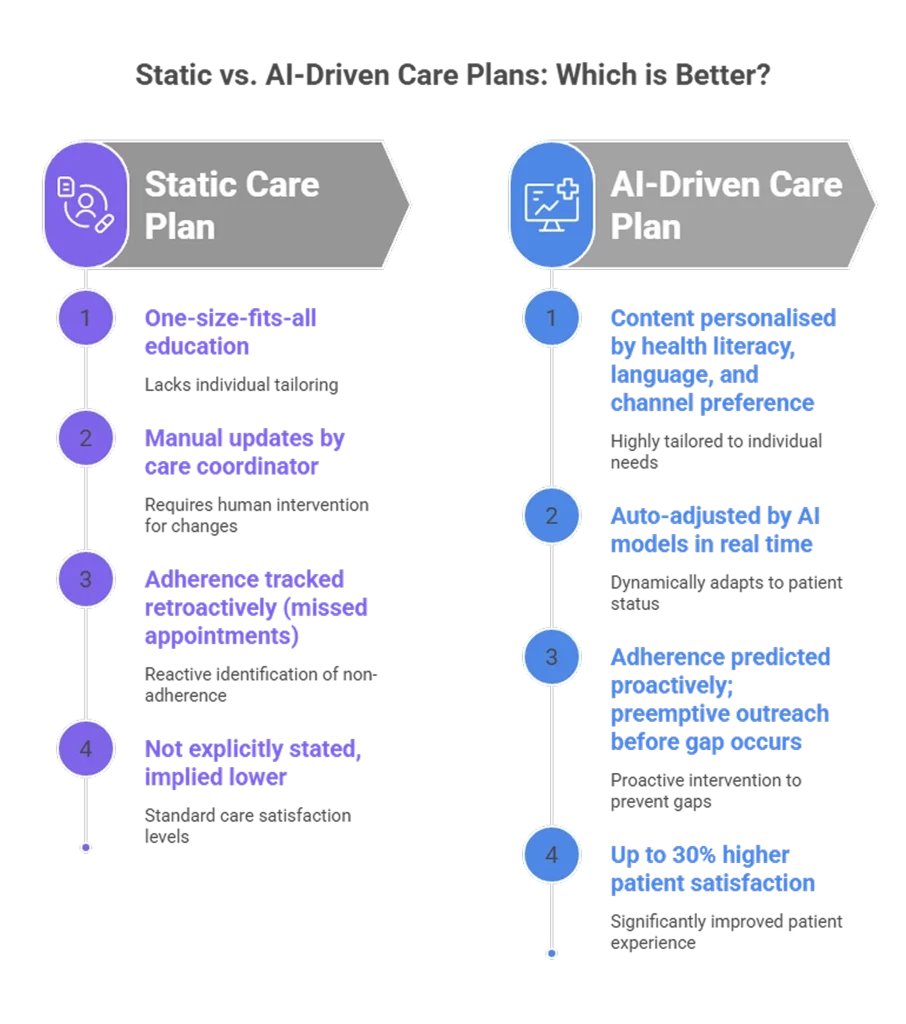
Personalised patient care plans are becoming an essential component of value-based care. By leveraging AI insights from CRM data, hospitals can create highly tailored care plans that address individual patient needs, preferences, and health goals. These AI-driven personalised care plans enhance patient engagement, treatment adherence, and ultimately improve healthcare outcomes.
Here is how the AI layer adds value beyond what traditional care planning delivers:
Dynamic plan adjustment. Unlike static care plans written at discharge, AI-driven plans update continuously as new data arrives. A patient’s A1C result worsens? The CRM automatically adjusts outreach frequency, adds dietary education content, and alerts the endocrinologist.
Behavioural and preference modelling. The AI analyses which communication channels, message times, and content types drive the highest engagement for each patient segment. A patient who consistently ignores emails but responds to WhatsApp messages gets routed to WhatsApp automatically.
Adherence prediction. Machine learning models predict which patients are likely to fall off their care plan based on historical patterns, enabling preemptive outreach before a gap occurs rather than reactive follow-up after one.
Research indicates that personalised patient care significantly improves both satisfaction and clinical outcomes. Hospitals implementing AI-enhanced personalised care have reported up to 30% higher patient satisfaction scores compared to those without such systems.
AI-Enhanced Care Coordination Across Multidisciplinary Teams
Care coordination is critical in value-based healthcare delivery. Hospital CRMs enhanced with AI facilitate better communication and collaboration among multidisciplinary healthcare teams. Real-time data access, automated workflows, and predictive insights help reduce errors, minimise redundant tasks, and improve overall patient care quality.
In practice, this means the primary care physician, specialist, social worker, pharmacist, and care manager all see the same real-time patient dashboard. When a cardiologist updates a medication, the CRM notifies the PCP and adjusts the patient’s refill reminder sequence. When a social worker logs a housing instability flag, the system adds social-determinant-aware outreach to the care plan. No manual handoffs. No missed signals.
A leading healthcare provider utilising AI-driven CRM technology observed significant cost savings and improved patient outcomes through enhanced care coordination. With real-time updates accessible to all healthcare providers involved, redundancies were drastically reduced, patient safety improved, and costs associated with unnecessary interventions were notably diminished.
Data Analytics and Outcome Measurement in Value-Based Care
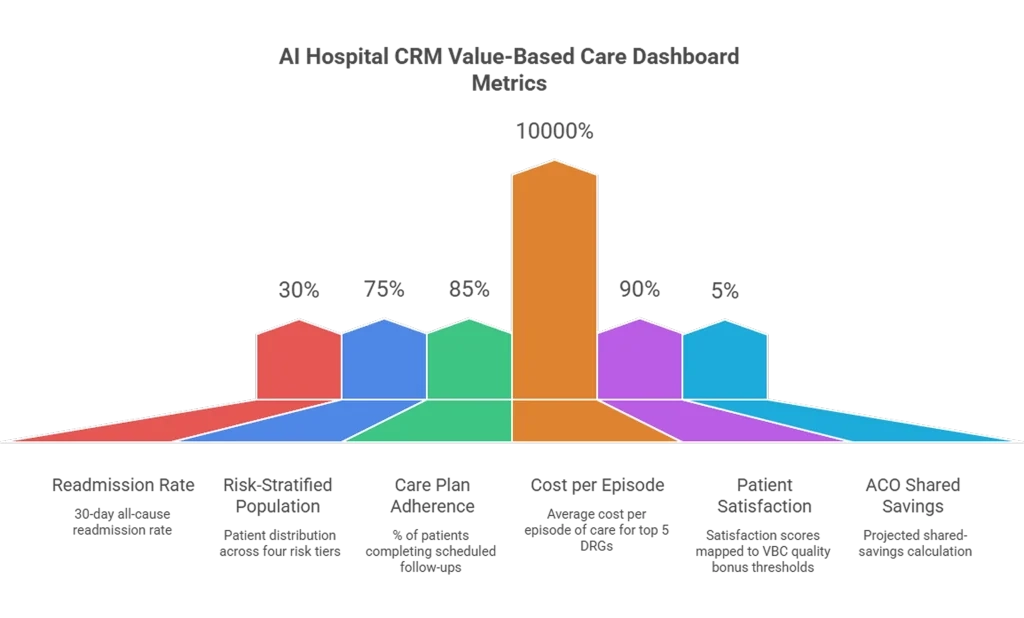
AI-enabled hospital CRMs offer robust data analytics and outcome measurement capabilities. Providers can track critical metrics such as hospital readmission rates, patient satisfaction scores, and preventive care effectiveness. This ability to systematically analyse outcomes enables continuous, data-driven improvements, aligning closely with the principles of value-based care.
Hospitals adopting AI analytics within their CRM platforms have reported substantial improvements in clinical outcomes and patient satisfaction. One healthcare network experienced a 15% improvement in clinical quality metrics within a year of AI-driven CRM implementation. Data-driven insights allowed for targeted interventions, optimised resource allocation, and improved preventive care strategies.
The dashboard should connect interventions to results: risk-stratified outreach volumes mapped to readmission-rate changes; care-plan adherence scores mapped to cost-per-episode trends; and referral completion rates mapped to specialist utilisation. Without this closed loop, VBC reporting is guesswork.
How AI CRM Supports ACO and Bundled Payment Reporting
Accountable Care Organisations (ACOs) and bundled-payment programmes require hospitals to report granular outcome data to CMS and commercial payers. This includes quality measures (often drawn from CMS’s ACO quality measure set), cost benchmarks, and patient-reported outcomes. Manually compiling these reports is labour-intensive, error-prone, and typically months behind the data.
An AI hospital CRM automates this process. It continuously aggregates clinical, engagement, and cost data against the specific measures required by each contract. Quality measure numerators and denominators are calculated in real time. Gaps in care that would drag down a quality score are flagged immediately, giving care teams time to intervene before the reporting period closes.
For bundled-payment programmes, the CRM tracks cost-per-episode against the target price, alerts administrators when an episode is trending over budget, and identifies the cost drivers (unplanned readmission, extended length of stay, post-acute care utilisation). This turns VBC reporting from a retrospective compliance exercise into a prospective management tool.
Overcoming Implementation Challenges
Despite clear benefits, integrating AI into existing hospital CRM systems presents several challenges that healthcare decision-makers should address proactively.
Data integration complexity. AI models require clean, normalised data from multiple sources: EHR, claims, pharmacy, and sometimes wearables. Hospitals with fragmented IT ecosystems need an interoperability layer (FHIR-based APIs are the industry standard) to unify data before AI can deliver value.
Staff adoption. Clinicians and care coordinators need to trust AI recommendations. A phased rollout, beginning with a single high-impact use case like readmission prediction, builds confidence through visible results before expanding to broader population-health workflows.
ROI clarity. Hospital decision-makers may hesitate without a clear understanding of financial returns. Frame ROI around avoided readmission penalties, reduced administrative FTEs for manual outreach and reporting, and improved quality-incentive payments from payer contracts.
Data security. Data security. AI-driven CRM systems store vast amounts of patient data. HIPAA-compliant encryption, role-based access controls, and continuous audit logging are non-negotiable, making hospital CRM privacy and compliance a core design requirement, not an afterthought. The CRM vendor must sign a Business Associate Agreement (BAA) and demonstrate SOC 2 or equivalent security certification.
For a deeper look at where AI-driven CRM is heading, explore our piece on the future of AI in hospital CRM.
What ROI Can Hospitals Expect from AI CRM in Value-Based Care?
The financial case for AI hospital CRM in VBC environments rests on four pillars:
1. Avoided readmission penalties. Medicare’s HRRP penalises hospitals up to 3% of base DRG payments for excess readmissions. An AI CRM that reduces chronic-disease readmissions by 25% can translate to hundreds of thousands of dollars in avoided penalties for mid-sized hospitals.
2. Quality-incentive payments. Under the VBP program and ACO contracts, hospitals that hit quality thresholds earn bonus payments. AI-driven outreach that improves care-plan adherence and patient satisfaction directly boosts the quality scores that determine these payments.
3. Administrative labour savings. Automating post-discharge calls, referral follow-ups, care-gap outreach, and VBC reporting reduces the FTE burden on care coordination and quality teams. Hospitals report 20–30% better utilisation of clinical staff time after CRM automation.
4. Reduced cost per episode. Better risk stratification and proactive management keep patients out of high-cost settings (ED, inpatient). For bundled-payment contracts, lower cost-per-episode means a higher margin.
AI automation reduces labour costs, minimises appointment no-shows, and increases overall hospital efficiency, leading to substantial financial returns. Hospitals should expect to see measurable ROI within 12–18 months of full deployment, with the strongest early returns in readmission avoidance and reporting automation.
Conclusion
The integration of AI in hospital CRM systems represents a transformative opportunity to enhance value-based care outcomes significantly. By improving risk stratification, delivering personalised patient care, optimising care coordination, and automating VBC reporting, hospitals can achieve better clinical outcomes, higher patient satisfaction, and greater operational efficiency.
Healthcare decision-makers must proactively embrace AI-driven CRM solutions to fully realise these benefits and meet evolving patient expectations and payer requirements.
AI-powered hospital CRM from Quad One delivers advanced patient engagement, streamlined workflows, and powerful analytics to improve healthcare outcomes in value-based care environments.
Book an AI Hospital CRM Demo to see how Quad One’s platform connects risk stratification, care coordination, and outcome reporting into one system built for value-based care.
