
India’s healthcare system isn’t just under pressure due to a shortage of skilled professionals; it’s also constrained by a communication infrastructure that hasn’t kept pace with rising demand. Phone lines remain overloaded, reminders often go unnoticed, and front-desk teams spend hours on repetitive tasks like appointment confirmations. At the same time, patients trying to connect after hours or during busy moments frequently hit voicemail and disengage, leading to missed opportunities for care.
WhatsApp chatbots are helping bridge this gap. Built on the official WhatsApp Business API and used within an app that over 500 million Indians access daily, they automate key interactions such as appointment scheduling, reminders, FAQs, prescription refills, and follow-ups -24/7, without adding to staff workload. The result is fewer no-shows, reduced call volumes, and a more seamless, responsive patient experience. This guide covers everything you need to evaluate and implement one, from core features and real-world use cases of WhatsApp chatbots to integration, compliance, and rollout.
What Is a WhatsApp Chatbot for Healthcare?
An AI WhatsApp chatbot is a software program that communicates with users through the WhatsApp messaging interface using natural language, making interactions feel conversational rather than transactional. Unlike a website form or a phone IVR, it meets patients in the app they already check dozens of times a day, removing friction and increasing the likelihood of engagement. Instead of navigating menus or waiting in call queues, patients can simply type what they need to book an appointment, reschedule, ask for clinic timings, or check test updates and receive an instant response.
The bot can send and receive text, images, voice notes, documents, and rich interactive messages, all within a familiar green chat window. It operates 24×7, responds in milliseconds, handles thousands of simultaneous conversations, and never puts anyone on hold. Beyond basic interactions, it can be integrated with hospital systems to automate workflows like appointment scheduling, reminders, patient intake, and follow-ups. This not only reduces the load on front-desk staff but also ensures consistency, speed, and accuracy in every interaction, turning WhatsApp into a powerful, always-on patient engagement channel.
Why Hospitals and Clinics Are Using WhatsApp Chatbots in 2026
Healthcare operations are quietly breaking under the pressure.
The problem isn’t a lack of skilled staff or genuine care. It’s that the volume of patient interactions has outgrown the systems designed to handle them. The result? Burnt-out teams, frustrated patients, and a healthcare workflow that creaks under the weight of modern demand.
Healthcare workflow automation and patient communication automation are no longer luxury upgrades; they’re the operational lifeline that keeps clinics running with dignity and operational efficiency intact.
Rising patient volume
India’s outpatient demand is rising rapidly, with millions of new patients entering the system each year. Urban clinics that once handled 70-80 consultations a day are now managing 140-150+, but with the same staff, same phone lines, and the same manual booking processes. The front desk is stretched thin, juggling calls, walk-ins, and scattered messages without a unified system in place. What seems like simple growth is actually a structural mismatch between demand and operational capacity.
Each additional patient adds a small, cumulative burden, more calls to answer, appointments to schedule, and follow-ups to track. Over time, this invisible tax compounds: calls are missed, schedules become unpredictable, staff burn out, and patient experience declines. The issue isn’t a lack of demand, but the inability of outdated workflows to scale with it, turning growth into operational strain.
Staff overload and burnout
A trained nurse spending her afternoon confirming appointment times over the phone isn’t a staffing problem; it’s a systems problem. Across clinics, clinical and administrative staff are buried under repetitive, time-consuming tasks that are, crucially, automatable.
The consequence is real: high turnover, compassion fatigue, errors made under pressure, and good people leaving a profession they love because the operational load has become unbearable. Healthcare workflow automation doesn’t replace these people. It gives them their time back so they can do the work that actually needs a human being in it.
Missed appointments
A no-show is not just an empty chair; it creates a ripple effect across the entire healthcare system. Every missed appointment means lost revenue, underutilised clinical time, and scheduling gaps that are hard to recover. More importantly, it delays care. For patients, a missed visit can mean worsening conditions, prolonged discomfort, or delayed diagnosis. What makes this challenge frustrating is how preventable it is; most no-shows happen simply because patients forget. In busy, unpredictable routines, even important health appointments can slip through without timely reminders.
Automated reminders solve this with simplicity and scale. A message 48 hours before allows patients to reschedule in time, while a second nudge 2 hours before reduces last-minute forgetfulness. The result is a 30-50% drop in no-show rates for many clinics, improving utilisation, patient flow, and revenue without adding staff effort. Beyond efficiency, these systems also generate actionable insights like confirmation trends and patient responsiveness, helping refine scheduling strategies. Delivered through channels patients already use, reminders feel less like alerts and more like helpful prompts quietly strengthening engagement, accountability, and continuity of care.
Support bottlenecks
Unusual or complex queries don’t cause most clinic support bottlenecks. They’re caused by the same ten questions asked by different people, all day, every day. ‘What time do you open?’ ‘Is Dr Mehta available this week?’ ‘How do I get my blood test report?’ Each question takes 2-4 minutes.
Multiply that by 60 queries a day, and your entire morning is gone before the first patient has even been seen. Patient communication automation handles these in under two seconds consistently, correctly, and without a hold tone.
24/ 7 Patient Expectation
Patients don’t feel unwell between 9 AM and 6 PM. A worried parent at midnight, a working professional who only has time to book during lunch, a senior citizen trying to reschedule after-hours, they all reach for their phone, and they all expect an answer.
When that answer is silence or a voicemail, they don’t wait patiently. They call another clinic, search online, or go to the emergency room for something that didn’t need to be. The 24/7 expectation isn’t a patient being unreasonable. Healthcare operational efficiency in 2025 means meeting them where they are.
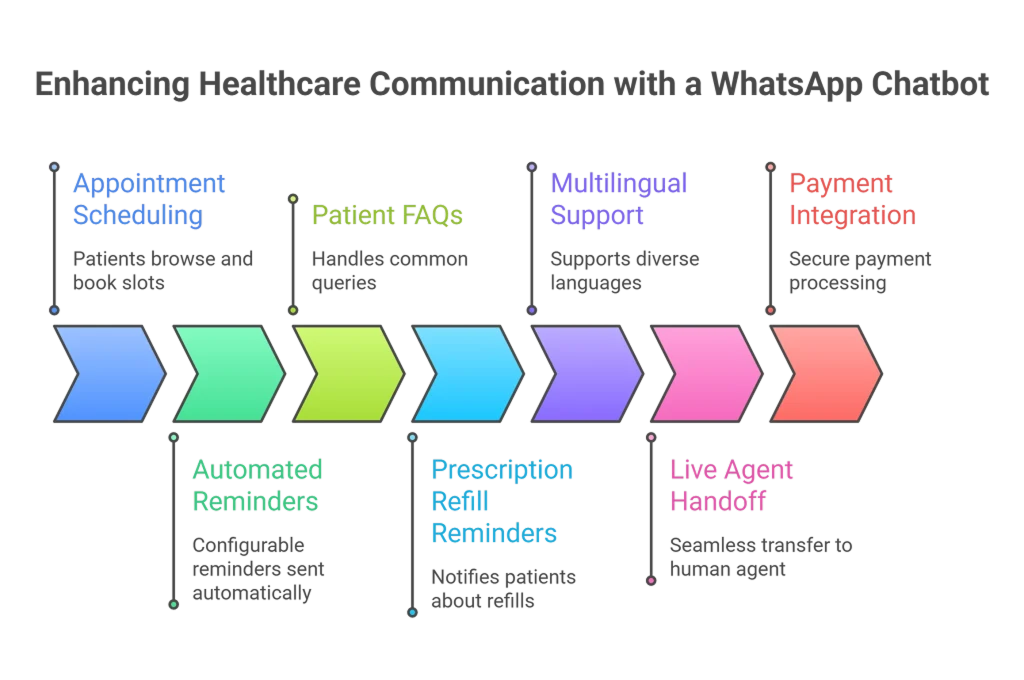
Top Use Cases of WhatsApp Chatbots in Healthcare
Healthcare today depends on speed and constant communication, where WhatsApp chatbots make a real difference. They automate high-volume interactions, reducing reliance on phone calls and manual processes while keeping patients connected in real time.
WhatsApp chatbots can automate some of the most common patient communication workflows for hospitals and clinics, including appointment booking, reminders, FAQs, follow-ups, prescription refill requests, telemedicine support, and feedback collection. When connected with scheduling systems, CRM workflows, and clear escalation rules, these use cases help reduce front-desk workload, improve patient response times, and create a smoother healthcare experience.
How WhatsApp Chatbots Improve Healthcare Workflow Automation
Workflow automation is where AI WhatsApp conversational chatbots genuinely transform healthcare operations, not just individual tasks, but the end-to-end processes that define patient experience and staff efficiency.
Healthcare Chatbot Workflow Improvements: Before and After Automation Results
| Process | Before ChatBot | After ChatBot |
|---|---|---|
| Appointment Booking | Manual phone calls, staff scheduling, and error-prone | Automated 24/7 booking with real-time calendar sync |
| Reminder Follow-Ups | Staff-dependent calls and SMS batches | Auto-triggered multi-step reminder sequences |
| FAQ Handling | Reception staff answering repetitive calls | Instant AI-powered responses, zero wait time |
| Patient Triage | Slow manual assessment, delayed routing | Automated symptom-based routing and escalation |
| Insurance Verification | Manual back-and-forth with payer portals | Automated real-time eligibility checks |
| Prescription Refills | Patient-initiated calls to pharmacy/clinic | Proactive chatbot-triggered refill workflows |
| Post-Visit Follow-Up | Sporadic nurse calls, low patient response | Structured automated check-in sequences |
Beyond individual workflows, WhatsApp chatbots create a connected patient journey, one where every interaction flows through a single, familiar channel. This continuity reduces patient confusion, improves adherence, and creates richer data for clinical and operational analytics.
WhatsApp Chatbot Integration with Healthcare Systems
Most vendors undersell the complexity of healthcare chatbot deployment. Here are the real challenges you’ll face and how to approach them:
• Compliance Complexity – HIPAA, GDPR, and regional data protection laws impose strict requirements on data handling, patient consent, and breach notification. Navigating these across multiple jurisdictions is time-intensive and requires dedicated legal and compliance resources – not just a checkbox.
• Integration Issues – Legacy EHR and hospital management systems are notorious for limited API support, inconsistent data formats, and siloed architectures. Integration projects frequently run over time and budget. Prioritize vendors with proven connectors to your specific systems.
• AI Misunderstanding Medical Queries – General-purpose NLP models struggle with medical terminology, regional dialects, abbreviations, and the nuanced way patients describe symptoms. Without healthcare-specific training data and rigorous testing, misclassifications can lead to dangerous escalation failures.
• Staff Adoption – Clinical and administrative staff often resist chatbot tools that change their workflows. Successful deployments invest in change management: training sessions, clear handoff protocols, and early involvement of staff in flow design. Technology without people alignment fails.
• Multilingual Challenges – Supporting multiple languages isn’t just translation; it’s cultural context, idiomatic expression, and dialect-specific vocabulary. A Spanish FAQ bot may work perfectly for Mexican patients and fail with Colombian users speaking differently about the same symptoms.
• Scaling Problems – A chatbot handling 500 conversations a day behaves very differently at 50,000. Conversation routing logic, API rate limits, system load during peak hours, and backend database performance all become critical at scale. Plan capacity from day one.
Step-by-Step Guide to Implementing a WhatsApp Chatbot for Healthcare
Deploying a healthcare WhatsApp chatbot isn’t just a technical setup; it’s an operational transformation. From reducing front-desk overload to improving patient engagement, success depends on a structured and well-executed rollout. Here’s a complete roadmap from strategy to launch.
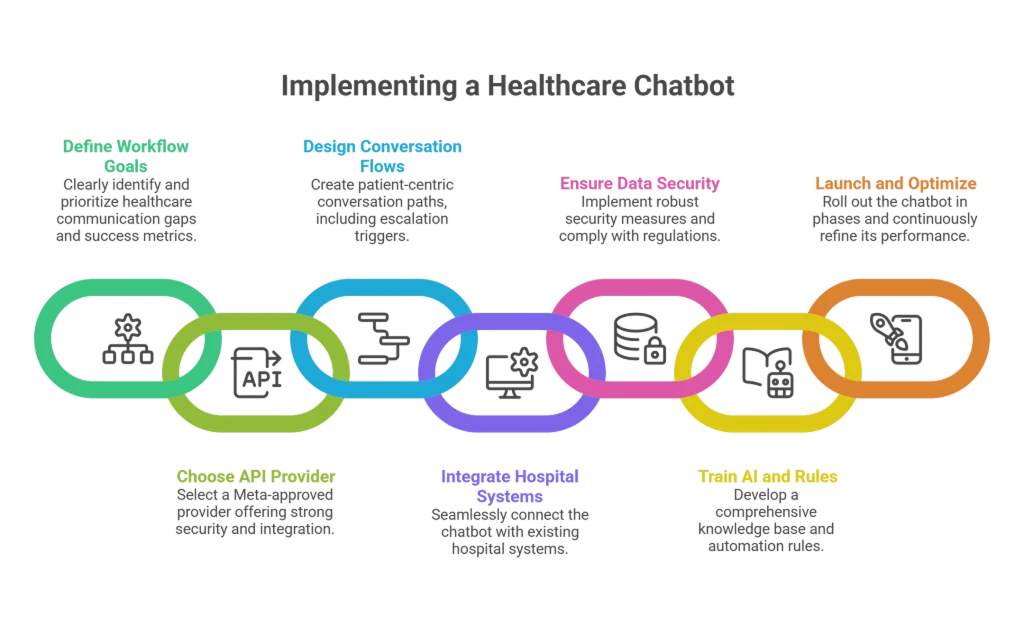
Step 1: Define Healthcare Workflow Goals
Begin with a clear audit of your current patient communication gaps. Identify where manual processes are slowing operations, whether it’s missed calls, delayed responses, or frequent appointment no-shows. Focus on three to five high-impact use cases for the initial rollout, such as appointment scheduling, automated reminders, FAQ handling, or report sharing.
At the same time, define measurable success metrics. These should include a reduction in call volume, improvement in no-show rates, faster response times, and better patient satisfaction scores. Establishing clarity at this stage ensures that the chatbot addresses real operational challenges rather than simply adding another layer of technology.
Step 2: Choose a WhatsApp Business API Provider
Selecting the right provider is a critical decision. It is important to work with a Meta-approved Business Solution Provider that understands the specific requirements of healthcare organizations. The provider should offer strong data security, compliance readiness, high system reliability, and seamless integration capabilities with existing hospital systems.
Solutions such as Twilio, Infobip, and other healthcare-focused vendors provide scalable and customizable platforms. Choosing the right partner ensures that your chatbot infrastructure remains stable, secure, and future-ready as patient volumes grow.
Step 3: Design Patient-Centric Conversation Flows
Designing effective conversation flows requires mapping the complete patient journey rather than focusing only on ideal scenarios. This includes the standard flow where a patient books an appointment, receives reminders, and completes the visit, as well as less predictable situations such as rescheduling, cancellations, or missed responses.
It is equally important to define escalation triggers for situations where the chatbot should hand over to a human, such as when patients show confusion, report potential clinical concerns, or face payment issues. The overall experience should feel natural and supportive, ensuring that patients feel guided rather than processed.
Step 4: Integrate Hospital Systems
The effectiveness of a chatbot depends heavily on its ability to integrate with existing hospital systems. This includes scheduling platforms, electronic health records, billing systems, and CRM tools. Proper integration ensures that information flows seamlessly across systems in real time.
Appointment bookings should instantly reflect in the scheduling system, patient data must be accessed securely, and payment updates should sync accurately with billing systems. Depending on the complexity of the infrastructure, this phase typically takes between four and eight weeks to complete.
Step 5: Ensure Data Security and Compliance
Healthcare chatbot deployments must prioritize data security and regulatory compliance from the outset. This includes implementing end-to-end encryption for all communications and ensuring that explicit patient consent is obtained before any data exchange occurs.
Organizations must also follow data minimization practices, maintain detailed audit trails of all interactions, and conduct regular security assessments. Compliance with regulations such as HIPAA, GDPR, or relevant local data protection laws is essential. Neglecting this step can result in significant legal and reputational consequences.
Step 6: Train AI and Define Automation Rules
The performance of the chatbot depends on the quality of its training. A well-structured knowledge base should be created, including medically accurate FAQs, clinic-specific information, and clear procedural instructions. The system must be trained to understand healthcare terminology, patient language patterns, and multilingual inputs to ensure accessibility.
In addition, clear automation rules must be defined to manage how the chatbot behaves in different scenarios. This includes identifying when conversations should be escalated to human staff, how timeouts are handled, and how sensitive queries are prioritized. Clinical teams should always review and validate responses before the chatbot goes live.
Step 7: Launch, Monitor, and Optimize
A phased rollout approach is recommended, starting with a soft launch to a smaller group of patients. This allows teams to gather feedback and identify areas for improvement early in the process. Monitoring key performance indicators such as conversation completion rates, escalation frequency, booking conversions, and patient satisfaction is essential.
Based on real-world usage data, conversation flows, and responses should be continuously refined. The first four to six weeks after launch are particularly important for optimization, as this is when the system evolves into a more accurate and efficient communication tool.
Common Challenges in Healthcare Chatbot Deployment
Healthcare chatbots offer clear benefits, but their implementation comes with real complexities. From compliance and integration to AI accuracy and staff adoption, these challenges can impact success if not planned for early.
- Compliance Complexity: Strict regulations like HIPAA and GDPR require robust data handling, consent management, and ongoing legal oversight, not a one-time setup.
- Integration Issues: Legacy EHR and hospital systems often lack clean APIs, causing delays, data inconsistencies, and higher implementation costs.
- AI Misunderstanding Queries: Generic NLP struggles with medical terms, patient language, and regional nuances, increasing the risk of incorrect responses or missed escalations.
- Staff Adoption: Resistance from clinical and admin teams can slow adoption; success depends on training, clear workflows, and early involvement.
- Multilingual Challenges: True language support requires cultural context and dialect understanding, not just direct translation.
- Scaling Problems: Performance issues emerge at high volumes, including routing complexity, API limits, and system load during peak times, requiring early capacity planning.
Best Practices for Healthcare WhatsApp Automation
Getting healthcare automation right isn’t just about launching fast; it’s about designing for safety, trust, and long-term scalability. The most successful deployments follow a few core principles that balance technology with human care.
1. Design for Human-in-the-Loop Care
No AI can fully replace human judgment in healthcare. Clinical concerns, emotional conversations, and unexpected scenarios will always need human intervention. The key is to make escalation seamless, ensuring that when a conversation is handed off, the human agent has full context and can respond without friction.
2. Build Trust Through Transparency and Consent
Patient trust starts with clarity. Before collecting or processing any health data, explicitly communicate what is being captured, how it will be used, and how patients can opt out. Consent should be easy to give and just as easy to withdraw.
3. Make Security a Core Design Layer
Healthcare communication must be built on secure foundations. Use encrypted messaging at all times and avoid sharing sensitive records directly. Instead, guide patients to secure, authenticated portals when deeper access is required.
4. Think Multilingual from Day One
Language is more than translation; it’s context. Designing flows that adapt to multiple languages and cultural nuances from the start prevents costly rework later and ensures accessibility across diverse patient groups.
5. Treat AI as a Living System
Healthcare knowledge evolves constantly, and so should your chatbot. Regularly review conversations, especially failed or escalated ones, to refine responses and close knowledge gaps. Continuous training is what keeps the system relevant and reliable.
6. Optimize for Speed and Responsiveness
In healthcare, delays create anxiety. Patients expect near-instant replies, especially for routine queries. Fast response times not only improve experience but also reduce drop-offs and repeated follow-ups.
7. Define Clear Escalation Logic
Ambiguity in escalation leads to frustration. Clearly define when a conversation should move to a human, whether it’s due to clinical keywords, repeated confusion, emotional distress, or payment issues, and keep refining these triggers over time.
Conclusion
WhatsApp chatbots don’t replace clinical care; they clear the path for it. By automating routine interactions like appointment bookings, reminders, FAQs, and follow-ups on a platform patients already use every day, they strip away the operational noise that slows teams down. The impact is immediate: front-desk staff regains valuable time, no-show rates drop, and patients experience faster, more reliable communication that builds real trust over time.
The clinics seeing the strongest outcomes aren’t just adopting the technology; they’re implementing it with intent. That means setting clear objectives, integrating deeply with existing systems, and continuously refining the experience based on patient behavior. The need is no longer theoretical, the technology is proven, and patient expectations have already shifted. What truly matters now is not whether to adopt but how well you execute.
The UAE’s healthcare sector is stepping into a new era, one shaped by digital innovation, intelligent systems, and deeply connected care. By 2026, the shift toward AI-driven ecosystems, integrated health platforms, and patient-centric models is no longer just emerging; it’s becoming the backbone of how modern healthcare operates. Technologies like telemedicine, remote monitoring, predictive analytics, and automated workflows are helping providers make faster decisions, improve diagnostic accuracy, and deliver more seamless patient experiences.
At the heart of this transformation are healthcare IT companies ranging from global leaders to specialised regional players, each contributing in different ways. Some bring large-scale system integration and enterprise expertise, while others focus on cloud-native development, localised compliance, or cost-effective innovation. Together, they are enabling healthcare providers to move beyond reactive treatment models toward proactive, continuous, and data-driven care.
The Rise of Digital Healthcare in the UAE (2026)
The UAE has rapidly positioned itself as a global leader in healthcare technology, driven by strong government initiatives, growing private investment, and widespread digital adoption. By 2026, the healthcare ecosystem is expected to be highly integrated and intelligent, where seamless data exchange, virtual care, and personalised treatment journeys become the norm rather than the exception.
Healthcare applications, in particular, have evolved far beyond basic functionality. Today, they act as intelligent platforms combining teleconsultation, remote monitoring, AI-assisted diagnostics, and personalised care pathways. This shift is making healthcare more accessible, efficient, and proactive, ultimately improving outcomes while enhancing patient engagement.
Leading Healthcare IT Companies in the UAE
A diverse mix of global enterprises and regional specialists is powering this transformation. Each company brings its own strengths, depending on the scale, complexity, and specific needs of healthcare organisations.
Quad One Technologies
Quad One Technologies is steadily emerging as a strong player in the UAE’s healthcare IT space, known for its AI-first approach and automation-led solutions. With over two decades of experience, the company focuses on building intelligent, future-ready systems by blending artificial intelligence, machine learning, and data analytics with real-world clinical workflows.
- AI-first approach with 20+ years of industry experience
- Combines AI, machine learning, and data analytics with clinical workflows
- Focuses on proactive, data-driven care delivery
- Streamlines patient engagement and operational efficiency
- Optimizes clinical data management for healthcare providers
- Positioned as a long-term digital health partner in the UAE
Build AI-powered healthcare IT solutions with Quad One Technologies.
Zymr
Zymr stands out for its expertise in cloud-native development and digital health product engineering. The company builds scalable, secure, and compliant healthcare solutions, including patient engagement platforms, clinical data systems, and AI-powered applications.
- Specialises in cloud-native healthcare product engineering
- Builds scalable, secure, and compliance-ready solutions
- Covers patient engagement platforms and clinical data systems
- Delivers AI-powered applications tailored to health tech needs
- Flexible delivery model suited for both startups and established providers
- Strong fit for organisations scaling across the GCC market
Cerner (Oracle Health)
Now part of Oracle Health, Cerner has a well-established presence in the UAE healthcare ecosystem. Its Millennium platform is widely adopted across large hospital networks and government health systems.
- Part of Oracle Health with a strong UAE market presence
- The Millennium platform was widely adopted across hospitals and government systems
- Robust EHR capabilities with high interoperability standards
- Integrates with national health exchanges — Malaffi and Nabidh
- Supports data standardisation across multi-facility organisations
- Best suited for large-scale healthcare networks requiring enterprise-grade solutions
Intelhealth
IntelHealth differentiates itself with a strong regional focus. Its healthcare information systems and clinical software are designed specifically for Gulf environments, featuring Arabic-first interfaces and built-in compliance with UAE regulations.
- Deep regional focus tailored for Gulf healthcare environments
- Arabic-first interfaces designed for local usability
- Built-in compliance with UAE regulatory standards
- Strong familiarity with DHA and HAAD requirements
- Ideal for organisations seeking locally adapted, not generic, solutions
- Reliable choice for navigating UAE-specific healthcare regulations
Accenture
Accenture brings a powerful mix of strategic consulting and large-scale execution capabilities. In the UAE, it plays a key role in driving digital transformation across both public and private healthcare sectors.
- Combines strategic consulting with large-scale digital execution
- Active across both public and private UAE healthcare sectors
- Expertise in AI integration, cloud migration, and system modernisation
- Capable of managing complex, long-term transformation programs
- Delivers end-to-end solutions from vision to implementation
- Best suited for organisations undertaking enterprise-wide transformation
Warba Systems
Warba Systems offers a strong regional advantage with solutions designed specifically for the Gulf healthcare landscape. Its platforms support Arabic-language workflows, local insurance integration, and regulatory compliance.
- Purpose-built solutions for the Gulf healthcare market
- Supports Arabic-language workflows and local insurance integration
- Ensures regulatory compliance across the UAE health authorities
- Hands-on understanding of regional operational challenges
- Practical and dependable partner for localised healthcare needs
- Strong track record with providers that value regional expertise
Cognizant
Cognizant has expanded its healthcare footprint in the Middle East with a comprehensive suite of services spanning payer systems, provider operations, analytics, and revenue cycle management.
- Comprehensive healthcare services across payer and provider systems
- Expertise in analytics and revenue cycle management
- Manages complex, multi-stakeholder healthcare environments
- Expanding Middle East presence with proven delivery capabilities
- Valuable for large hospital groups and insurance providers
- Suited for end-to-end digital transformation at scale
Philips Healthcare
Philips Healthcare occupies a unique space by bridging medical hardware and digital health software. Its offerings include imaging systems, patient monitoring, and AI-powered diagnostics, all connected within a unified ecosystem.
- Uniquely bridges medical hardware and digital health software
- Offers imaging systems, patient monitoring, and AI diagnostics
- All solutions operate within a connected, unified ecosystem
- Enables seamless integration between clinical equipment and IT
- AI-powered tools enhance diagnostic accuracy and clinical decision-making
- Preferred partner for hospitals seeking hardware-software integration
Innowise
Innowise is gaining traction for its strong engineering capabilities and cost-effective delivery models. The company specialises in custom healthcare application development, including telemedicine platforms, analytics tools, and AI-driven solutions.
- Strong engineering capabilities with cost-effective delivery
- Specialises in custom healthcare application development
- Builds telemedicine platforms, analytics tools, and AI solutions
- Ideal for startups and mid-sized healthcare organisations
- Delivers high-quality solutions without enterprise-level costs
- Growing reputation for flexible and scalable development models
Wipro
Wipro has established itself as a reliable partner for large-scale healthcare IT initiatives in the UAE. Its expertise spans hospital information systems, data management, and digital transformation programs.
- Reliable partner for large-scale healthcare IT in the UAE
- Expertise across hospital information systems and data management
- Proven digital transformation methodologies and frameworks
- Backed by strong regional teams with local market knowledge
- Solid choice for government entities and large healthcare providers
- Experienced in managing complex, multi-year IT implementation programs
AI and automation are also playing a critical role. From assisting in diagnostics to automating administrative workflows, these technologies are reducing the burden on healthcare professionals while improving efficiency. This allows clinicians to spend more time focusing on what truly matters: patient care.
Ultimately, healthcare is shifting from a reactive model to a continuous, personalised care journey where prevention, early detection, and long-term engagement take priority.
How to Choose the Right Healthcare IT Services Company
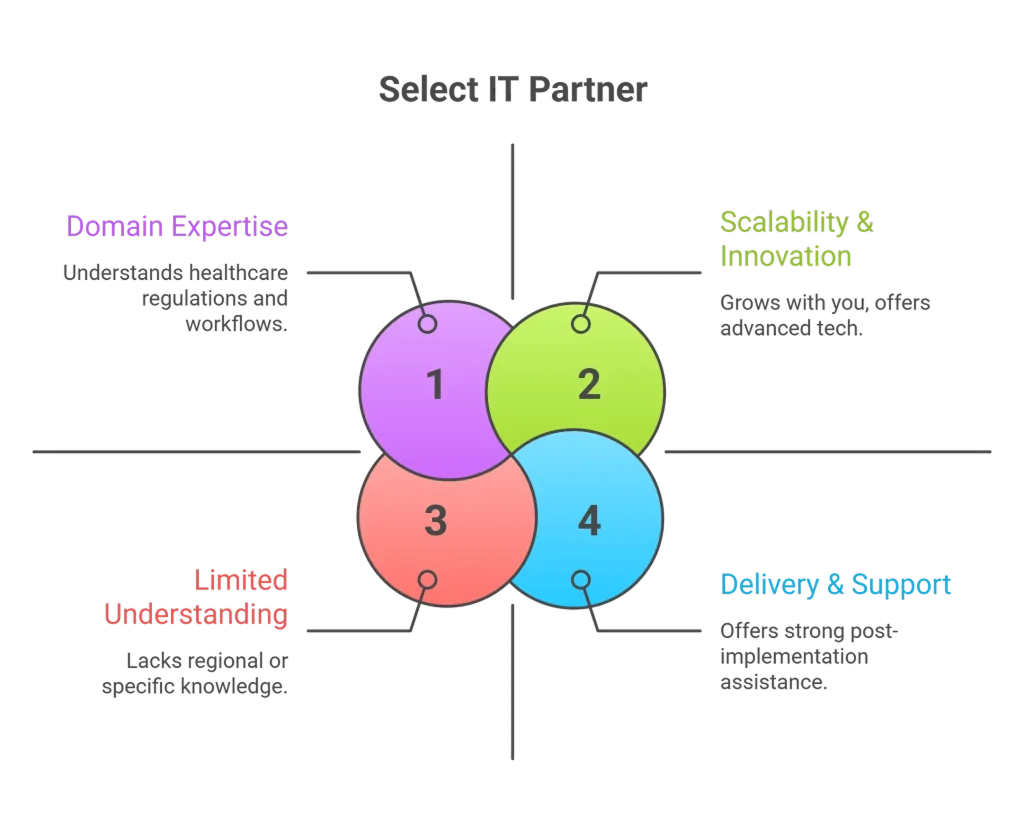
Choosing the right healthcare IT partner is a strategic decision that directly impacts efficiency, scalability, and patient outcomes.
Start by evaluating domain expertise. Healthcare is highly regulated, so it’s essential to work with a partner that understands compliance requirements, data security, and clinical workflows.
Next, consider scalability and technology capabilities. Your partner should be able to grow with your organisation while offering expertise in areas like cloud computing, AI, data analytics, and system integration.
Regional understanding is especially important in the UAE. Companies familiar with local regulations, insurance systems, and language requirements can significantly reduce implementation challenges.
It’s also important to assess their delivery model and support structure. Strong post-implementation support, transparent communication, and a collaborative approach are key indicators of a reliable partner.
Finally, think beyond cost. The goal is to find a partner that offers long-term value, a balance of quality, innovation, and cost-efficiency.
What’s Actually Shifting in Care Delivery
Healthcare IT companies are fundamentally transforming how care is delivered, experienced, and managed. What was once a fragmented, reactive system is now becoming proactive, connected, and patient-centric.
One of the biggest shifts is the move toward real-time, data-driven care. With integrated systems and health information exchanges, providers can access patient records instantly, enabling faster and more accurate decision-making. This reduces delays, minimises errors, and improves overall care quality.
Another major transformation is the rise of virtual care and remote monitoring. Patients no longer need to rely solely on in-person visits. Through teleconsultations, wearable integrations, and mobile health apps, care can now happen anytime and anywhere, improving accessibility, especially for chronic disease management.
AI and automation are also playing a crucial role. From AI-powered diagnostics to automated administrative workflows, healthcare IT is reducing the burden on medical staff while improving efficiency. This allows healthcare professionals to focus more on patient care rather than operational tasks.
Ultimately, these advancements are shifting healthcare from a reactive model to a continuous, personalised care journey, where prevention, early detection, and long-term engagement take centre stage.
Post-implementation support, clear communication, and a collaborative approach are key indicators of a strong partnership.
Finally, align on budget and long-term value. The cheapest option isn’t always the best. Focus on partners who offer a balance of quality, innovation, and cost-efficiency.
Why Partnering with a Top Healthcare IT Services Company Matters
Working with a leading healthcare IT company is no longer just about technology; it’s about strategy and long-term growth.
Top-tier providers bring proven frameworks, deep industry expertise, and access to advanced technologies that can accelerate digital transformation. Instead of building everything from scratch, organisations can leverage established platforms and best practices.
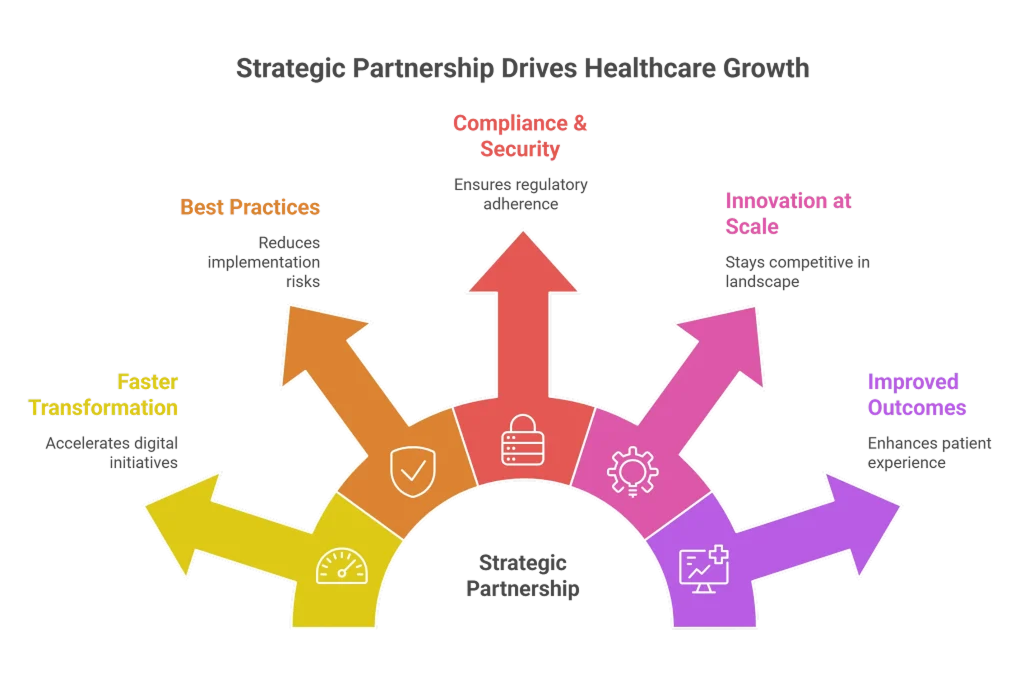
Strategic Impact:
Partnering with a leading healthcare IT company is not just a technical choice. It’s a strategic decision that shapes long-term growth and innovation.
Faster Digital Transformation:
Top-tier providers bring proven frameworks, industry expertise, and advanced technologies, helping organisations accelerate transformation without building from scratch.
Access to Best Practices:
Established platforms and tested methodologies reduce risk and ensure smoother implementation.
Regulatory Compliance & Security:
Experienced partners ensure adherence to healthcare regulations and strong data security, protecting sensitive patient information and maintaining trust.
Innovation at Scale:
Continuous investment in AI, predictive analytics, and interoperability helps organisations stay competitive in a rapidly evolving landscape.
Improved Patient Outcomes:
The right partner enables faster diagnoses, personalised treatment plans, and seamless communication, enhancing overall patient experience and care quality.
Healthcare IT Companies Comparison: Core Strengths & Best Fit.
| Company | Best For | Core Strength | Unique Edge |
|---|---|---|---|
| Quad One | AI-driven providers | AI-first healthcare systems | 20+ yrs clinical + AI expertise |
| Zymr | GCC startups | Cloud-native engineering | Fast scaling delivery |
| Cerner | Enterprise hospitals | Deep EHR systems | Malaffi + Nabidh integration |
| Intelhealth | UAE providers | Arabic-first healthcare software | UAE regulation-ready |
| Accenture | Large transformation projects | Strategy + execution | Enterprise consulting depth |
| Warba Systems | Local Gulf rollout | Regional healthcare expertise | Gulf-native workflows |
| Cognizant | Hospitals + insurers | End-to-end healthcare ops | Payer + provider expertise |
| Philips Healthcare | Device-heavy hospitals | Hardware + software integration | Imaging + diagnostics |
| Innowise | Budget-conscious teams | Custom development | Cost-effective engineering |
| Wipro | Government + enterprise | Reliable implementation | Strong regional delivery |
Conclusion
The future of healthcare in the UAE is being built right now, and technology is leading the way. Healthcare IT services companies are at the centre of this transformation, driving a shift toward more connected, efficient, and patient-focused systems. From global technology leaders to specialised regional players, each brings unique strengths that are helping shape a smarter, more integrated healthcare ecosystem.
As healthcare continues to evolve in 2026 and beyond, choosing the right IT partner will become increasingly critical for organisations aiming to stay competitive. Those who invest in the right technologies and partnerships today will be better positioned to deliver smarter care, improve patient outcomes, and meet the rising expectations of modern healthcare consumers.
External references
Top Healthcare Software Development Companies in Dubai
HealthTech SaaS Startups in United Arab Emirates
Key takeaways: AI medical coding uses NLP, machine learning, and computer-assisted coding (CAC) to automate ICD-10 and CPT code assignment, reducing coding errors by up to 40%, cutting claim denials by up to 50%, and delivering measurable ROI across healthcare revenue cycle management.
The healthcare industry continues to evolve rapidly, driven by technological advancements that aim to enhance patient care, optimize operational workflows, and improve the financial health of healthcare organizations. Among these breakthroughs, artificial intelligence (AI) is playing an increasingly transformative role in medical coding, and the results are measurable.
As of mid-2026, AI-powered tools are reshaping the way healthcare organizations approach medical coding, billing, and revenue cycle management (RCM). This article examines how AI is transforming medical coding, the key technologies driving this transformation, and the practical implications for medical coders, HIM professionals, and healthcare executives.
of medical bills contain at least one coding error
of claim denials are caused by coding issues
reduction in coding errors with AI-powered systems
of hospitals already use AI in their revenue cycle
What Is AI Medical Coding?
AI medical coding is the use of artificial intelligence, specifically natural language processing (NLP), machine learning (ML), and predictive analytics, to automatically translate clinical documentation into standardized alphanumeric codes used for billing, insurance claims, and health data reporting.
Medical coding is the process of converting healthcare diagnoses, procedures, services, and equipment into universal codes drawn from systems such as:
- ICD-10-CM/PCS International Classification of Diseases, 10th Edition, is used to classify diagnoses and inpatient procedures.
- CPT (Current Procedural Terminology) codes for outpatient procedures and physician services.
- HCPCS Level II codes for supplies, equipment, and services not covered by CPT.
Traditionally, this has been a labor-intensive, error-prone process requiring certified coders to manually review physician notes, discharge summaries, and electronic health records (EHRs). AI medical coding automates this workflow, dramatically reducing manual effort while improving accuracy and coding compliance.
Key AI Technologies Driving Medical Coding Automation
1. Natural Language Processing (NLP) in Medical Coding
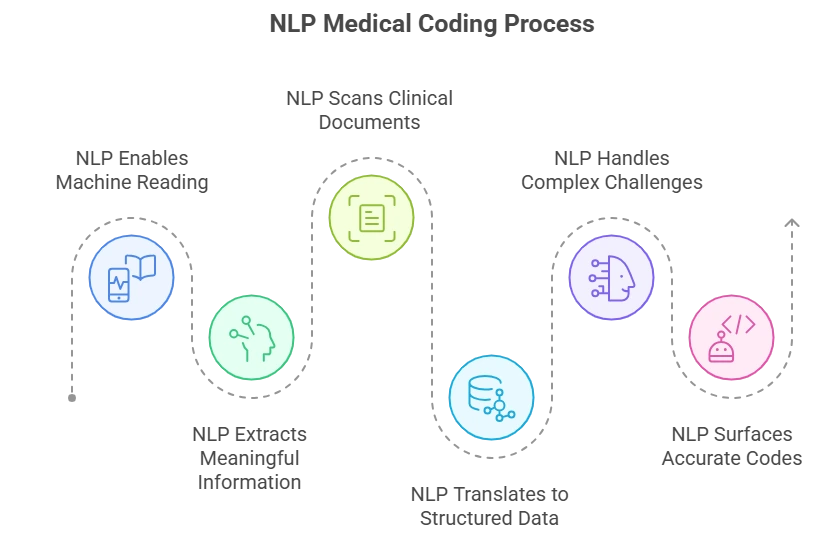
Natural language processing is the backbone of AI medical coding. NLP enables machines to read, interpret, and extract meaningful information from unstructured clinical text, a task that previously required trained human expertise.
In practice, NLP medical coding tools automatically scan physician notes, radiology reports, operative summaries, and EHR entries to identify key clinical terms and translate them into structured, codable data. This significantly reduces the manual burden of sifting through documentation while improving the consistency and accuracy of code assignment.
Advanced NLP systems also handle clinical abbreviations, negation (e.g., “no evidence of pneumonia”), and contextual disambiguation challenges that earlier rule-based coding tools struggled with. Quad One’s AI Medical Coding Application leverages NLP to process complex documentation and surface the most accurate ICD-10 and CPT codes in real time.
2. Computer-Assisted Coding (CAC) and EHR Integration

Computer-assisted coding (CAC) systems use AI algorithms to analyze clinical documentation and suggest appropriate medical codes, functioning as an intelligent co-pilot for human coders. CAC helps coders select the correct ICD-10 and CPT codes, eliminating much of the manual lookup and cross-referencing that slows traditional workflows.
Modern CAC tools integrate directly with EHR platforms and RCM systems, ensuring a seamless flow of information across the healthcare organization. With the ability to process large documentation volumes in real time, CAC enhances coding productivity, reduces claim rejections, and optimizes revenue cycle performance.
3. Machine Learning for Continuous Coding Improvement
Unlike static rule-based systems, machine learning models improve over time. As they are exposed to more clinical data and coding decisions, ML algorithms refine their predictive capabilities learning to recognize patterns that human coders might miss, especially in complex multi-diagnosis or multi-procedure cases.
ML in medical coding enables real-time code suggestions, predicts the likelihood of specific codes being accepted by payers, and identifies anomalies that may indicate documentation gaps or compliance risks. A large hospital system that integrated an ML-driven coding platform reported a 30% reduction in coding errors within the first year of deployment.
4. Predictive Analytics for Denial Management and Compliance
Predictive analytics represents one of the most powerful applications of AI in revenue cycle management. By analyzing historical coding and claims data, predictive models can anticipate which codes are likely to trigger denials, flag documentation deficiencies before claim submission, and identify patterns of non-compliance before they escalate into audits.
For example, AI-driven predictive coding can alert coders to a chronic condition requiring a more specific ICD-10 code, or flag a high-value procedure where documentation does not adequately support medical necessity, both situations that would otherwise result in a denied claim and costly rework.
Benefits of AI in Revenue Cycle Management and Medical Coding
AI-powered medical coding technologies use machine learning to automate the assignment of standardized codes (like ICD-10 and CPT) to patient diagnoses, procedures, and treatments. By analyzing clinical notes, EHRs, and billing data with high accuracy, they reduce errors, speed up reimbursements, ensure compliance, and free coders for complex tasks boosting efficiency in healthcare revenue cycles.
Natural Language Processing (NLP) in Medical Coding
One of the most powerful applications of AI in medical coding is Natural Language Processing (NLP). NLP is a branch of AI that enables machines to comprehend, interpret, and produce human language in a manner that is both meaningful and contextually accurate. In the context of medical coding, NLP is utilized to process and extract relevant information from unstructured clinical data, including physician notes, discharge summaries, and electronic health records (EHRs).
NLP medical coding tools can automatically scan patient records and translate clinical language into standardized codes, significantly reducing the need for manual coding. This not only increases efficiency but also minimizes human error, a common issue in traditional coding methods. The integration of NLP into coding workflows enhances coding compliance, reduces administrative burdens, and ensures that medical billing is accurate and up-to-date with the latest regulations.
Computer-Assisted Coding (CAC)
Another AI-powered technology transforming medical coding is Computer-Assisted Coding (CAC). CAC systems use AI algorithms to analyze clinical documentation and suggest appropriate medical codes based on the data. These systems serve as a form of support for human coders, offering coding suggestions and enhancing coding accuracy. They streamline the process by assisting coders in selecting the correct ICD-10 and CPT codes, which helps eliminate human error while speeding up the entire coding workflow.
CAC tools often integrate with EHR systems and revenue cycle management (RCM) platforms, ensuring a seamless flow of information across healthcare organizations. With the ability to process vast amounts of data in real time, CAC enhances coding productivity, reduces claim rejections, and optimizes revenue cycle management.
Machine Learning and Predictive Analytics in Coding
Machine learning (ML) is another AI technology that has great potential in medical coding. Unlike traditional algorithms that are programmed with specific instructions, ML systems can learn from data over time, improving their predictive capabilities as they are exposed to more clinical data.
In the context of medical coding, machine learning algorithms are trained to recognize patterns in clinical data and predict the most likely codes based on historical coding patterns and clinical guidelines. For example, predictive analytics coding can anticipate and prevent coding errors before they occur, reducing claim denials and ensuring that accurate codes are submitted in a timely manner.
By continuously analyzing past coding data, ML tools can offer real-time suggestions and even predict the likelihood of specific codes being accepted by insurers, helping healthcare organizations avoid costly rework and delays.
The Benefits of AI in Medical Coding
Improved Coding Accuracy and Reduced Error Rates
AI medical coding systems reduce coding errors by cross-referencing clinical documentation against coding guidelines, payer rules, and compliance standards in real time. These systems can identify potential errors before claims are submitted, preventing denials and audit exposure that are expensive to remediate after the fact.
Faster Claims Processing and Reimbursement
By automating the bulk of routine code assignment, AI dramatically shortens the time from patient encounter to clean claim submission. This accelerates reimbursement cycles, improves cash flow, and reduces the accounts receivable (AR) backlog that burdens many coding departments.
Significant Cost Savings and Administrative Efficiency
The reduction in coding errors leads to fewer denied claims, less rework, and reduced appeals costs. Healthcare organizations adopting AI in their revenue cycle report administrative cost reductions of up to 25%, along with a 30% average ROI driven by faster reimbursements and reduced staffing requirements for routine coding tasks.
Enhanced HIPAA Compliance and Audit Readiness
AI coding platforms generate comprehensive audit trails for every code assignment, documenting the clinical evidence, guidelines referenced, and coder decisions. This traceability is invaluable during OIG audits, payer reviews, or Recovery Audit Contractor (RAC) investigations, and is a prerequisite for demonstrating coding compliance..
AI vs. Manual Medical Coding: A 2026 Comparison
| Factor | Manual Coding | AI Medical Coding |
|---|---|---|
| Coding speed | Minutes per chart; bottleneck at high volumes | Seconds per chart; scales instantly |
| Error rate | Up to 80% of bills contain errors | Up to 40% reduction in error rates |
| Claim denial rate | 42% of denials linked to coding issues | Up to 50% reduction in first-pass denials |
| Compliance monitoring | Periodic manual audits, reactive | Real-time, proactive compliance checks |
| ICD-10/CPT updates | Requires manual retraining and guidebook updates | AI models updated continuously with new code sets |
| Scalability | Linear requires more staff for higher volumes | AI models are updated continuously with new code sets |
| Complex cases | ✔ Human judgment essential | AI flags for human review; hybrid model required |
| Audit trail | Manual documentation; incomplete | ✔ Auto-generated, traceable for every code |
| Cost | High labor cost; grows with volume | Upfront integration cost; lower per-encounter cost at scale |
Will AI Replace Medical Coders in 2026?
This is the most common question from coding professionals, and the evidence is clear: AI will not replace medical coders, but it will fundamentally change what they do.
The emerging standard in 2026 is the human-AI hybrid coding model. AI systems autonomously handle high-volume, routine coding tasks, standard office visits, common diagnoses, and straightforward procedures while human coders focus on complex cases requiring clinical judgment, CDI (clinical documentation improvement) queries, denial appeals, and compliance oversight.
According to a 2026 survey, 79% of healthcare professionals believe AI will significantly transform their roles, but the overwhelming consensus is augmentation rather than replacement. Coders who embrace AI tools are becoming more productive and more strategically valuable, shifting from code lookup to coding leadership, audit defense, and quality assurance.
Importantly, regulatory bodies, including the OIG and CMS, continue to insist on human-in-the-loop oversight for AI-generated codes, particularly in high-risk billing areas. This means certified medical coders remain essential to the healthcare revenue cycle for the foreseeable future.
ROI of AI Medical Coding: What the Data Shows
By automating the medical coding process and reducing the reliance on manual labor, AI in medical coding contributes to significant cost savings for healthcare organizations. The reduction in coding errors results in fewer claim denials, less rework, and fewer delays in reimbursement, all of which can lead to reduced administrative overhead and improved operational efficiency.
Furthermore, AI’s ability to analyze clinical data in real time can help identify inefficiencies in coding workflows, leading to streamlined processes and greater cost reduction in the long run. This is particularly important in an era of value-based care, where healthcare organizations are under increasing pressure to deliver high-quality care while controlling costs.
Real-World Applications of AI in Medical Coding
The business case for AI medical coding has moved from theoretical to measurable. Here is what healthcare organizations are reporting in 2026:
average ROI for organizations using AI in revenue cycle
reduction in first pass claim denials
faster documentation and coding turnaround
reduction in administrative overhead costs
One mid-sized hospital that deployed a predictive analytics coding platform eliminated a 10.5-day coding backlog and increased coder productivity by 60% within four months. Another large health system reduced coding errors by 30% after integrating an ML-driven coding platform across its inpatient documentation workflow.
The total addressable savings are substantial: analysts estimate that AI automation across the healthcare revenue cycle could unlock more than $122 billion annually in administrative savings for U.S. providers, the largest share of which comes from smarter, faster medical coding.
How to Implement AI Medical Coding in Your Organization
Assess your current coding workflow and error profile. Audit your first-pass denial rate, coding error rate, AR days, and coder throughput. Identify which encounter types generate the most rework. This baseline determines where AI will have the highest impact and gives you benchmarks to measure ROI.
Select a vendor with proven EHR integration and compliance capabilities. Prioritize AI coding platforms with documented accuracy benchmarks, open APIs for your EHR (Epic, Cerner, eClinicalWorks, etc.), HIPAA-compliant data handling, and a Business Associate Agreement (BAA). Ask for references from healthcare organizations of similar size and specialty mix.
Integrate with your EHR and revenue cycle management platform. Work with your IT and RCM teams to connect the AI coding engine to your document management and billing systems. Define confidence thresholds above which the AI auto-assigns codes and below which a human coder reviews and configures escalation rules for complex or high-value cases.
Train coding staff on AI-assisted workflows and exception review. Upskill coders in reviewing AI-flagged exceptions, using audit dashboards, and applying explainable AI logic to compliance documentation. The transition from manual coding to AI-assisted coding is a cultural shift; leadership buy-in and clear change management are as important as the technology itself.
Challenges and Considerations for AI Medical Coding Adoption
Data Quality and Training Data Bias
AI models are only as good as the data they are trained on. Inaccurate, incomplete, or historically biased coding data can produce unreliable predictions. Healthcare organizations should audit their historical coding data before training or deploying an AI system, and work with vendors who regularly retrain their models on updated code sets (particularly as ICD-11 adoption approaches).
EHR Integration and Legacy System Compatibility
Many hospitals and practices still operate on older EHR platforms with limited API capabilities. Ensuring that an AI coding tool integrates seamlessly without disrupting existing workflows and without requiring a full EHR replacement is a common implementation challenge. Cloud-based solutions with standardized HL7 FHIR integration have made this significantly easier in 2026.
HIPAA Compliance and Patient Data Security
AI coding systems handle highly sensitive patient health information (PHI). Robust access controls, encryption at rest and in transit, comprehensive audit logging, and a fully executed BAA with the vendor are non-negotiable requirements. Healthcare organizations should also define data retention and deletion policies in alignment with HIPAA and state-specific regulations.
Change Management and Coder Adoption
Shifting from manual to AI-assisted coding requires a cultural change. Coders may be resistant to trusting AI recommendations, particularly early in deployment when the model is still learning organization-specific patterns. Ongoing training, transparent AI logic (“explainable AI”), and visible performance metrics build the confidence needed for broad adoption.
The Future of AI Medical Coding Beyond 2026
As NLP and large language models (LLMs) continue to mature, the future of medical coding is moving toward fully autonomous coding for high-confidence encounter types, with real-time documentation feedback to clinicians, reducing CDI queries and improving documentation quality at the point of care.
Key trends shaping the next phase of AI medical coding include:
- ICD-11 transition readiness: AI systems will be critical in managing the expanded ICD-11 code set, which has over 55,000 unique codes compared to ICD-10’s 14,000.
- Ambient clinical intelligence: AI tools that listen to physician-patient conversations in real time and pre-populate documentation for coding review.
- Predictive revenue cycle analytics: Expanding from coding to broader RCM functions, prior authorization, payer negotiations, and patient financial services.
- Blockchain for coding data integrity: Emerging use of blockchain to create immutable audit trails and improve interoperability across payer and provider systems.
Healthcare organizations that begin their AI medical coding journey now will be best positioned to scale as these technologies mature. For medical coders, the opportunity is not to resist automation but to become the expert layer that oversees, validates, and improves it.
Overcoming Regulatory and Compliance Challenges
As AI technologies in healthcare continue to evolve, regulatory bodies must ensure that AI-powered coding systems comply with existing coding standards, such as ICD-10, CPT, and HCPCS codes. Additionally, Healthcare AI systems must be rigorously tested and validated to ensure that they produce accurate and reliable coding results.
Training and Adaptation for Medical Coders
While AI can significantly enhance coding processes, human coders will continue to be essential for handling complex cases that require clinical judgment. The future of medical coding will likely involve greater collaboration between AI and human coders. Training healthcare professionals to work effectively with AI tools will be crucial for maximizing the benefits of these technologies.
Conclusion: Embracing AI Medical Coding in 2026
AI medical coding is no longer a future promise; it is a present reality delivering measurable results across healthcare organizations of every size. From NLP-powered documentation analysis to ML-driven denial prevention and predictive compliance monitoring, the technologies are mature, proven, and deployable today.
For medical coders, HIM professionals, and revenue cycle leaders, the question is no longer whether to adopt AI medical coding; it is how quickly you can integrate it into your workflows before competitors and peers pull ahead.
Quad One’s AI Medical Coding Application is purpose-built for healthcare organizations seeking to improve coding accuracy, reduce claim denials, and accelerate reimbursements. Our solution integrates seamlessly with your existing EHR and billing infrastructure, backed by certified coding expertise and real-time compliance monitoring.
Telemedicine is booming in the healthcare industry, rapidly transforming how care is delivered, accessed, and experienced. What started as a convenient alternative has now become a core part of modern healthcare systems. With continuous advancements in digital technology, improved internet connectivity, and the growing demand for faster, more accessible care, telemedicine is reaching new heights in 2026. Patients today expect quick consultations, minimal waiting times, and the ability to connect with healthcare providers from the comfort of their homes, and telemedicine is making all of this possible.
These shifts highlight the future of telemedicine and key trends shaping healthcare, where virtual care becomes a default option rather than an exception.
Below are ten key telemedicine trends that are currently shaping the healthcare industry and redefining how care is delivered, making it more accessible and efficient
How Telemedicine Works
The rise of telemedicine and e-consultation has made virtual visits a routine part of care. A standard online doctor consultation typically involves:
- Booking via a virtual care platform or app
- Secure audio/video communication with the clinician
- e-Prescription and digital documentation
- Follow-up or referral, sometimes aided by AI-powered diagnostics
- Data capture via wearables or remote devices for RPM
Behind the scenes, virtual care platforms integrate with EHRs, billing systems, and real-time information access APIs, ensuring seamless interoperability across the care ecosystem.
1. Real Patient Monitor ( RPM )
Remote Patient Monitoring (RPM) refers to the use of connected digital devices that allow healthcare providers to track a patient’s health data in real time, without requiring frequent hospital visits. These devices are especially helpful for managing chronic conditions such as heart disease, diabetes, and hypertension, where continuous observation is important.
2. AI Virtual Consultations
With AI becoming a part of almost every aspect of healthcare, it is simplifying the entire consultation process from initial interactions to symptom detection and even treatment guidance. Patients can now access care more easily, while doctors benefit from quicker insights and streamlined workflows.
3. Integration with Electronic Health Record ( EHR)
Electronic Health Records (EHRs) are now being integrated with telemedicine platforms, creating a unified system that maintains comprehensive patient data securely and intact across virtual and in-person care. This integration ensures all patient information from visit notes and vitals to prescriptions is centralized, eliminating fragmented records and enabling real-time access for providers.
4. Expansion of Mental Health Services
Telemedicine extends beyond routine patient appointments and guidance into specialized sectors like mental health services. In this field, patients receive professional counseling through virtual platforms with timely scheduled sessions, demonstrating measurable improvements in accessibility, engagement, and overall mental well-being.
5. Mobile Health Applications
Mobile health applications bring healthcare directly into the hands of patients, making it more accessible and convenient than ever. These apps allow users to book consultations, track their health metrics, and access medical reports all in one place.
Many of these apps also integrate voice assistants, streamlining appointment booking and allowing patients to schedule or reschedule visits using simple voice commands.
6. Cloud-Based Telemedicine Platforms
Cloud-based technology is used in Telemedicine for the storage and security of data, enabling healthcare providers to manage patient information efficiently and securely. It allows medical records like patient histories, reports, and prescriptions to be stored in a centralized digital system instead of traditional methods.
7. AR/VR for Training & Remote Care
AR/VR for Training & Remote Care is a growing telemedicine trend where immersive technologies help healthcare professionals learn, practice, and deliver care remotely. By combining real-world views with digital guidance or simulated environments, these tools improve accuracy, enhance training, and enable expert support from anywhere, making healthcare more interactive and accessible.
8. Advancing Regulations in Digital Healthcare
Advancing Regulations in Digital Healthcare refers to the ongoing updates in policies that support safe and effective telemedicine use. With clearer guidelines, better data protection, and improved insurance coverage, these regulations help make digital healthcare more accessible and widely accepted.
9. Personalised and Predictive Care
Telemedicine is increasingly moving toward personalized care by using patient data, AI, and analytics to provide treatments to individual needs. Predictive insights help identify potential health risks early, enabling preventive care rather than reactive treatment. This approach enhances patient outcomes and reduces frequent hospital visits.
10. 5G-Enabled Telemedicine Services
5G-enabled telemedicine services use high-speed internet to deliver faster, more reliable, and seamless healthcare experiences. They support services such as smooth video consultations, quick sharing of patient data, and real-time communication between doctors and patients without delays. With its low latency and high data capacity, 5G also enables continuous remote monitoring through connected devices and improves the accuracy and speed of diagnoses.
How Telemedicine Improves Patient Care
Telemedicine is making healthcare more accessible, efficient, and convenient for both patients and providers. It removes barriers like distance and long wait times, allowing people to receive care from the comfort of their homes, especially in rural or underserved areas. It also helps reduce costs, enables quicker consultations, and makes it easier to connect with specialists. With features like remote monitoring and digital records, patients can better manage chronic conditions while staying more engaged in their healthcare, while also reducing the risk of infections from in-person visits.
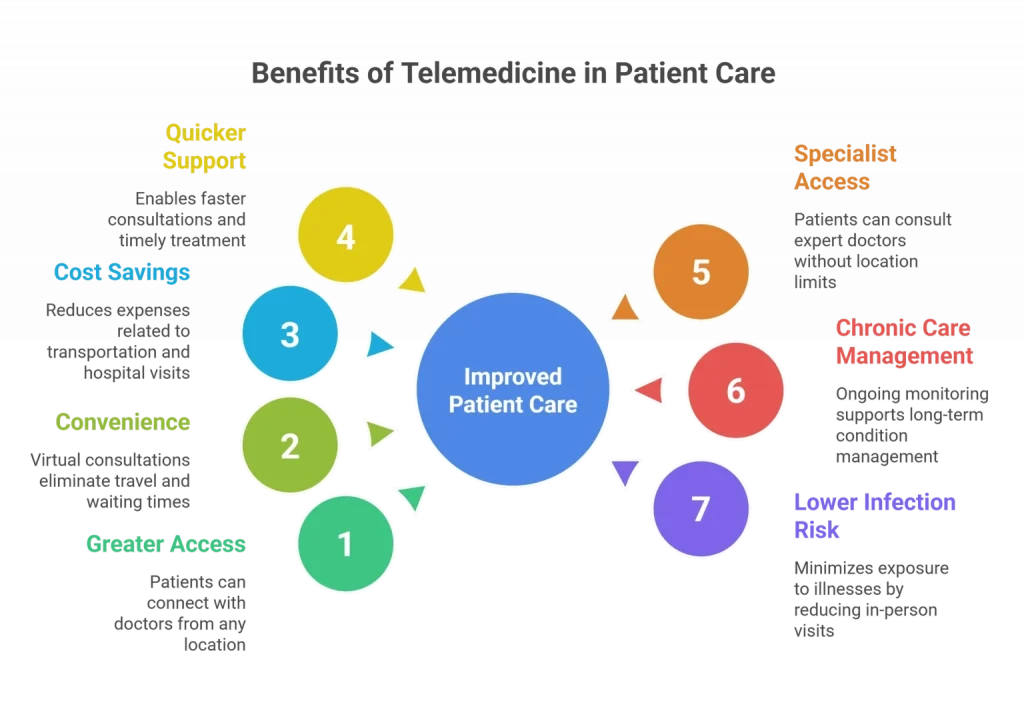
Greater Access to Care: Patients can connect with doctors from any location, which is especially beneficial for those in rural or underserved areas.
Convenience & Time Efficiency: Virtual consultations eliminate the need for travel and reduce waiting times.
Cost Savings: Helps cut down expenses related to transportation, hospital visits, and infrastructure.
Quicker Medical Support: Enables faster consultations, leading to early diagnosis and timely treatment.
Easy Access to Specialists: Patients can consult expert doctors without being limited by location.
Improved Chronic Care Management: Ongoing monitoring supports better management of long-term conditions like diabetes and heart disease.
Lower Risk of Infection: Reduces the need for in-person visits, minimizing exposure to illnesses.
Telemedicine Technology Challenges
As telemedicine continues to grow in adoption, it brings along several technological challenges that need to be addressed. Issues such as data security, limited digital access, technical reliability, and integration with existing systems can impact the effectiveness of virtual care. Addressing these concerns is essential to ensure telemedicine remains accessible, efficient, and trustworthy for both patients and healthcare providers.
System Fragmentation and Lack of Standardization
One of the biggest challenges in telemedicine is system fragmentation and the lack of standardization. As digital health solutions have grown rapidly, many healthcare providers use different platforms that don’t always work well together. This leads to disconnected systems where patient data is stored in various formats, making it difficult to share, access, and maintain consistent records. Without common standards, it becomes harder to deliver seamless and coordinated care.
Security and Platform Integration
Protecting patient data is a major concern in telemedicine. Healthcare platforms must ensure strong data privacy and security while also integrating smoothly with systems like Electronic Health Records (EHRs). Building secure and well-connected systems requires advanced cybersecurity measures and reliable technical frameworks to prevent data breaches and ensure safe information exchange.
Meeting Consumer Expectations for a Digital-First Experience
Today’s patients expect healthcare services to be as smooth and convenient as other digital experiences, like online banking or shopping. They look for easy-to-use platforms, quick access to doctors, and minimal technical issues. However, consistently delivering such a seamless and user-friendly experience across different devices and networks can be challenging for healthcare providers.
Identifying Telehealth Use Cases
Not every medical condition can be effectively managed through telemedicine. It is important for healthcare providers to clearly identify which cases are suitable for virtual care and which require in-person visits. Defining these use cases helps ensure patients receive the right type of care at the right time without compromising quality.
Telehealth Staffing Challenges
Adopting telemedicine also requires healthcare professionals to adapt to new technologies and workflows. This can be challenging without proper training and support. Providers need to become comfortable with digital tools, remote consultations, and virtual patient management to deliver effective care in a telehealth environment.
Conclusion
Telemedicine has quickly become a key part of modern healthcare, changing how care is delivered and experienced. Technologies like AI, remote monitoring, and digital platforms are making healthcare more accessible, efficient, and convenient for both patients and providers.
At the same time, challenges such as data security, system integration, and staffing need to be managed carefully. As technology continues to evolve and regulations improve, telemedicine is set to grow even further, making healthcare more connected, patient-focused, and easier to access in the future.
AI chatbot patient engagement is changing the way patients communicate with healthcare providers. With WhatsApp bots, hospitals can quickly assist patients with tasks such as booking appointments, sending reminders, and answering basic health queries. These chatbots offer 24/7 support, share follow-up information and updates, and make patient communication easier and more accessible. They also help reduce administrative workload for healthcare teams, allowing organizations to deliver more efficient and patient-centered care.
Healthcare is undergoing a significant digital transformation, especially in the way patients communicate with healthcare providers. One of the most impactful developments in this shift is the rise of AI-powered WhatsApp conversational bots, which are redefining how patients access healthcare services.
These solutions use Conversational AI to enable real-time, personalized communication through WhatsApp, a platform that millions of people already use every day. By introducing a WhatsApp bot for patient communication, healthcare organizations can provide faster support, improve accessibility, and simplify interactions between patients and providers.
In this article, we explore how AI-powered WhatsApp chatbots are improving AI chatbot patient engagement, reducing operational inefficiencies, and enhancing the overall patient experience. We will also examine real-world implementations, technical considerations, and practical strategies for healthcare providers planning to adopt this technology.
Bridging the Healthcare Communication Gap with Conversational AI
Healthcare providers have long struggled to manage patient communication efficiently. Traditional methods such as phone calls, appointment desks, and manual follow-ups often result in long wait times, overloaded staff, and delayed responses.
Conversational AI offers a modern solution to these challenges. By introducing automation through messaging platforms like WhatsApp, healthcare organizations can streamline interactions and respond to patients instantly.A WhatsApp bot for patient communication can handle routine tasks such as appointment scheduling, reminders, and general inquiries. This not only reduces administrative pressure on healthcare staff but also improves the patient experience by providing quicker responses and easier access to services.
Since WhatsApp is widely used across the world, patients can interact with healthcare providers through an app they are already comfortable using. This makes the transition to AI-driven communication smooth and convenient.
Understanding AI WhatsApp Chatbots in Healthcare
An AI WhatsApp chatbot for healthcare is a virtual assistant powered by technologies such as Natural Language Processing (NLP) and Machine Learning (ML). These technologies allow the chatbot to understand patient queries and provide meaningful responses.
The chatbot typically integrates with hospital systems such as Electronic Health Records (EHR), Electronic Medical Records (EMR), and Customer Relationship Management (CRM) platforms. This integration allows the bot to provide personalized assistance and support effective AI chatbot patient engagement through real-time interactions.
Core Functions of AI WhatsApp Healthcare Bots
AI-powered WhatsApp healthcare bots are designed to streamline patient communication and improve service delivery through automated, real-time interactions. These bots handle a range of essential tasks, from answering patient queries to managing appointments and sending timely updates.
By leveraging conversational AI, they help healthcare providers reduce manual workload, enhance patient engagement, and ensure quicker, more efficient responses. Understanding their core functions highlights how these bots support both patients and providers in delivering a smoother healthcare experience.
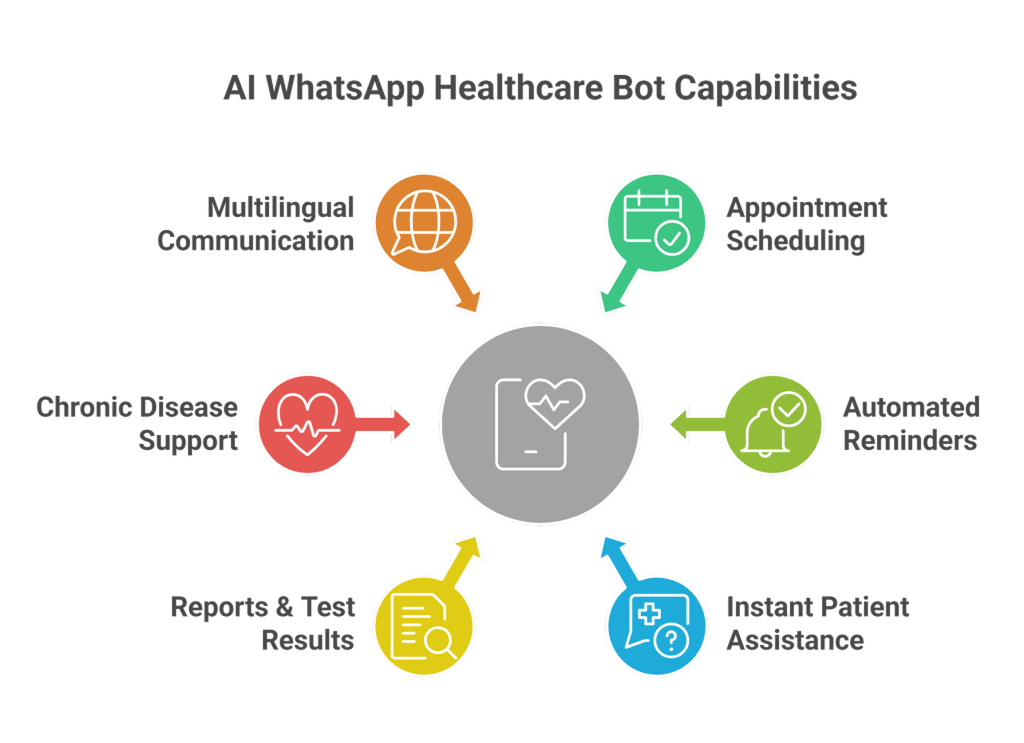
Appointment Scheduling
Patients can easily book, reschedule, or cancel appointments through simple chat interactions with the bot.
Automated Reminders and Notifications
The chatbot sends appointment reminders, medication alerts, and preventive care notifications to ensure patients stay informed and prepared.
Instant Patient Assistance
A WhatsApp bot for patient communication can answer common healthcare questions, provide symptom guidance, and offer general health information instantly.
Access to Reports and Test Results
Patients may receive diagnostic reports and follow-up instructions directly within the chat interface.
Chronic Disease Support
Chatbots can assist patients managing long-term conditions by sending medication reminders, wellness tips, and symptom tracking prompts.
How Do AI WhatsApp Bots Improve Real-Time Patient Interaction?
AI WhatsApp chatbots significantly improve AI chatbot patient engagement by enabling instant and continuous communication between patients and healthcare providers.
Instead of waiting on phone lines or contacting hospitals during limited office hours, patients can interact with a chatbot anytime through WhatsApp. This ensures faster responses and greater convenience.
During the COVID-19 pandemic, many healthcare institutions used chatbots to manage patient queries, provide vaccine information, and conduct preliminary symptom checks. These implementations demonstrated how conversational AI can support real-time patient interaction at scale.
By providing immediate responses and round-the-clock availability, AI chatbots help healthcare organizations maintain strong and consistent communication with patients.
The Benefits of AI Chatbot Patient Engagement in Healthcare
In this section, we look at the top benefits of AI WhatsApp bots in healthcare, showing how AI chatbots are changing how providers connect with patients by offering quick, personalized interactions.
24/7 Accessibility for Patients
AI-powered chatbots enable patients to reach healthcare services at any time of the day. This continuous accessibility improves patient satisfaction and ensures people can receive assistance whenever they need it.
Greater Operational Efficiency
Automation allows healthcare organizations to manage a large number of routine inquiries without overwhelming administrative teams.
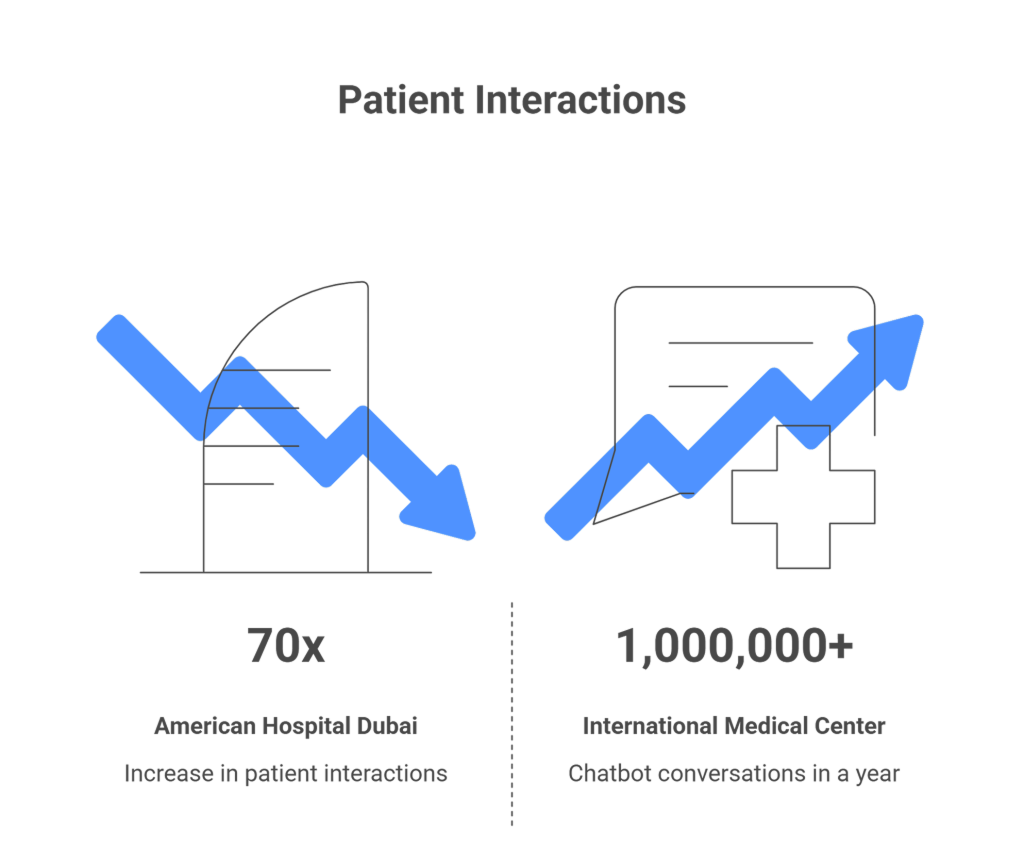
For example, the International Medical Center (IMC) in Saudi Arabia handled more than one million chatbot conversations in a single year, significantly reducing the burden on their call center operations.
Stronger Patient Relationships
Consistent communication through WhatsApp improves AI chatbot patient engagement by keeping patients informed and involved in their healthcare journey. Appointment reminders, follow-ups, and health tips encourage patients to stay proactive about their care.
At American Hospital Dubai, the implementation of a chatbot resulted in a 70-fold increase in patient interactions, demonstrating the effectiveness of conversational communication.
Multilingual Communication
A WhatsApp bot for patient communication can easily support multiple languages. This feature is especially valuable in regions with diverse populations, where language barriers often affect access to healthcare services.
By automatically switching languages, chatbots make healthcare information accessible to a broader range of patients.
What Do Real-World Results Show About WhatsApp Bots in Healthcare?
Real-world deployments highlight the growing success of AI chatbot patient engagement strategies.
Hospitals and Healthcare Networks
Several hospitals have implemented WhatsApp bots to streamline patient communication.
For example, American Hospital Dubai (AHD) introduced a chatbot to manage appointment bookings, test result notifications, and general inquiries. Within the first six months, the hospital experienced a dramatic increase in patient interactions while reducing call center workload.
Similarly, the International Medical Center in Saudi Arabia automated over one million patient conversations, improving efficiency and simplifying service access.
Private Clinics and Health-Tech Companies
Smaller healthcare providers are also benefiting from conversational AI.
In India, Taal Clinic recorded a 50% increase in patient engagement after implementing automated WhatsApp reminders and follow-ups. Health-tech platforms across the Middle East have also used chatbot solutions to automate appointment scheduling and reduce contact center traffic by up to 70%.
Government and Public Health Initiatives
Public healthcare systems have also adopted chatbots for large-scale communication.
The Dubai Health Authority introduced a WhatsApp bot during the COVID-19 pandemic to manage symptom checks, health alerts, and vaccine scheduling. Similarly, Saudi
These initiatives demonstrate how conversational AI can support efficient healthcare communication during public health emergencies.
How Does WhatsApp Bot Integration Work with EHR Systems?
To deliver personalized services, a WhatsApp bot for patient communication must connect with existing hospital systems.
Integration with EHR and CRM platforms allows the chatbot to retrieve relevant patient information, including appointment schedules, treatment updates, and diagnostic reports. This enables the bot to provide accurate and context-aware responses.
Ensuring Data Security and Compliance
Healthcare data requires strict protection, making it essential to understand how WhatsApp chatbots protect patient data privacy. Chatbot systems must comply with data protection standards such as HIPAA, GDPR, and regional healthcare regulations.
WhatsApp provides end-to-end encryption, while chatbot platforms often add extra security measures such as two-factor authentication (2FA) or OTP verification to protect patient information, further strengthening how WhatsApp chatbots protect patient data privacy.
Voice-Based Interaction Capabilities
Some advanced chatbots now support voice interaction. Patients can speak their queries rather than typing them, making healthcare communication more accessible for elderly users or individuals with disabilities.
Strategic Recommendations for Healthcare Providers
As healthcare organizations increasingly adopt digital solutions, a well-defined strategy becomes crucial for achieving success and long-term impact. Strategic guidance helps providers align technology with patient expectations, compliance requirements, and operational objectives.
With the right approach, healthcare providers can fully leverage digital tools to enhance patient engagement and improve efficiency. This section highlights key considerations to support effective implementation and sustainable results.
Promote Cross-Team Collaboration
Successful implementation of a WhatsApp bot for patient communication requires coordination between IT teams, compliance specialists, and patient service departments. Early collaboration ensures the solution fits within hospital workflows and regulatory requirements.
Continuously Improve the Chatbot Experience
Healthcare providers should track key performance metrics such as chatbot response accuracy, patient satisfaction, and appointment conversions. Insights from these metrics can help improve the chatbot and expand its capabilities over time.
Conclusion
AI-powered WhatsApp chatbots are transforming how patients communicate with healthcare providers. By improving AI chatbot patient engagement and enabling an efficient WhatsApp bot for patient communication, these technologies make healthcare more accessible, responsive, and convenient.
From reducing operational workload to improving chronic disease management and patient engagement, conversational AI offers clear benefits across the healthcare ecosystem.
By adopting a strategic and phased implementation approach, healthcare organizations can leverage WhatsApp chatbots to improve patient access, strengthen communication, and enhance overall healthcare delivery.
As we advance through 2025, the healthcare industry is witnessing a paradigm shift. What once began as an emergency response to the global pandemic has now matured into a sophisticated, scalable component of modern care. The future of telemedicine is no longer theoretical, it is foundational to how hospitals, clinicians, and patients interact. With evolving policies, emerging technologies, and changing patient expectations, telemedicine in healthcare is being redefined by innovation and integration.
For hospital administrators, clinical innovation leaders, and health IT professionals, the ability to adapt and lead this transformation is more than a strategic advantage, it is a healthcare imperative.
Telemedicine’s Strategic Role in Healthcare Systems
From Peripheral Tool to Core Strategy
Telemedicine has evolved beyond convenience; it is now a critical enabler of operational efficiency, patient engagement, and care continuity. Hospitals and healthcare systems are embedding virtual consultations into routine clinical workflows, supported by cloud-based healthcare solutions that offer secure, compliant, and scalable infrastructure.
Health systems are now adopting telehealth platforms that not only connect patients to clinicians but also support population health management, triage automation, and digital-first care pathways.
Policy Shifts and Regulatory Enablement
Legislation and regulatory frameworks in the US, Europe, and Asia have extended support for virtual care through 2025. The U.S. has allowed Medicare beneficiaries to access telehealth from home with continued reimbursement support. In Europe, national telemedicine strategies have enabled cross-border consultations, while India’s eSanjeevani has surpassed 340 million free online consultations, highlighting the public health potential of remote healthcare delivery.
Key Technologies Driving Virtual Healthcare in 2025
Artificial Intelligence in Telemedicine
The integration of artificial intelligence in telemedicine is enhancing diagnostic accuracy, streamlining documentation, and enabling intelligent triage systems. AI-powered decision support tools are embedded into EHR systems, allowing physicians to make faster and more informed decisions.
Ambient clinical intelligence, such as AI scribes and virtual assistants, has improved the telemedicine user experience for both providers and patients. These tools reduce cognitive load and allow clinicians to focus more on personalized patient care.
Virtual Healthcare Innovations
Innovations in virtual healthcare have made care delivery more accessible, interactive, and patient-centered. From digital therapeutics to app-based rehabilitation programs, virtual-first care is being embraced across specialties. Mobile-first solutions offer intuitive user interfaces and are designed to support multilingual, culturally adaptive care experiences.
Additionally, secure telemedicine software now includes advanced encryption, multi-factor authentication, and consent capture to ensure compliance with HIPAA, GDPR, and other global standards.
Remote Patient Monitoring (RPM)
Remote patient monitoring is bridging the gap between episodic care and continuous health management. Wearables and connected devices such as smartwatches, ECG monitors, and glucose sensors transmit real-time health data to providers. This data is seamlessly integrated into care dashboards, enabling proactive interventions and early detection of complications.
RPM has shown significant impact in chronic care management, particularly for conditions like hypertension, COPD, and diabetes. Many health systems have established virtual chronic care clinics that use telehealth as the front door to ongoing support.
Clinical Integration and the Rise of Hybrid Care
Embedding Telemedicine in Clinical Workflows
The modern healthcare environment no longer distinguishes between virtual and in-person care; they are interconnected. Whether through automated scheduling for post-operative follow-ups or virtual triage before emergency visits, patient-centered virtual care is becoming the standard.
Telehealth is also expanding in specialties like oncology, psychiatry, and dermatology. For example, tele-dermatology is enabling faster diagnosis and treatment planning through high-resolution image submissions and asynchronous specialist consultations.
Hospital-at-Home and Acute Telehealth Services
In 2025, hospital-at-home models are gaining traction, supported by integrated telehealth and RPM technologies. Patients with moderate acute conditions can now receive hospital-level care at home with regular virtual check-ins and on-demand escalation protocols.
These models are particularly impactful in reducing readmission rates, improving patient satisfaction, and lowering operational costs. They are also supported by cloud-based remote monitoring solutions and virtual nursing platforms.
Global Innovation Outlook
Regional Trends in the U.S., Europe, and Asia
In the U.S., the continuation of telehealth reimbursement policies has led to greater institutional investments in virtual infrastructure. Europe, with its centralized health systems, is focusing on telehealth for aging populations and rural outreach. Asia is witnessing a technology-led transformation with platforms like Ping An Good Doctor and widespread mobile health adoption in rural India and Southeast Asia.
Each region contributes unique innovations, from AI-integrated public systems to private virtual hospitals, building a diverse but converging future for telemedicine.
Future-Forward Technologies
Predictive Analytics and Proactive Care
Predictive analytics is becoming a cornerstone in proactive healthcare delivery. By analyzing data from wearables, EHRs, and historical patient records, healthcare systems can anticipate complications and intervene early. This capability enables tailored interventions and more efficient chronic disease management.
5G and Low-Latency Telehealth
The rollout of 5G technology is transforming virtual care by enabling ultra-low latency connections. This facilitates high-resolution video consultations, real-time diagnostics, and remote robotic surgeries, especially in rural and bandwidth-challenged areas.
Real-Time Transcription and Clinical Documentation
AI-powered transcription tools now provide real-time clinical documentation during telehealth visits. This reduces administrative burdens, enhances accuracy, and allows clinicians to maintain eye contact and engagement with patients during virtual encounters.
API-First and Interoperable Platforms
Modern telehealth platforms are increasingly adopting API-first architectures, making it easier to integrate with third-party apps, health information exchanges, and EHR systems. Interoperability ensures seamless data exchange, supports care continuity, and enhances the overall telemedicine user experience.
Emerging innovations include AR/VR for physical therapy and pain management, real-time language translation for global consultations, and blockchain-enabled health data security. The evolution of telehealth platforms into complete care ecosystems is now a dominant theme.
Moreover, virtual second opinions and international teleconsultations are expanding the reach of clinical expertise beyond geographical boundaries.
Expert Perspectives: Challenges and Opportunities
Healthcare leaders agree that the success of virtual care depends on three pillars: integration, equity, and usability. While adoption rates are high, ensuring inclusivity for older adults, rural populations, and those with limited digital literacy remains a challenge.
To address this, health systems are providing telehealth navigators, multilingual support tools, and offline patient education. Telemedicine user experience is being reimagined not just for tech-savvy users, but for all demographic segments.
Conclusion: Leading with Innovation, Compassion, and Intelligence
The future of telemedicine is shaping a new era in global healthcare, one that is more inclusive, intelligent, and accessible. As telemedicine in healthcare becomes the default for many services, it is imperative for decision-makers to invest in agile platforms, patient-centric design, and sustainable policy models.
By aligning virtual healthcare innovations, remote patient monitoring, and artificial intelligence in telemedicine with operational strategies, healthcare leaders can build resilient, connected, and compassionate care ecosystems.
The healthcare organizations that succeed in 2025 and beyond will be those that see telemedicine not as an adjunct but as a core pillar of care.
Explore AI-Powered Telemedicine with Quad One
Quad One’s AI Telemedicine Solution streamlines patient care with intelligent appointment scheduling, automated triage, and real-time reporting—all within a secure and scalable digital infrastructure.
Transform Healthcare Access, One Virtual Visit at a Time
Stay ahead with expert insights and proven strategies on how AI-powered telemedicine is reshaping patient engagement, scheduling, and care delivery. Subscribe now!
Prompts play a critical role in healthcare because they directly shape how AI interprets information and delivers results. In a field where accuracy, clarity, and safety are essential, even small changes in how a prompt is written can significantly influence the outcome.
A well-designed prompt helps AI generate precise and clinically relevant responses whether it’s summarizing patient records, drafting medical documentation, or supporting decision-making. By clearly defining the context, intent, and expected format, prompts reduce ambiguity and ensure the output aligns with clinical needs.and it changes everything.
Prompt Engineering in Healthcare: Best Practices, Strategies and Trends
With technology becoming a bigger part of healthcare, giving clear instructions to systems is more important than ever. Prompt engineering helps doctors and staff get accurate answers for tasks like diagnosis, documentation, and patient data. By framing the right questions, healthcare professionals can reduce errors, save time, and make better-informed decisions.
It also supports smoother workflows by simplifying complex processes and improving communication between teams and digital tools. As new trends and tools continue to evolve, adopting effective prompt strategies can help healthcare organizations stay efficient, deliver more personalized care, and achieve better patient outcomes.
The Rise of AI in Healthcare: A New Frontier
Healthcare is stepping into a new era where artificial intelligence is not just supporting care — it’s actively shaping how it’s delivered, reflecting AI in healthcare 2026 top trends that are redefining clinical practice and operations.
This shift marks a new frontier, where technology and human expertise work side by side to improve outcomes, reduce inefficiencies, and create more personalized patient experiences. As AI continues to evolve, it’s redefining the boundaries of what healthcare systems can achieve.
How Generative AI is Transforming Modern Care
In recent years, healthcare has witnessed rapid advancements in artificial intelligence. Models like GPT-4 have demonstrated near expert-level performance in medical assessments, while Med-PaLM 2 has shown high accuracy in clinical reasoning tasks. These developments highlight how natural language processing is reshaping both clinical and operational aspects of healthcare, with generative AI in healthcare explored across diagnostics, documentation, and patient communication.
From enabling personalized treatment approaches to improving operational efficiency, AI is helping providers make more informed and timely decisions. Today, healthcare organizations are integrating large language models (LLMs) into workflows to summarize electronic health records (EHRs), assist with patient communication, and generate clinical documentation all guided by well-crafted prompts.
What Is Prompt Engineering in Healthcare?
Prompt engineering in healthcare refers to the practice of designing structured and precise instructions that guide AI systems to produce accurate, safe, and clinically relevant outputs.
In a high-stakes environment like healthcare, prompts act as a control layer between human intent and AI response. Whether it’s generating diagnostic suggestions, drafting reports, or assisting in patient interactions, the quality of the prompt directly influences the reliability of the outcome.
Well-designed prompts help reduce ambiguity, ensure alignment with clinical standards, and support compliance with regulatory requirements. As AI adoption grows, prompt engineering is becoming essential for integrating AI safely and effectively into healthcare workflows.
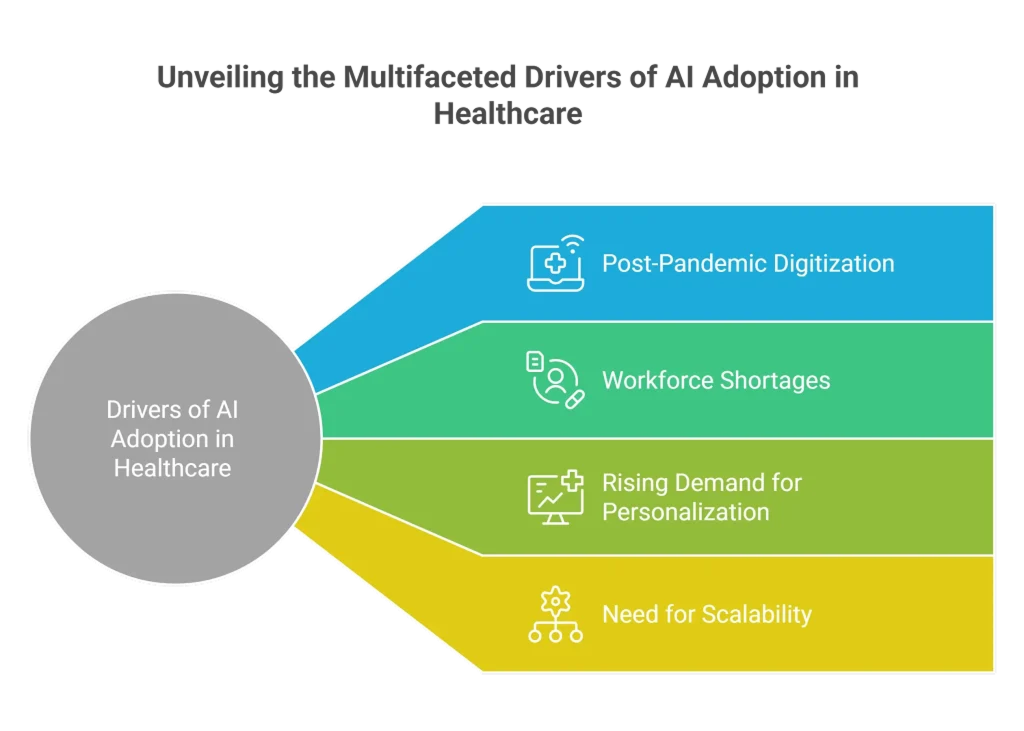
Clinical Applications of Prompt Engineering
Prompt engineering is increasingly important in clinical settings as it helps healthcare professionals use AI tools more effectively. By giving clear instructions, clinicians can get accurate information for diagnosis, patient data analysis, and treatment planning. This makes AI more reliable and helps improve overall efficiency in healthcare workflows.
Enhancing Diagnostic Accuracy with Medical AI Prompts
Structured prompts can significantly improve clinical decision support. For instance:
A 60-year-old male with chest pain and shortness of breath. Provide possible causes, recommended diagnostic tests, and an initial treatment plan.
Such prompts enable AI to generate organized and clinically relevant outputs, supporting faster and more accurate decision-making.
Domain-Specific Prompting in Clinical Practice
Specialty-focused prompts enhance precision and usability:
- Oncology: Analyze imaging for tumor size, location, and stage
- Mental Health: Guide patient conversations with empathetic follow-ups
- Cardiology: Interpret ECGs and flag abnormalities
Tailored prompts align AI outputs with clinical workflows, improving both efficiency and accuracy.
Personalized Treatment Planning
AI models can assist in developing treatment plans by incorporating patient history, co-morbidities, and clinical guidelines.
Prompt Format:
[Patient Summary] + [Clinical Goal] + [Guideline Constraints]
This approach ensures recommendations remain evidence-based while allowing clinicians to validate and refine outputs.
Streamlining Administrative Workflows with Prompt Engineering
Managing administrative tasks in healthcare can often be time-consuming and complex. Prompt engineering helps simplify these processes by guiding AI systems with clear instructions, making tasks like documentation, scheduling, and data handling faster and more accurate. This not only improves efficiency but also reduces workload, allowing healthcare staff to focus more on patient care.
Automating Clinical Documentation
Prompt-driven AI can reduce administrative workload by:
- Drafting clinical notes and summaries
- Generating referral letters
- Preparing discharge instructions
Prompt Format:
[Task] + [Document Type] + [Formatting Requirements]
Enhancing Operational Efficiency
Enhancing operational efficiency in healthcare focuses on improving how daily tasks and processes are managed. By optimizing workflows, reducing delays, and using technology effectively, organizations can save time, lower costs, and improve accuracy. This ultimately helps deliver faster, more reliable care and a better experience for both patients and staff.
AI prompts are also used for:
- AI is transforming medical coding and billing support
- Prior authorization documentation
- Insurance communication
Standardized prompts improve turnaround time and ensure consistency across administrative processes.
Improving Patient Experience with Healthcare Chatbots
Integration strategies in hospitals aim to link different systems, technologies, and workflows for smoother operations. By bringing together tools like health records, AI, and clinical processes, hospitals can improve communication, minimize errors, and deliver better patient care. This leads to a more organized and efficient healthcare system.
Prompt Design in Virtual Health Assistants
AI-powered chatbots rely on structured prompts to:
- Conduct symptom checks
- Provide pre-visit guidance
- Offer follow-up care instructions
Empathetic and Clear Communication
Prompts that guide AI to respond in simple, patient-friendly language improve trust and engagement. They help translate complex medical information into understandable insights, enhancing the overall patient experience.
Integration Strategies for Hospitals
Hospitals often use many different systems that don’t always work well together. Integration strategies help connect these tools and processes so information flows smoothly across departments. This improves coordination, reduces errors, and makes overall hospital operations more efficient while supporting better patient care.
Embedding in EHR Systems
AI tools are increasingly integrated into platforms like EHR systems, where prompts are automatically triggered based on clinical context, enabling seamless workflow integration.
Training Clinical Teams
Educating healthcare professionals on prompt usage ensures:
- More effective AI interaction
- Reduced errors
- Consistent and reliable outputs
What Are Key Best Practices for AI Prompt Engineering in Healthcare?
Strong prompt engineering is key to generating accurate, safe, and context-relevant outputs from AI in healthcare. Following best practices helps organizations improve reliability, stay compliant, and support better clinical decisions while reducing potential risks.
Prompts Must Be Specific
Clear and detailed prompts lead to more accurate and relevant outputs. Vague instructions often result in incomplete or unreliable responses.
Provide Relevant Context With Follow-Up Prompts
Including patient history, clinical background, and additional clarifications helps AI generate more precise insights. Follow-up prompts can refine and improve responses further.
Give Examples of Desired Outputs
Providing sample outputs or formats helps guide AI in structuring responses correctly, ensuring consistency and usability in clinical settings.
Challenges and Ethical Considerations
The growing use of AI in healthcare brings both new possibilities and important challenges that cannot be overlooked. Factors such as accuracy, data privacy, bias, and overdependence on technology must be carefully addressed to protect patient safety and maintain trust. Ensuring responsible use through clear guidelines, ethical practices, and human oversight is essential for effective implementation.
Managing AI Hallucinations and Clinical Risk
AI systems may generate incorrect yet plausible responses. Structured prompts and human oversight are essential to minimize such risks.
Ensuring Data Privacy
Sensitive patient data must be protected through secure systems, de-identification, and compliance with healthcare regulations.
Responsible AI Use
Healthcare organizations must prioritize transparency, informed consent, and human involvement in critical decisions.
Future Outlook: Scaling Prompt Engineering in Healthcare
As AI evolves, prompt engineering will play a central role in enabling. As these systems grow more interconnected, using a model context protocol for AI communication will help agents share context reliably across tools and workflows.
- Multimodal AI applications (text, images, and data integration)
- Advanced clinical decision support
- Personalized and scalable patient care
Investing in prompt libraries, governance frameworks, and continuous optimization will be key to unlocking long-term value.
Conclusion
Prompt engineering is rapidly becoming a foundational element in healthcare AI. By structuring inputs effectively and refining them over time, organizations can ensure AI delivers accurate, safe, and meaningful outcomes.
From improving diagnostics and automating documentation to enhancing patient engagement, prompt engineering is shaping a smarter, more efficient, and patient-centric healthcare ecosystem.
Advance Healthcare with Intelligent Innovation
Explore how prompt engineering and AI are shaping the future of healthcare delivery. Stay informed with expert-led insights and practical strategies. Subscribe for updates.
The rise of telemedicine has significantly transformed healthcare by making care more accessible, efficient, and patient-centered. What began as a supplementary service has now become a core part of modern healthcare, especially accelerated by the COVID-19 pandemic. With the integration of artificial intelligence, e-consultation platforms have evolved into intelligent systems that support real-time patient interaction, symptom triage, appointment scheduling, and follow-ups.
AI-powered telemedicine enhances both patient experience and clinical efficiency. It reduces administrative workload, enables better data management, and allows healthcare providers to focus on high-value tasks. These platforms also improve accessibility by supporting multiple languages, assisting low-tech users, and reaching patients in remote areas. Seamless integration with electronic health records ensures continuity of care and more informed decision-making.
“These ongoing telemedicine trends are making care more accessible, efficient, and patient-centered.”
Telemedicine and the rise of online consultations
Telemedicine and online consultations have rapidly transformed how healthcare is delivered, making medical support more accessible and convenient than ever before. With the help of digital platforms, patients can now connect with doctors remotely for
diagnosis, follow-ups, and even ongoing treatment without the need for in-person visits.
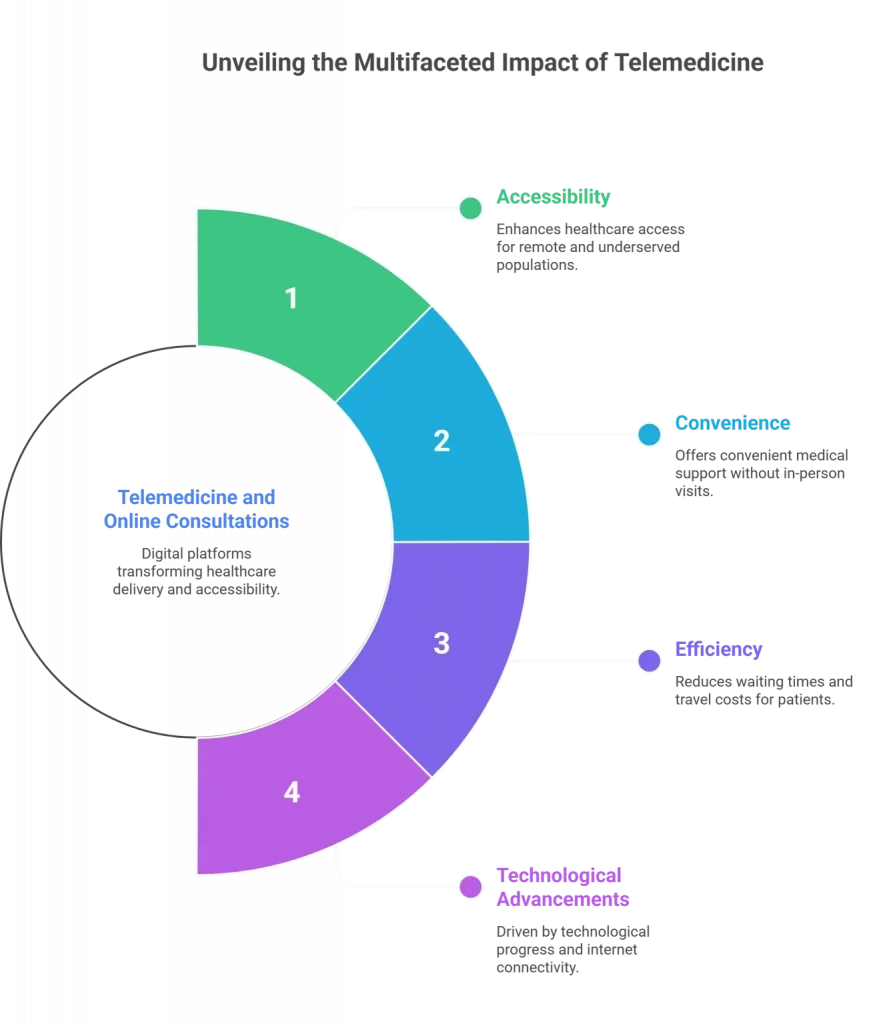
This shift has been driven by advancements in technology, increased internet access, and the growing demand for faster, more flexible care. Telemedicine not only helps reduce waiting times and travel costs but also plays a crucial role in reaching patients in remote or underserved areas. As healthcare continues to evolve, online consultations are becoming an essential part of modern care delivery.
What is Telemedicine?
Telemedicine is a way to get all your medical care needs met using technology such as phone calls, video calls, or mobile apps. It enables patients to connect with healthcare professionals remotely, making it easy to discuss symptoms, seek medical advice, receive diagnoses, and even get prescriptions without needing to visit a hospital or clinic in person.
Beyond basic consultations, telemedicine also supports follow-up care, routine check-ups, mental health services, and the management of chronic conditions like diabetes or hypertension. It helps reduce travel time, lowers healthcare costs, and improves access for people in remote or underserved areas.
Advantages of Telemedicine :
Telemedicine has played a significant role in making healthcare more efficient and convenient for both patients and providers. It helps reduce long waiting hours at hospitals and clinics, allowing patients to connect with doctors quickly and get timely medical advice without the hassle of travel. This not only saves time but also makes it easier for people to fit healthcare into their daily lives.
Patients can reach out to doctors as soon as they notice symptoms, which leads to faster diagnosis and early treatment. This quick access can make a real difference, especially in preventing minor issues from becoming serious health problems.
In many platforms, voice assistants in healthcare appointment booking also make it easier for patients to schedule or reschedule visits using simple voice commands, adding another layer of convenience.
Challenges and Limitations of Online Consultations
Telemedicine has definitely made some remarkable strides, but it also comes with its own set of limitations. One of the main challenges is the lack of physical examination, which can make it difficult for doctors to accurately diagnose certain conditions that require hands-on assessment or diagnostic tests.
Another limitation is the dependence on technology. Not everyone has access to a stable internet connection, smartphones, or the digital skills needed to use telehealth platforms effectively. This can create a gap, especially among elderly patients or those in underserved communities.
There are also concerns around data privacy and security, as sensitive medical information is shared online. In addition, some patients may feel that virtual consultations lack the personal touch and reassurance of face-to-face interactions with their doctors.
| Aspects | Telemedicine (Online Consultations) | In-Person Consultations |
| Accessibility | Easy access from anywhere with internet | Requires travel to the hospital |
| Time Efficiency | Saves time, no waiting in long queues | Often involves waiting time and travel |
| Physical Examination | Not possible or limited | Full physical check-up possible |
| Convenience | Highly convenient, can consult from home | Less convenient, requires scheduling and travel |
| Cost | Usually lower (no travel or related expenses) | Higher due to travel, time, and hospital costs |
| Personal Interaction | Less personal, virtual communication | More direct and personal interaction |
The Role of Online Consultations in the Future of Healthcare
Online consultations are shaping the future of telemedicine and key healthcare trends by making care more connected and patient-focused. People no longer have to depend only on physical visits. People no longer have to depend only on physical visits to get medical help; they can speak to a doctor anytime, from anywhere. This flexibility is especially helpful for those with busy schedules, limited mobility, or living in areas where healthcare facilities are not easily accessible. It brings a sense of comfort and ease, knowing that medical support is just a call or click away.
As healthcare continues to evolve, online consultations will become a natural part of everyday care. They will help doctors stay connected with patients even after treatment, ensuring better follow-ups and ongoing support. While hospitals and clinics will always remain important, virtual care will act as a strong support system, making healthcare faster, more efficient, and more responsive to people’s needs.
Conclusion:
Healthcare delivery has evolved rapidly in recent years, with telemedicine and online consultations playing a key role in making care more accessible and adaptable to modern lifestyles. From quick virtual consultations to AI-powered support systems, this shift has brought care closer to patients, breaking down barriers like distance, time, and availability. It has not only improved patient convenience but also allowed healthcare providers to work more efficiently and focus on delivering quality care.
While there are still challenges such as limited physical examinations, technology gaps, and data security concerns, the overall impact of telemedicine remains highly positive. As technology continues to advance, these limitations are likely to be addressed, making virtual care even more reliable and inclusive. In the coming years, telemedicine will not replace traditional healthcare but will work alongside it, creating a balanced, hybrid model that ensures better access, continuity, and quality of care for everyone.
Healthcare systems worldwide are under immense pressure to balance operational efficiency with delivering timely, personalised patient care. Traditional appointment booking methods, primarily phone calls or online forms, often lead to bottlenecks, staff overload, and suboptimal patient experiences. Voice assistants for healthcare appointment booking are changing this dynamic. These AI-powered systems use natural language processing (NLP) to engage with patients via speech, allowing them to schedule, modify, or cancel appointments using simple spoken commands, 24/7, without call queues.
| Quick Answer : Voice assistants streamline healthcare appointment booking by using natural language processing (NLP) to let patients schedule, modify, or cancel appointments via voice commands — 24/7, without call queues. Integrated with EHR and CRM systems via FHIR APIs, they reduce no-show rates by up to 72%, cut cost-per-booking from $8–15 to $1–3, and free staff from up to 38% of administrative scheduling workload. |
Voice scheduling is one component of a broader AI in healthcare transformation that is reshaping how hospitals operate, engage patients, and deliver care.
Whether it is booking a consultation with a general practitioner or scheduling a specialised diagnostic test, voice assistants offer real-time interaction that mirrors human-like conversation. This guide covers how they work, how they integrate with hospital systems, what results leading hospitals are seeing, and how the technology is evolving.
Traditional vs. AI-Powered Healthcare Appointment Booking: A Full Comparison
Before evaluating voice assistants, it helps to understand exactly what they replace. The table below compares traditional phone-and-form scheduling against AI-powered voice booking across the dimensions that matter most to hospital operations teams.
Availability. Traditional booking is limited to business hours and staff capacity. Voice assistants operate 24/7, handling simultaneous requests without hold times.
Cost per booking. Manual scheduling typically costs $8–15 per appointment when factoring in staff time, phone infrastructure, and error correction. AI voice agent healthcare reduces this to $1–3 per booking by automating the entire workflow.
No-show management. Phone-based reminders are inconsistent and resource-intensive. Voice assistants deliver multi-touch, personalised reminders at optimal intervals (72 hours and 24 hours before the appointment), with one-tap confirm or reschedule options, cutting no-show rates by up to 72%.
Language support. Traditional call centres require multilingual staff, which is expensive and hard to scale. Voice assistants handle dozens of languages natively using NLP models, making healthcare access equitable across diverse patient populations.
Scalability. Adding call centre capacity means hiring, training, and managing more staff. voice AI healthcare appointment scheduling scales instantly during peak demand (flu season, vaccination drives, outbreaks) without additional headcount.
Data capture. Manual booking often results in incomplete or inaccurate patient records. Voice assistants capture structured data (patient ID, appointment type, preferred provider, insurance details) and write it directly to the EHR and scheduling system in real time.
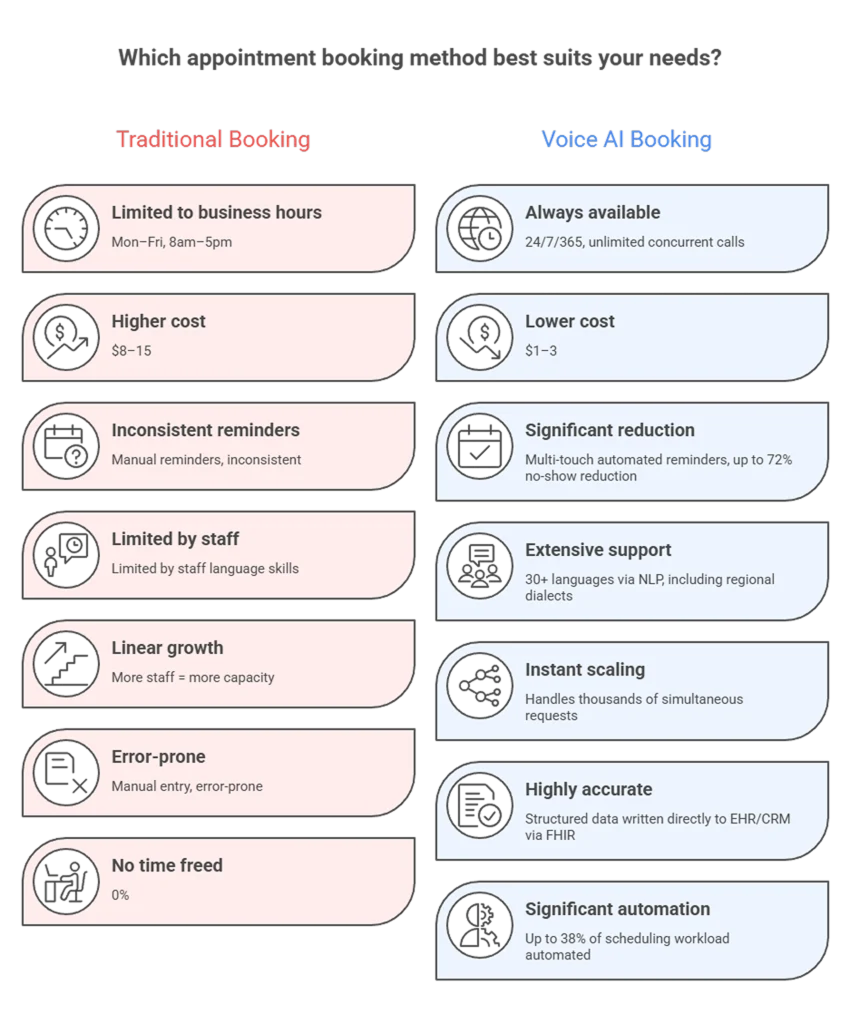
How Do Voice Assistants Work for Healthcare Scheduling?
A voice assistant for healthcare scheduling operates through a four-stage pipeline that converts spoken patient input into a confirmed appointment record inside the hospital’s systems.
Stage 1: Speech Recognition. The patient speaks naturally (“I need to see Dr. Patel next Thursday afternoon”). Automatic speech recognition (ASR) converts the audio to text. Modern ASR models handle accents, medical terminology, and background noise with accuracy rates above 95%.
Stage 2: Natural Language Understanding (NLU). The NLU engine extracts intent (book, reschedule, cancel) and entities (provider name, date, time preference, appointment type). It disambiguates: “next Thursday” becomes a specific calendar date; “afternoon” maps to available slots between 12:00 and 17:00.
Stage 3: Back-End Integration. The system queries the scheduling engine via FHIR APIs to check real-time provider availability, patient eligibility, and insurance coverage. If the requested slot is unavailable, the assistant proposes alternatives ranked by proximity to the patient’s preference.
Stage 4: Confirmation and Follow-Up. The assistant confirms the booking, writes the appointment to the EHR, and triggers a confirmation message through the patient’s preferred channel (voice callback, SMS, WhatsApp, email). Automated reminder sequences are scheduled (72h + 24h) with one-tap reschedule links.
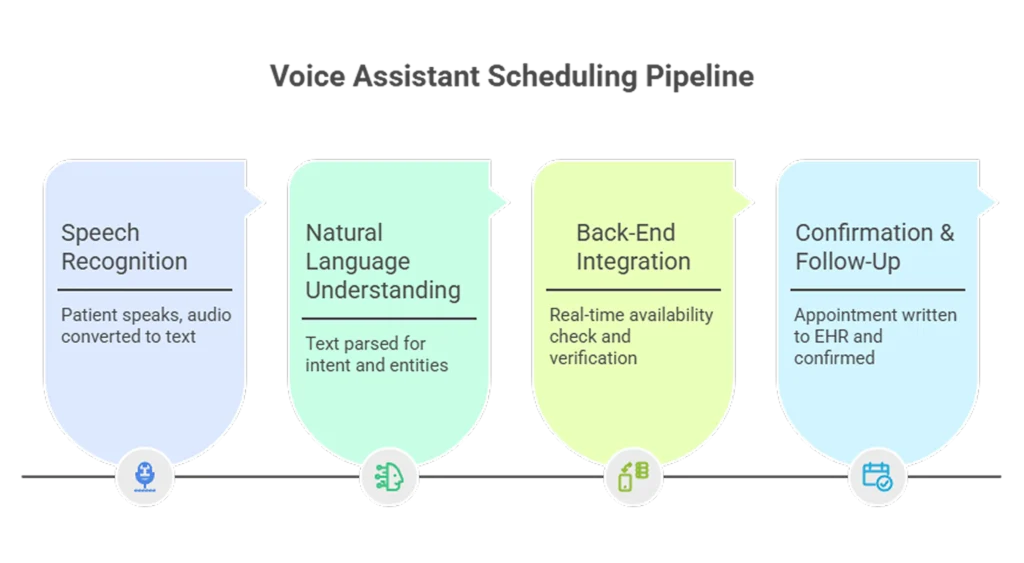
Technical Integration: Connecting the Voice agent healthcare to Hospital Systems
For hospital administrators and Health IT professionals, the most significant advantage of voice assistants is their ability to integrate securely and effectively with back-end infrastructure. Successful implementations typically include EHR and scheduling system integration to enable real-time availability checks and booking updates, Natural Language Understanding (NLU) capabilities to support multilingual patient interaction, omni-channel deployment via smart devices, mobile apps, and IVR phone systems, and FHIR-compatible APIs for standardised data exchange.
Voice assistants use FHIR (Fast Healthcare Interoperability Resources) APIs to securely exchange standardised healthcare data. These APIs enable voice systems to access appointment slots, patient records, and provider availability through consistent formats, reducing integration time by 30–40% compared to custom approaches.
When voice scheduling is connected to an AI hospital CRM, the booking data feeds directly into patient engagement workflows: automated pre-visit prep, post-visit follow-ups, and feedback collection all trigger from the same appointment event.
HIPAA compliance is non-negotiable. Voice data must be encrypted during transmission and at rest. Patient identity verification (date of birth, MRN, or biometric voice print) must precede any access to Protected Health Information. Audit logs must record every interaction. Leading implementations use end-to-end encryption and store voice recordings only when explicit patient consent is captured.
Real-World Results: How Leading Hospitals Use Voice Assistants
United States
Leading healthcare systems including Kaiser Permanente, Cleveland Clinic, Providence Health, and Mass General Brigham have implemented voice assistants for scheduling. Key technology providers include Microsoft Healthcare Bot, Google Health AI, and Amazon Comprehend Medical. Northeast Medical Group implemented a voice-first scheduling system and experienced significant improvements in booking completion rates and staff time savings.
Healthcare organisations like Cleveland Clinic and Mayo Clinic are now leveraging advanced voice capabilities to not only schedule appointments but also help prioritise urgent cases and suggest appropriate care levels based on symptom description.
In India, the combination of voice assistants and WhatsApp patient communication offers massive reach, especially in semi-urban and rural areas where voice-first interaction is the natural digital entry point, showing how AI WhatsApp bots are changing patient access by making support available through familiar everyday channels.
India
Apollo Hospitals deployed an Alexa-based voice skill linked to its internal scheduling systems. Later enhanced with multilingual support through WhatsApp and mobile platforms, Apollo reported a 49% increase in appointment bookings, particularly from regions with limited digital literacy. Their latest update added support for 8 regional languages, allowing them to reach over 80% of the Indian population in their native language.
In India, the combination of voice assistants and WhatsApp patient communication offers massive reach, especially in semi-urban and rural areas where voice-first interaction is the natural digital entry point.
Middle East
Medcare Hospitals in the UAE launched an AI assistant capable of handling bookings, cancellations, and rescheduling in real time. With Arabic-English bilingual capabilities and backend system integration, the assistant significantly improved both patient satisfaction and staff productivity. The UAE Ministry of Health has since established new standards for voice assistant implementation, making it part of their 2025 healthcare digitisation initiative.
These regional case studies share a common success factor: seamless integration with existing hospital systems (scheduling engines, CRMs, EHRs) combined with the ability to deliver a responsive, voice-enabled interface localised for the patient population.
How Do Voice Assistants Reduce No-Show Rates?
No-shows are one of healthcare’s most expensive blind spots. In the US alone, missed appointments are estimated to cost providers more than $150 billion annually. Voice assistants attack no-shows through three mechanisms.
Multi-touch, personalised reminders. Unlike generic SMS blasts, voice assistants deliver conversational reminders at optimal intervals. They call the patient, confirm intent, and offer one-tap rescheduling if the patient cannot make it. The conversational format drives higher engagement than text-only reminders.
Predictive no-show identification. AI models analyse historical attendance patterns, demographic factors, and appointment characteristics to flag high-risk patients. These patients receive enhanced engagement: additional reminder touchpoints, transportation assistance information, and proactive outreach from staff.
Instant waitlist backfill. When a patient cancels or reschedules, the voice assistant immediately contacts waitlisted patients with matching availability preferences and books the open slot in real time. This preserves clinic capacity that would otherwise be lost.
The Future of Voice Assistants in Healthcare Scheduling
The latest voice assistants are transcending basic scheduling functionality and are closely tied to the future of telemedicine key trends, where intelligent, always-available virtual front doors become a standard part of care delivery.
Large Language Models (LLMs) that enable more natural, context-aware conversations with patients. Instead of rigid slot-filling dialogues, the assistant can handle complex multi-turn requests (“I need to see my cardiologist sometime next week, but not Tuesday, and I’d prefer morning”) in a single conversational flow.
Predictive analytics that suggest optimal appointment times based on historical data and patient preferences. Systems at MetroHealth and Johns Hopkins are already using this to reduce scheduling friction.
Sentiment analysis that detects patient stress or confusion and adjusts responses accordingly, slowing down, simplifying language, or escalating to a human agent.
Integration with telehealth platforms for seamless virtual care transitions is accelerating. Learn more about Quad One’s AI telemedicine solution and how voice-booked appointments can transition between in-person and virtual modalities based on clinical need.
The next generation of voice solutions will not only streamline bookings but also support triage, medication adherence, and chronic disease management, turning the scheduling touchpoint into a broader patient engagement channel.
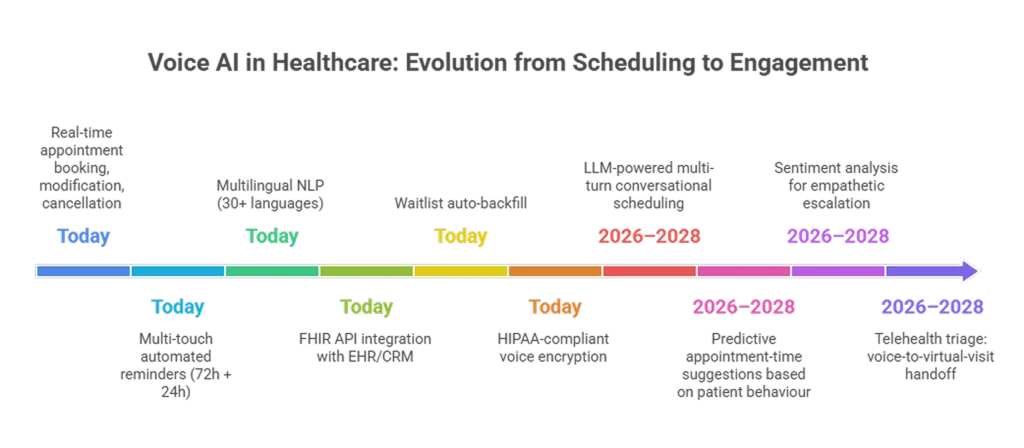
Implementation Playbook: Getting Started with Voice Scheduling
For hospital executives, innovation leaders, and health IT professionals looking to implement voice assistants, the following action steps provide a structured path to deployment:
Step 1: Audit current scheduling inefficiencies. Quantify call volumes, average hold times, no-show rates, cost-per-booking, and staff time spent on scheduling. This establishes the baseline for ROI measurement.
Step 2: Define integration requirements. Map the voice assistant’s data needs: which EHR fields, scheduling engine APIs, and patient identity verification methods are required. Confirm FHIR API availability from your EHR vendor.
Step 3: Start with a single high-volume use case. New patient appointments or follow-up scheduling are ideal pilots. Limit scope to one department or clinic to prove value before expanding.
Step 4: Configure multilingual and omni-channel support. Prioritise the languages spoken by your patient population. Deploy across the channels patients already use: phone (IVR), mobile app, smart speakers, and WhatsApp.
Step 5: Measure and iterate. Track booking completion rate, no-show rate delta, cost-per-booking reduction, and patient satisfaction scores. Use A/B testing for reminder timing, channel, and conversational style.
Conclusion
Voice assistants in healthcare do not just enhance operational efficiency. They play a vital role in advancing patient-centric care by removing friction from the first touchpoint most patients have with a hospital: booking an appointment. By automating and personalising the scheduling process, they help healthcare providers reduce administrative burden, cut no-show rates, lower cost-per-booking, and free clinical and front-desk staff to focus on higher-value interactions.
The integration of voice assistants with EHR, CRM, and telehealth platforms means the scheduling interaction becomes the starting point for a connected patient journey, not an isolated transaction.
As these systems evolve alongside conversational tools, hospitals can also leverage how chatbots improve patient engagement by extending the same intelligent, automated experience beyond booking into reminders, education, and ongoing follow-up.
Book a demo to see how Quad One’s AI-powered voice and scheduling solutions connect appointment booking, patient engagement, and clinical workflows in one platform.
Patient engagement has become a strategic priority for hospitals and healthcare providers in the digital-first healthcare ecosystem. With the growing expectations for real-time communication, personalized care, and seamless access to services, healthcare organizations are leveraging advanced technologies to bridge communication gaps. Among these innovations, the AI WhatsApp Chatbot for Healthcare, powered by Natural Language Processing (NLP), is revolutionizing how hospitals interact with patients, providing 24/7 support and enhancing patient-centric care.
What is an AI WhatsApp Chatbot for Healthcare?
An AI WhatsApp Chatbot for Healthcare is an intelligent virtual assistant integrated within the WhatsApp platform, specifically designed to automate and personalize communication between healthcare providers and patients. Powered by AI and NLP technologies, these chatbots facilitate human-like conversations, enabling hospitals to offer real-time assistance, appointment booking, medication reminders, and health information dissemination through an accessible messaging platform.
Role of NLP in Chatbot Communication
Natural Language Processing (NLP) enables chatbots to understand patient queries in multiple languages, interpret context, and provide accurate responses. NLP in Chatbot systems is crucial in healthcare, where patients may use non-technical language or regional dialects to communicate their concerns.
Benefits of AI WhatsApp Chatbots in Enhancing Patient Engagement
Real-Time Patient Communication
With instant communication capabilities, AI WhatsApp Chatbots ensure that patients receive timely responses to their queries without waiting for human intervention. Whether it’s scheduling an appointment, getting lab results, or accessing post-discharge instructions, the chatbot operates 24/7, significantly improving patient satisfaction.
Personalized Patient Experience
AI WhatsApp Chatbots use Hospital CRM systems to access patient history, preferences, and previous interactions. This data-driven healthcare approach allows the chatbot to deliver personalized health tips, medication schedules, and preventive care reminders, enhancing the overall patient experience.
Automation for Operational Efficiency
Automating repetitive administrative tasks through AI chatbots reduces the burden on hospital staff, enabling them to focus on clinical care. Functions like appointment management, feedback collection, and FAQs can be fully automated, leading to operational efficiency and cost savings.
Automation for Operational Efficiency
24/7 Availability for Patients
AI WhatsApp Chatbots provide round-the-clock support, making healthcare services accessible anytime, especially beneficial for emergency queries or remote patients in different time zones.
Scalability and Cost-Effectiveness
Hospitals can easily scale their chatbot operations without increasing human resource costs. A single chatbot can handle thousands of patient queries simultaneously, reducing dependency on call centers.
Consistent Patient Communication
AI chatbots ensure that all patients receive uniform and accurate information, reducing the risk of misinformation and maintaining healthcare service quality standards.
Improved Patient Education
Chatbots can be programmed to share educational content about diseases, treatment plans, healthy habits, and preventive care, helping patients stay informed about their health conditions.
Reduced Appointment No-Shows
By sending automated appointment reminders and follow-up messages, chatbots help minimize patient no-shows, ensuring better utilization of healthcare resources.
Real-World Use Cases of AI WhatsApp Chatbots in Healthcare
Chronic Disease Management
Hospitals are deploying AI WhatsApp Chatbots to support chronic disease management programs by sending automated medication reminders, lifestyle modification tips, and follow-up appointment alerts, promoting better patient compliance.
COVID-19 Information Dissemination
During the pandemic, AI in healthcare saw increased adoption of WhatsApp chatbots for disseminating critical information related to testing centers, vaccination appointments, and COVID-19 guidelines, ensuring accurate information reached patients instantly.
Mental Health Support
Some healthcare providers have integrated NLP in Chatbots to offer emotional support and preliminary mental health assessments, ensuring patients have a confidential platform for expressing their concerns before consulting a professional.
Key Features that Set AI WhatsApp Chatbots Apart
Predictive Analytics for Proactive Care
Using Hospital CRM data, AI chatbots can identify high-risk patients and provide them with proactive care suggestions, improving preventive care strategies.
Multilingual Support
NLP-driven chatbots can engage patients in their preferred language, breaking communication barriers in multilingual regions.
Integration with Hospital CRM
The seamless integration of AI WhatsApp Chatbots with existing Hospital CRM systems ensures that all patient interactions are captured, analyzed, and utilized for continuous improvement in care delivery.
Challenges in Implementing AI WhatsApp Chatbots
Data Privacy and Security
Patient data confidentiality is a top concern. Healthcare providers must ensure that AI chatbots comply with data protection regulations such as HIPAA and GDPR, implementing end-to-end encryption and secure data storage practices.
Maintaining Accuracy in NLP Responses
AI Chatbots require continuous learning and updates to handle new medical terminologies, patient behaviors, and healthcare scenarios effectively. Regular training and monitoring are essential to maintain accuracy and relevance.
The Future of AI WhatsApp Chatbots in Healthcare
The future of AI WhatsApp Chatbots is promising, with advancements expected in AI-driven virtual health assistants, telemedicine integrations, wearable device connectivity, and predictive patient engagement models. These technologies will further enhance the role of chatbots in delivering personalized, accessible, and efficient patient care.
Key Takeaways
AI WhatsApp Chatbots for Healthcare, powered by NLP, are transforming patient engagement by enabling real-time communication, personalized care, and operational efficiency. As healthcare providers continue to embrace digital transformation, these chatbots will play a vital role in improving patient-centric care delivery.
Experience Smarter Patient Engagement with AI
Subscribe to get expert insights, use cases, and practical tips on how AI WhatsApp Chatbots are reshaping healthcare communication and patient care. and want to know how the implementation works, read this blog: Healthcare WhatsApp chatbot implementation
