
India’s healthcare system isn’t just under pressure due to a shortage of skilled professionals; it’s also constrained by a communication infrastructure that hasn’t kept pace with rising demand. Phone lines remain overloaded, reminders often go unnoticed, and front-desk teams spend hours on repetitive tasks like appointment confirmations. At the same time, patients trying to connect after hours or during busy moments frequently hit voicemail and disengage, leading to missed opportunities for care.
WhatsApp chatbots are helping bridge this gap. Built on the official WhatsApp Business API and used within an app that over 500 million Indians access daily, they automate key interactions such as appointment scheduling, reminders, FAQs, prescription refills, and follow-ups -24/7, without adding to staff workload. The result is fewer no-shows, reduced call volumes, and a more seamless, responsive patient experience. This guide covers everything you need to evaluate and implement one, from core features and real-world use cases of WhatsApp chatbots to integration, compliance, and rollout.
What Is a WhatsApp Chatbot for Healthcare?
An AI WhatsApp chatbot is a software program that communicates with users through the WhatsApp messaging interface using natural language, making interactions feel conversational rather than transactional. Unlike a website form or a phone IVR, it meets patients in the app they already check dozens of times a day, removing friction and increasing the likelihood of engagement. Instead of navigating menus or waiting in call queues, patients can simply type what they need to book an appointment, reschedule, ask for clinic timings, or check test updates and receive an instant response.
The bot can send and receive text, images, voice notes, documents, and rich interactive messages, all within a familiar green chat window. It operates 24×7, responds in milliseconds, handles thousands of simultaneous conversations, and never puts anyone on hold. Beyond basic interactions, it can be integrated with hospital systems to automate workflows like appointment scheduling, reminders, patient intake, and follow-ups. This not only reduces the load on front-desk staff but also ensures consistency, speed, and accuracy in every interaction, turning WhatsApp into a powerful, always-on patient engagement channel.
Why Hospitals and Clinics Are Using WhatsApp Chatbots in 2026
Healthcare operations are quietly breaking under the pressure.
The problem isn’t a lack of skilled staff or genuine care. It’s that the volume of patient interactions has outgrown the systems designed to handle them. The result? Burnt-out teams, frustrated patients, and a healthcare workflow that creaks under the weight of modern demand.
Healthcare workflow automation and patient communication automation are no longer luxury upgrades; they’re the operational lifeline that keeps clinics running with dignity and operational efficiency intact.
Rising patient volume
India’s outpatient demand is rising rapidly, with millions of new patients entering the system each year. Urban clinics that once handled 70-80 consultations a day are now managing 140-150+, but with the same staff, same phone lines, and the same manual booking processes. The front desk is stretched thin, juggling calls, walk-ins, and scattered messages without a unified system in place. What seems like simple growth is actually a structural mismatch between demand and operational capacity.
Each additional patient adds a small, cumulative burden, more calls to answer, appointments to schedule, and follow-ups to track. Over time, this invisible tax compounds: calls are missed, schedules become unpredictable, staff burn out, and patient experience declines. The issue isn’t a lack of demand, but the inability of outdated workflows to scale with it, turning growth into operational strain.
Staff overload and burnout
A trained nurse spending her afternoon confirming appointment times over the phone isn’t a staffing problem; it’s a systems problem. Across clinics, clinical and administrative staff are buried under repetitive, time-consuming tasks that are, crucially, automatable.
The consequence is real: high turnover, compassion fatigue, errors made under pressure, and good people leaving a profession they love because the operational load has become unbearable. Healthcare workflow automation doesn’t replace these people. It gives them their time back so they can do the work that actually needs a human being in it.
Missed appointments
A no-show is not just an empty chair; it creates a ripple effect across the entire healthcare system. Every missed appointment means lost revenue, underutilised clinical time, and scheduling gaps that are hard to recover. More importantly, it delays care. For patients, a missed visit can mean worsening conditions, prolonged discomfort, or delayed diagnosis. What makes this challenge frustrating is how preventable it is; most no-shows happen simply because patients forget. In busy, unpredictable routines, even important health appointments can slip through without timely reminders.
Automated reminders solve this with simplicity and scale. A message 48 hours before allows patients to reschedule in time, while a second nudge 2 hours before reduces last-minute forgetfulness. The result is a 30-50% drop in no-show rates for many clinics, improving utilisation, patient flow, and revenue without adding staff effort. Beyond efficiency, these systems also generate actionable insights like confirmation trends and patient responsiveness, helping refine scheduling strategies. Delivered through channels patients already use, reminders feel less like alerts and more like helpful prompts quietly strengthening engagement, accountability, and continuity of care.
Support bottlenecks
Unusual or complex queries don’t cause most clinic support bottlenecks. They’re caused by the same ten questions asked by different people, all day, every day. ‘What time do you open?’ ‘Is Dr Mehta available this week?’ ‘How do I get my blood test report?’ Each question takes 2-4 minutes.
Multiply that by 60 queries a day, and your entire morning is gone before the first patient has even been seen. Patient communication automation handles these in under two seconds consistently, correctly, and without a hold tone.
24/ 7 Patient Expectation
Patients don’t feel unwell between 9 AM and 6 PM. A worried parent at midnight, a working professional who only has time to book during lunch, a senior citizen trying to reschedule after-hours, they all reach for their phone, and they all expect an answer.
When that answer is silence or a voicemail, they don’t wait patiently. They call another clinic, search online, or go to the emergency room for something that didn’t need to be. The 24/7 expectation isn’t a patient being unreasonable. Healthcare operational efficiency in 2025 means meeting them where they are.
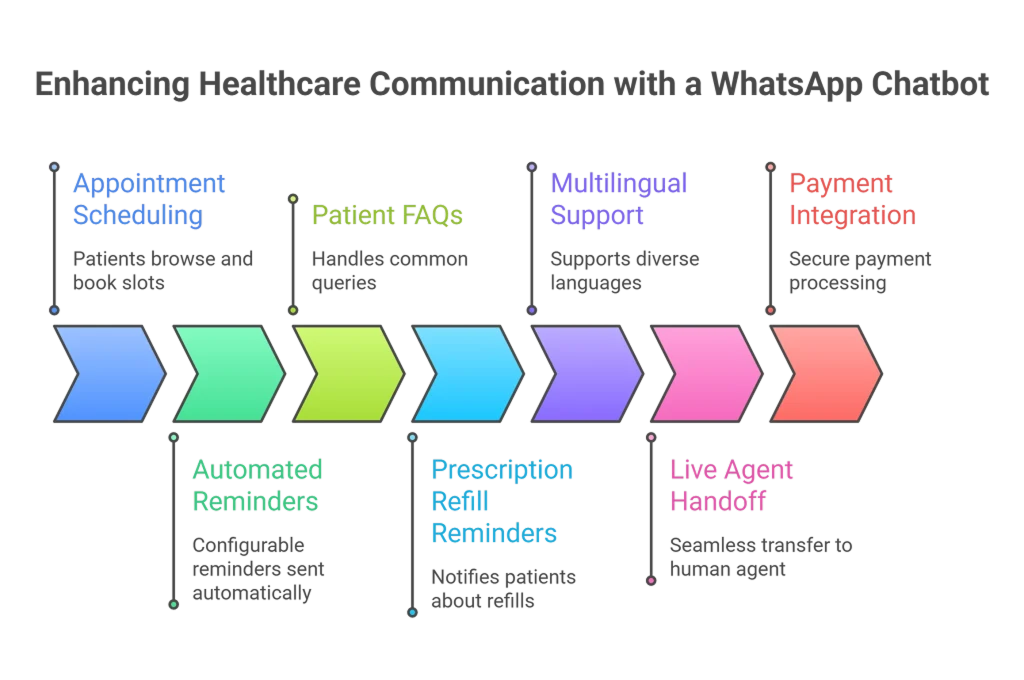
Top Use Cases of WhatsApp Chatbots in Healthcare
Healthcare today depends on speed and constant communication, where WhatsApp chatbots make a real difference. They automate high-volume interactions, reducing reliance on phone calls and manual processes while keeping patients connected in real time.
WhatsApp chatbots can automate some of the most common patient communication workflows for hospitals and clinics, including appointment booking, reminders, FAQs, follow-ups, prescription refill requests, telemedicine support, and feedback collection. When connected with scheduling systems, CRM workflows, and clear escalation rules, these use cases help reduce front-desk workload, improve patient response times, and create a smoother healthcare experience.
How WhatsApp Chatbots Improve Healthcare Workflow Automation
Workflow automation is where AI WhatsApp conversational chatbots genuinely transform healthcare operations, not just individual tasks, but the end-to-end processes that define patient experience and staff efficiency.
Healthcare Chatbot Workflow Improvements: Before and After Automation Results
| Process | Before ChatBot | After ChatBot |
|---|---|---|
| Appointment Booking | Manual phone calls, staff scheduling, and error-prone | Automated 24/7 booking with real-time calendar sync |
| Reminder Follow-Ups | Staff-dependent calls and SMS batches | Auto-triggered multi-step reminder sequences |
| FAQ Handling | Reception staff answering repetitive calls | Instant AI-powered responses, zero wait time |
| Patient Triage | Slow manual assessment, delayed routing | Automated symptom-based routing and escalation |
| Insurance Verification | Manual back-and-forth with payer portals | Automated real-time eligibility checks |
| Prescription Refills | Patient-initiated calls to pharmacy/clinic | Proactive chatbot-triggered refill workflows |
| Post-Visit Follow-Up | Sporadic nurse calls, low patient response | Structured automated check-in sequences |
Beyond individual workflows, WhatsApp chatbots create a connected patient journey, one where every interaction flows through a single, familiar channel. This continuity reduces patient confusion, improves adherence, and creates richer data for clinical and operational analytics.
WhatsApp Chatbot Integration with Healthcare Systems
Most vendors undersell the complexity of healthcare chatbot deployment. Here are the real challenges you’ll face and how to approach them:
• Compliance Complexity – HIPAA, GDPR, and regional data protection laws impose strict requirements on data handling, patient consent, and breach notification. Navigating these across multiple jurisdictions is time-intensive and requires dedicated legal and compliance resources – not just a checkbox.
• Integration Issues – Legacy EHR and hospital management systems are notorious for limited API support, inconsistent data formats, and siloed architectures. Integration projects frequently run over time and budget. Prioritize vendors with proven connectors to your specific systems.
• AI Misunderstanding Medical Queries – General-purpose NLP models struggle with medical terminology, regional dialects, abbreviations, and the nuanced way patients describe symptoms. Without healthcare-specific training data and rigorous testing, misclassifications can lead to dangerous escalation failures.
• Staff Adoption – Clinical and administrative staff often resist chatbot tools that change their workflows. Successful deployments invest in change management: training sessions, clear handoff protocols, and early involvement of staff in flow design. Technology without people alignment fails.
• Multilingual Challenges – Supporting multiple languages isn’t just translation; it’s cultural context, idiomatic expression, and dialect-specific vocabulary. A Spanish FAQ bot may work perfectly for Mexican patients and fail with Colombian users speaking differently about the same symptoms.
• Scaling Problems – A chatbot handling 500 conversations a day behaves very differently at 50,000. Conversation routing logic, API rate limits, system load during peak hours, and backend database performance all become critical at scale. Plan capacity from day one.
Step-by-Step Guide to Implementing a WhatsApp Chatbot for Healthcare
Deploying a healthcare WhatsApp chatbot isn’t just a technical setup; it’s an operational transformation. From reducing front-desk overload to improving patient engagement, success depends on a structured and well-executed rollout. Here’s a complete roadmap from strategy to launch.
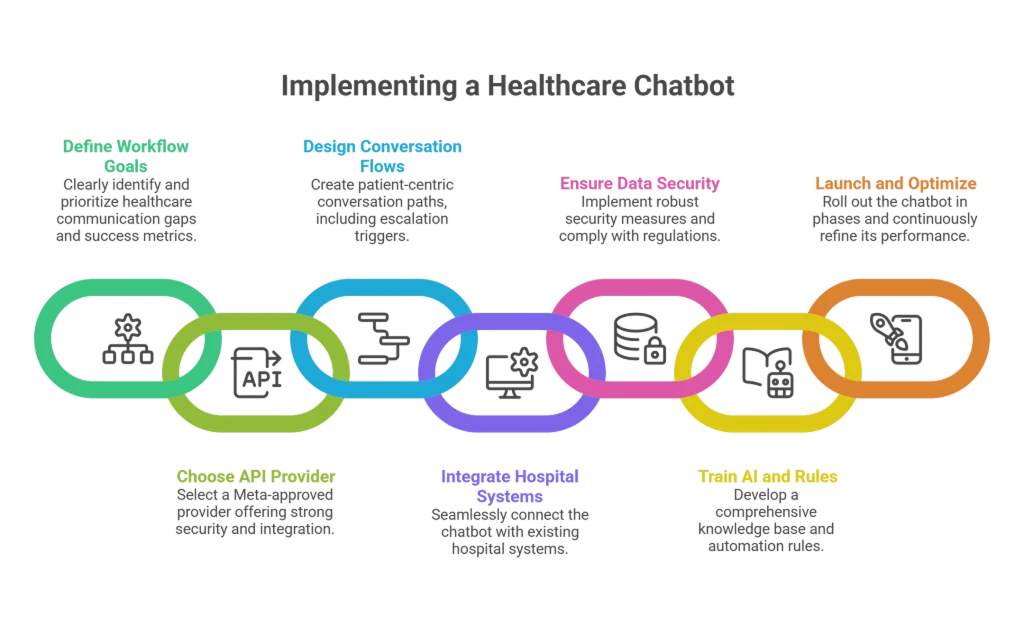
Step 1: Define Healthcare Workflow Goals
Begin with a clear audit of your current patient communication gaps. Identify where manual processes are slowing operations, whether it’s missed calls, delayed responses, or frequent appointment no-shows. Focus on three to five high-impact use cases for the initial rollout, such as appointment scheduling, automated reminders, FAQ handling, or report sharing.
At the same time, define measurable success metrics. These should include a reduction in call volume, improvement in no-show rates, faster response times, and better patient satisfaction scores. Establishing clarity at this stage ensures that the chatbot addresses real operational challenges rather than simply adding another layer of technology.
Step 2: Choose a WhatsApp Business API Provider
Selecting the right provider is a critical decision. It is important to work with a Meta-approved Business Solution Provider that understands the specific requirements of healthcare organizations. The provider should offer strong data security, compliance readiness, high system reliability, and seamless integration capabilities with existing hospital systems.
Solutions such as Twilio, Infobip, and other healthcare-focused vendors provide scalable and customizable platforms. Choosing the right partner ensures that your chatbot infrastructure remains stable, secure, and future-ready as patient volumes grow.
Step 3: Design Patient-Centric Conversation Flows
Designing effective conversation flows requires mapping the complete patient journey rather than focusing only on ideal scenarios. This includes the standard flow where a patient books an appointment, receives reminders, and completes the visit, as well as less predictable situations such as rescheduling, cancellations, or missed responses.
It is equally important to define escalation triggers for situations where the chatbot should hand over to a human, such as when patients show confusion, report potential clinical concerns, or face payment issues. The overall experience should feel natural and supportive, ensuring that patients feel guided rather than processed.
Step 4: Integrate Hospital Systems
The effectiveness of a chatbot depends heavily on its ability to integrate with existing hospital systems. This includes scheduling platforms, electronic health records, billing systems, and CRM tools. Proper integration ensures that information flows seamlessly across systems in real time.
Appointment bookings should instantly reflect in the scheduling system, patient data must be accessed securely, and payment updates should sync accurately with billing systems. Depending on the complexity of the infrastructure, this phase typically takes between four and eight weeks to complete.
Step 5: Ensure Data Security and Compliance
Healthcare chatbot deployments must prioritize data security and regulatory compliance from the outset. This includes implementing end-to-end encryption for all communications and ensuring that explicit patient consent is obtained before any data exchange occurs.
Organizations must also follow data minimization practices, maintain detailed audit trails of all interactions, and conduct regular security assessments. Compliance with regulations such as HIPAA, GDPR, or relevant local data protection laws is essential. Neglecting this step can result in significant legal and reputational consequences.
Step 6: Train AI and Define Automation Rules
The performance of the chatbot depends on the quality of its training. A well-structured knowledge base should be created, including medically accurate FAQs, clinic-specific information, and clear procedural instructions. The system must be trained to understand healthcare terminology, patient language patterns, and multilingual inputs to ensure accessibility.
In addition, clear automation rules must be defined to manage how the chatbot behaves in different scenarios. This includes identifying when conversations should be escalated to human staff, how timeouts are handled, and how sensitive queries are prioritized. Clinical teams should always review and validate responses before the chatbot goes live.
Step 7: Launch, Monitor, and Optimize
A phased rollout approach is recommended, starting with a soft launch to a smaller group of patients. This allows teams to gather feedback and identify areas for improvement early in the process. Monitoring key performance indicators such as conversation completion rates, escalation frequency, booking conversions, and patient satisfaction is essential.
Based on real-world usage data, conversation flows, and responses should be continuously refined. The first four to six weeks after launch are particularly important for optimization, as this is when the system evolves into a more accurate and efficient communication tool.
Common Challenges in Healthcare Chatbot Deployment
Healthcare chatbots offer clear benefits, but their implementation comes with real complexities. From compliance and integration to AI accuracy and staff adoption, these challenges can impact success if not planned for early.
- Compliance Complexity: Strict regulations like HIPAA and GDPR require robust data handling, consent management, and ongoing legal oversight, not a one-time setup.
- Integration Issues: Legacy EHR and hospital systems often lack clean APIs, causing delays, data inconsistencies, and higher implementation costs.
- AI Misunderstanding Queries: Generic NLP struggles with medical terms, patient language, and regional nuances, increasing the risk of incorrect responses or missed escalations.
- Staff Adoption: Resistance from clinical and admin teams can slow adoption; success depends on training, clear workflows, and early involvement.
- Multilingual Challenges: True language support requires cultural context and dialect understanding, not just direct translation.
- Scaling Problems: Performance issues emerge at high volumes, including routing complexity, API limits, and system load during peak times, requiring early capacity planning.
Best Practices for Healthcare WhatsApp Automation
Getting healthcare automation right isn’t just about launching fast; it’s about designing for safety, trust, and long-term scalability. The most successful deployments follow a few core principles that balance technology with human care.
1. Design for Human-in-the-Loop Care
No AI can fully replace human judgment in healthcare. Clinical concerns, emotional conversations, and unexpected scenarios will always need human intervention. The key is to make escalation seamless, ensuring that when a conversation is handed off, the human agent has full context and can respond without friction.
2. Build Trust Through Transparency and Consent
Patient trust starts with clarity. Before collecting or processing any health data, explicitly communicate what is being captured, how it will be used, and how patients can opt out. Consent should be easy to give and just as easy to withdraw.
3. Make Security a Core Design Layer
Healthcare communication must be built on secure foundations. Use encrypted messaging at all times and avoid sharing sensitive records directly. Instead, guide patients to secure, authenticated portals when deeper access is required.
4. Think Multilingual from Day One
Language is more than translation; it’s context. Designing flows that adapt to multiple languages and cultural nuances from the start prevents costly rework later and ensures accessibility across diverse patient groups.
5. Treat AI as a Living System
Healthcare knowledge evolves constantly, and so should your chatbot. Regularly review conversations, especially failed or escalated ones, to refine responses and close knowledge gaps. Continuous training is what keeps the system relevant and reliable.
6. Optimize for Speed and Responsiveness
In healthcare, delays create anxiety. Patients expect near-instant replies, especially for routine queries. Fast response times not only improve experience but also reduce drop-offs and repeated follow-ups.
7. Define Clear Escalation Logic
Ambiguity in escalation leads to frustration. Clearly define when a conversation should move to a human, whether it’s due to clinical keywords, repeated confusion, emotional distress, or payment issues, and keep refining these triggers over time.
Conclusion
WhatsApp chatbots don’t replace clinical care; they clear the path for it. By automating routine interactions like appointment bookings, reminders, FAQs, and follow-ups on a platform patients already use every day, they strip away the operational noise that slows teams down. The impact is immediate: front-desk staff regains valuable time, no-show rates drop, and patients experience faster, more reliable communication that builds real trust over time.
The clinics seeing the strongest outcomes aren’t just adopting the technology; they’re implementing it with intent. That means setting clear objectives, integrating deeply with existing systems, and continuously refining the experience based on patient behavior. The need is no longer theoretical, the technology is proven, and patient expectations have already shifted. What truly matters now is not whether to adopt but how well you execute.
Prompts play a critical role in healthcare because they directly shape how AI interprets information and delivers results. In a field where accuracy, clarity, and safety are essential, even small changes in how a prompt is written can significantly influence the outcome.
A well-designed prompt helps AI generate precise and clinically relevant responses whether it’s summarizing patient records, drafting medical documentation, or supporting decision-making. By clearly defining the context, intent, and expected format, prompts reduce ambiguity and ensure the output aligns with clinical needs.and it changes everything.
Prompt Engineering in Healthcare: Best Practices, Strategies and Trends
With technology becoming a bigger part of healthcare, giving clear instructions to systems is more important than ever. Prompt engineering helps doctors and staff get accurate answers for tasks like diagnosis, documentation, and patient data. By framing the right questions, healthcare professionals can reduce errors, save time, and make better-informed decisions.
It also supports smoother workflows by simplifying complex processes and improving communication between teams and digital tools. As new trends and tools continue to evolve, adopting effective prompt strategies can help healthcare organizations stay efficient, deliver more personalized care, and achieve better patient outcomes.
The Rise of AI in Healthcare: A New Frontier
Healthcare is stepping into a new era where artificial intelligence is not just supporting care — it’s actively shaping how it’s delivered, reflecting AI in healthcare 2026 top trends that are redefining clinical practice and operations.
This shift marks a new frontier, where technology and human expertise work side by side to improve outcomes, reduce inefficiencies, and create more personalized patient experiences. As AI continues to evolve, it’s redefining the boundaries of what healthcare systems can achieve.
How Generative AI is Transforming Modern Care
In recent years, healthcare has witnessed rapid advancements in artificial intelligence. Models like GPT-4 have demonstrated near expert-level performance in medical assessments, while Med-PaLM 2 has shown high accuracy in clinical reasoning tasks. These developments highlight how natural language processing is reshaping both clinical and operational aspects of healthcare, with generative AI in healthcare explored across diagnostics, documentation, and patient communication.
From enabling personalized treatment approaches to improving operational efficiency, AI is helping providers make more informed and timely decisions. Today, healthcare organizations are integrating large language models (LLMs) into workflows to summarize electronic health records (EHRs), assist with patient communication, and generate clinical documentation all guided by well-crafted prompts.
What Is Prompt Engineering in Healthcare?
Prompt engineering in healthcare refers to the practice of designing structured and precise instructions that guide AI systems to produce accurate, safe, and clinically relevant outputs.
In a high-stakes environment like healthcare, prompts act as a control layer between human intent and AI response. Whether it’s generating diagnostic suggestions, drafting reports, or assisting in patient interactions, the quality of the prompt directly influences the reliability of the outcome.
Well-designed prompts help reduce ambiguity, ensure alignment with clinical standards, and support compliance with regulatory requirements. As AI adoption grows, prompt engineering is becoming essential for integrating AI safely and effectively into healthcare workflows.
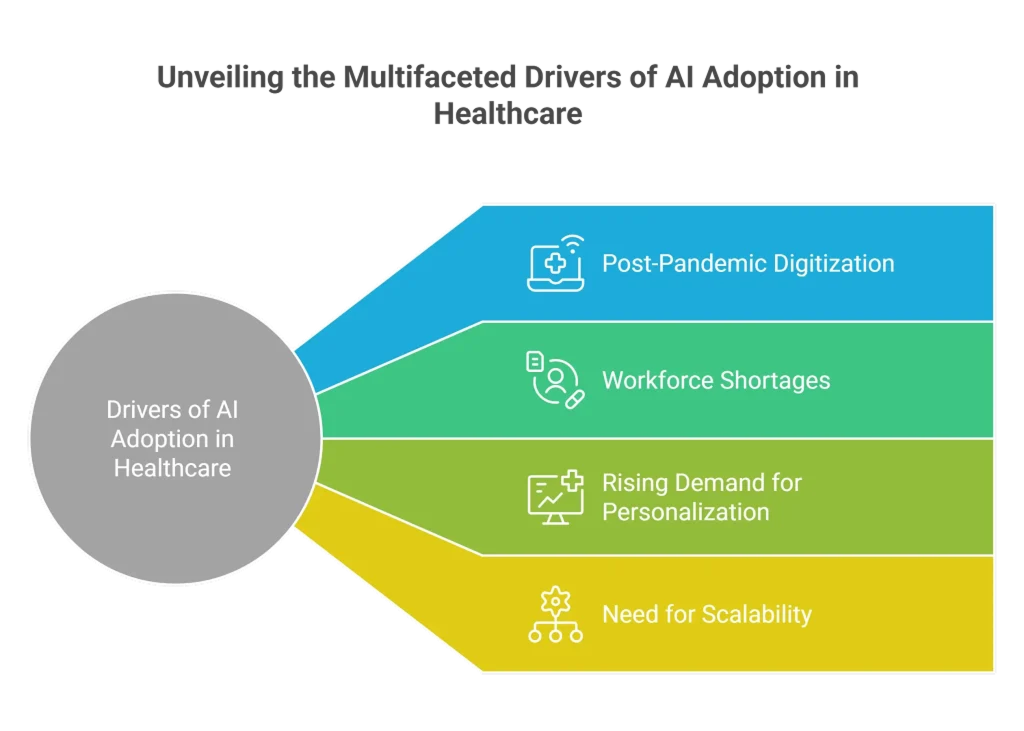
Clinical Applications of Prompt Engineering
Prompt engineering is increasingly important in clinical settings as it helps healthcare professionals use AI tools more effectively. By giving clear instructions, clinicians can get accurate information for diagnosis, patient data analysis, and treatment planning. This makes AI more reliable and helps improve overall efficiency in healthcare workflows.
Enhancing Diagnostic Accuracy with Medical AI Prompts
Structured prompts can significantly improve clinical decision support. For instance:
A 60-year-old male with chest pain and shortness of breath. Provide possible causes, recommended diagnostic tests, and an initial treatment plan.
Such prompts enable AI to generate organized and clinically relevant outputs, supporting faster and more accurate decision-making.
Domain-Specific Prompting in Clinical Practice
Specialty-focused prompts enhance precision and usability:
- Oncology: Analyze imaging for tumor size, location, and stage
- Mental Health: Guide patient conversations with empathetic follow-ups
- Cardiology: Interpret ECGs and flag abnormalities
Tailored prompts align AI outputs with clinical workflows, improving both efficiency and accuracy.
Personalized Treatment Planning
AI models can assist in developing treatment plans by incorporating patient history, co-morbidities, and clinical guidelines.
Prompt Format:
[Patient Summary] + [Clinical Goal] + [Guideline Constraints]
This approach ensures recommendations remain evidence-based while allowing clinicians to validate and refine outputs.
Streamlining Administrative Workflows with Prompt Engineering
Managing administrative tasks in healthcare can often be time-consuming and complex. Prompt engineering helps simplify these processes by guiding AI systems with clear instructions, making tasks like documentation, scheduling, and data handling faster and more accurate. This not only improves efficiency but also reduces workload, allowing healthcare staff to focus more on patient care.
Automating Clinical Documentation
Prompt-driven AI can reduce administrative workload by:
- Drafting clinical notes and summaries
- Generating referral letters
- Preparing discharge instructions
Prompt Format:
[Task] + [Document Type] + [Formatting Requirements]
Enhancing Operational Efficiency
Enhancing operational efficiency in healthcare focuses on improving how daily tasks and processes are managed. By optimizing workflows, reducing delays, and using technology effectively, organizations can save time, lower costs, and improve accuracy. This ultimately helps deliver faster, more reliable care and a better experience for both patients and staff.
AI prompts are also used for:
- AI is transforming medical coding and billing support
- Prior authorization documentation
- Insurance communication
Standardized prompts improve turnaround time and ensure consistency across administrative processes.
Improving Patient Experience with Healthcare Chatbots
Integration strategies in hospitals aim to link different systems, technologies, and workflows for smoother operations. By bringing together tools like health records, AI, and clinical processes, hospitals can improve communication, minimize errors, and deliver better patient care. This leads to a more organized and efficient healthcare system.
Prompt Design in Virtual Health Assistants
AI-powered chatbots rely on structured prompts to:
- Conduct symptom checks
- Provide pre-visit guidance
- Offer follow-up care instructions
Empathetic and Clear Communication
Prompts that guide AI to respond in simple, patient-friendly language improve trust and engagement. They help translate complex medical information into understandable insights, enhancing the overall patient experience.
Integration Strategies for Hospitals
Hospitals often use many different systems that don’t always work well together. Integration strategies help connect these tools and processes so information flows smoothly across departments. This improves coordination, reduces errors, and makes overall hospital operations more efficient while supporting better patient care.
Embedding in EHR Systems
AI tools are increasingly integrated into platforms like EHR systems, where prompts are automatically triggered based on clinical context, enabling seamless workflow integration.
Training Clinical Teams
Educating healthcare professionals on prompt usage ensures:
- More effective AI interaction
- Reduced errors
- Consistent and reliable outputs
What Are Key Best Practices for AI Prompt Engineering in Healthcare?
Strong prompt engineering is key to generating accurate, safe, and context-relevant outputs from AI in healthcare. Following best practices helps organizations improve reliability, stay compliant, and support better clinical decisions while reducing potential risks.
Prompts Must Be Specific
Clear and detailed prompts lead to more accurate and relevant outputs. Vague instructions often result in incomplete or unreliable responses.
Provide Relevant Context With Follow-Up Prompts
Including patient history, clinical background, and additional clarifications helps AI generate more precise insights. Follow-up prompts can refine and improve responses further.
Give Examples of Desired Outputs
Providing sample outputs or formats helps guide AI in structuring responses correctly, ensuring consistency and usability in clinical settings.
Challenges and Ethical Considerations
The growing use of AI in healthcare brings both new possibilities and important challenges that cannot be overlooked. Factors such as accuracy, data privacy, bias, and overdependence on technology must be carefully addressed to protect patient safety and maintain trust. Ensuring responsible use through clear guidelines, ethical practices, and human oversight is essential for effective implementation.
Managing AI Hallucinations and Clinical Risk
AI systems may generate incorrect yet plausible responses. Structured prompts and human oversight are essential to minimize such risks.
Ensuring Data Privacy
Sensitive patient data must be protected through secure systems, de-identification, and compliance with healthcare regulations.
Responsible AI Use
Healthcare organizations must prioritize transparency, informed consent, and human involvement in critical decisions.
Future Outlook: Scaling Prompt Engineering in Healthcare
As AI evolves, prompt engineering will play a central role in enabling. As these systems grow more interconnected, using a model context protocol for AI communication will help agents share context reliably across tools and workflows.
- Multimodal AI applications (text, images, and data integration)
- Advanced clinical decision support
- Personalized and scalable patient care
Investing in prompt libraries, governance frameworks, and continuous optimization will be key to unlocking long-term value.
Conclusion
Prompt engineering is rapidly becoming a foundational element in healthcare AI. By structuring inputs effectively and refining them over time, organizations can ensure AI delivers accurate, safe, and meaningful outcomes.
From improving diagnostics and automating documentation to enhancing patient engagement, prompt engineering is shaping a smarter, more efficient, and patient-centric healthcare ecosystem.
Advance Healthcare with Intelligent Innovation
Explore how prompt engineering and AI are shaping the future of healthcare delivery. Stay informed with expert-led insights and practical strategies. Subscribe for updates.
Artificial intelligence is transforming the healthcare industry by equipping physicians with innovative tools that enhance patient treatment, simplify administrative processes, and boost patient interaction. According to Accenture, AI applications have the potential to save the US healthcare system more than $150 billion each year by 2026. With ongoing advancements in AI technology, its importance in medicine continues to grow, providing solutions that assist doctors in making quicker and more precise decisions.
But the operative word is “assist.” AI in healthcare is not replacing doctors. It is augmenting them. The most effective deployments use a human-in-the-loop model where AI recommends, generates, or flags, and clinicians verify, contextualise, and decide. This guide covers the practical ways AI is helping doctors today, the clinical applications delivering measurable results, and the framework for responsible adoption.
How Does AI Augment Physician Decision-Making Without Replacing It?
No regulatory body has approved fully autonomous clinical AI for diagnosis or treatment. Every credible clinical deployment operates on a human-in-the-loop model: AI generates a recommendation, and a licensed clinician reviews, validates, and acts on it. This is not a limitation. It is the design.
In practice, this means a radiology AI flags a suspicious lesion on a mammogram, and the radiologist confirms or dismisses it. An ambient documentation tool drafts a clinical note from a patient encounter, and the physician reviews and signs it. A clinical decision support system suggests a drug interaction alert, and the prescribing doctor evaluates the clinical relevance.
The human-in-the-loop model works because it plays to the strengths of both parties. AI excels at pattern recognition across massive datasets, tireless monitoring, and processing speed. Doctors excel at contextual judgment, patient rapport, ethical reasoning, and handling ambiguity. Together, they produce outcomes that neither can achieve alone.
The risk is not that AI will replace doctors. The risk is that doctors who use AI will outperform those who do not, creating a competency gap. AI literacy is becoming a core clinical skill.
As these systems become more capable, the prompt engineering role in healthcare is becoming increasingly important, because well-structured prompts ensure AI outputs stay clinically relevant, safe, and aligned with physician intent.
Key Clinical Applications of AI for Doctors (2026)
Artificial Intelligence (AI) is playing an increasingly important role in healthcare, helping doctors provide more accurate, efficient, and personalized care. Rather than replacing physicians, it serves as a supportive tool that can process large amounts of medical data, recognize patterns, and assist in clinical decision-making. This enables doctors to focus more on patient interaction while improving overall efficiency.
It is widely applied in areas such as early disease detection, medical imaging, treatment planning, and remote patient monitoring. With its ability to reduce errors, streamline workflows, and enhance patient engagement, AI is becoming an essential part of modern clinical practice.
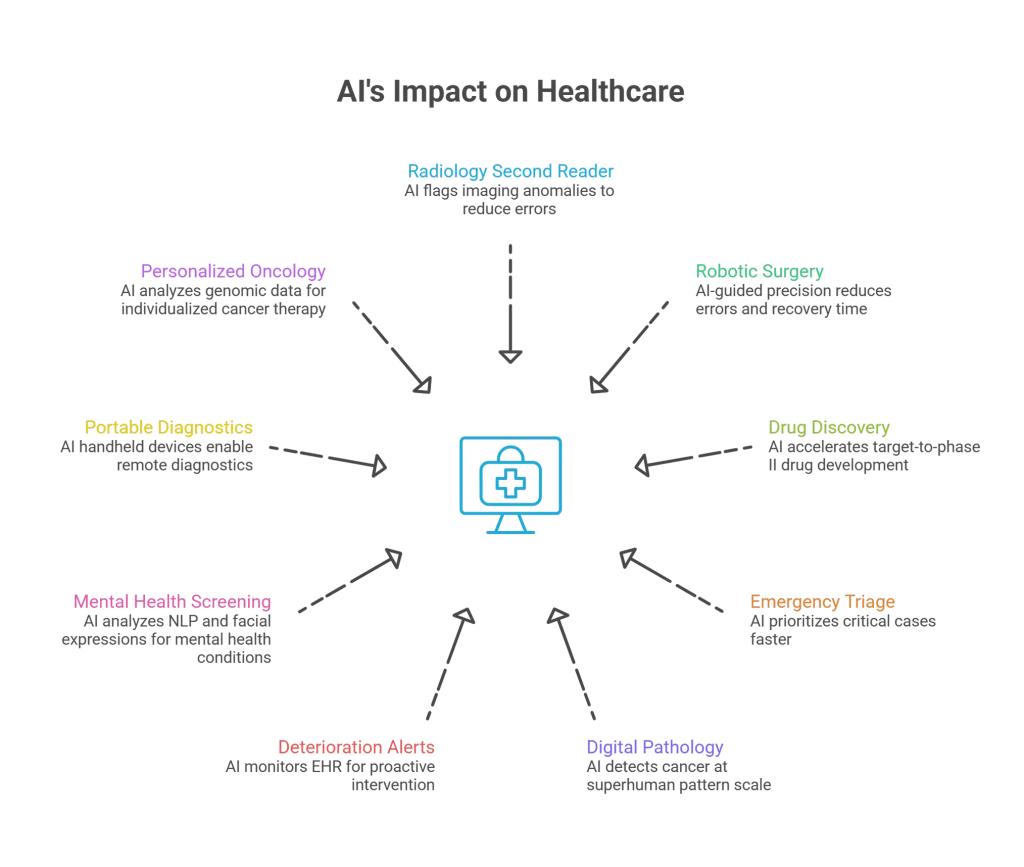
1. AI in Radiology: The Second-Reader Model
Over 70% of FDA-cleared AI tools focus on medical imaging. In radiology departments, AI operates as a “second reader”: algorithms analyse X-rays, CT scans, MRIs, and pathology slides to detect anomalies. AI algorithms have outperformed human radiologists in detecting breast cancer from mammograms. Google’s DeepMind predicts acute kidney injury up to 48 hours before onset. Hospitals report up to an 85% reduction in diagnostic errors.
2. Robotic-Assisted Surgery
AI-powered surgical robots enhance precision in complex procedures, reducing recovery time and improving patient safety. The “master-slave” model has surgeons controlling robotic arms from a console while AI provides real-time guidance, tissue identification, and movement scaling. Research shows significantly reduced intraoperative errors and postoperative complications.
3. Drug Discovery and Development
AI accelerates drug development by predicting potential drug candidates and optimising clinical trials. Insilico Medicine brought an AI-discovered candidate to Phase II trials in under 18 months. AI also enables drug repurposing, uncovering new therapeutic applications for existing compounds, reducing R&D costs by up to 60%.
4. AI in Emergency Care and Triage
AI-driven triage systems assess patient symptoms and prioritise critical cases in emergency departments, processing complaints, vitals, and history to assign acuity levels and ensure the most critical patients are seen first.
5. Digital Pathology
AI algorithms analyse pathology slides to detect cancers and rare diseases with higher accuracy than manual review, identifying patterns across thousands of cellular features simultaneously.
6. Predictive Patient Deterioration Alerts
AI monitors EHR data in real time to detect early signs of patient deterioration, analysing vital sign trends, lab results, and medication responses to flag patients whose condition is worsening before critical events.
7. Mental Health Detection
NLP and facial recognition tools identify early signs of depression, anxiety, or PTSD from patient speech patterns or expressions, supporting psychiatric screening in primary care and emergency settings.
8. AI-Enabled Portable Diagnostics
In remote or resource-limited areas, AI-equipped handheld devices (ultrasound, ECG, retinal cameras) help GPs perform accurate diagnostics without specialist support, expanding access to screening.
9. Personalised Oncology Treatment
AI models evaluate patient genetics, tumour genomics, and treatment responses to recommend individualised cancer therapies, improving efficacy and minimising side effects.
Can AI Reduce Physician Burnout and Documentation Overload?
Yes, and it is already happening at scale. Physicians spend 1–2 hours on documentation for every hour of patient care. EHR “pajama time” is a leading burnout contributor. AI addresses this through ambient clinical documentation: AI listens to the encounter (with consent), generates a structured SOAP note, and pushes it to the EHR for review and sign-off.
Tools like Nuance DAX Copilot, integrated with Epic, are deployed across major health systems. Clinicians reclaim hours per week. Documentation accuracy improves because notes are generated from the actual conversation.
Beyond documentation, AI automates prior-authorisation workflows, intelligent inbox triage, AI-generated patient communication, and pre-visit form completion.
AI in medical coding is also reducing the manual burden of translating clinical notes into accurate billing codes, cutting errors, and freeing clinicians and coders to focus more on patient-centric tasks.
For hospitals connecting documentation and patient communication into one layer, Quad One’s AI hospital CRM automates scheduling, follow-ups, feedback, and discharge workflows alongside clinical data.
How AI Enhances Patient Engagement and Communication
AI transforms how healthcare systems interact with patients. NLP facilitates multilingual communication. AI-based apps provide customised health recommendations, medication reminders, and instant alerts.
Quad One’s AI WhatsApp Bot enables patients to schedule, retrieve reports, and receive post-discharge instructions in their own language within WhatsApp, no app download required.
AI-powered virtual assistants provide 24/7 support, handling routine queries and performing preliminary symptom triage.
Barriers to AI Adoption in Clinical Practice and How to Overcome Them
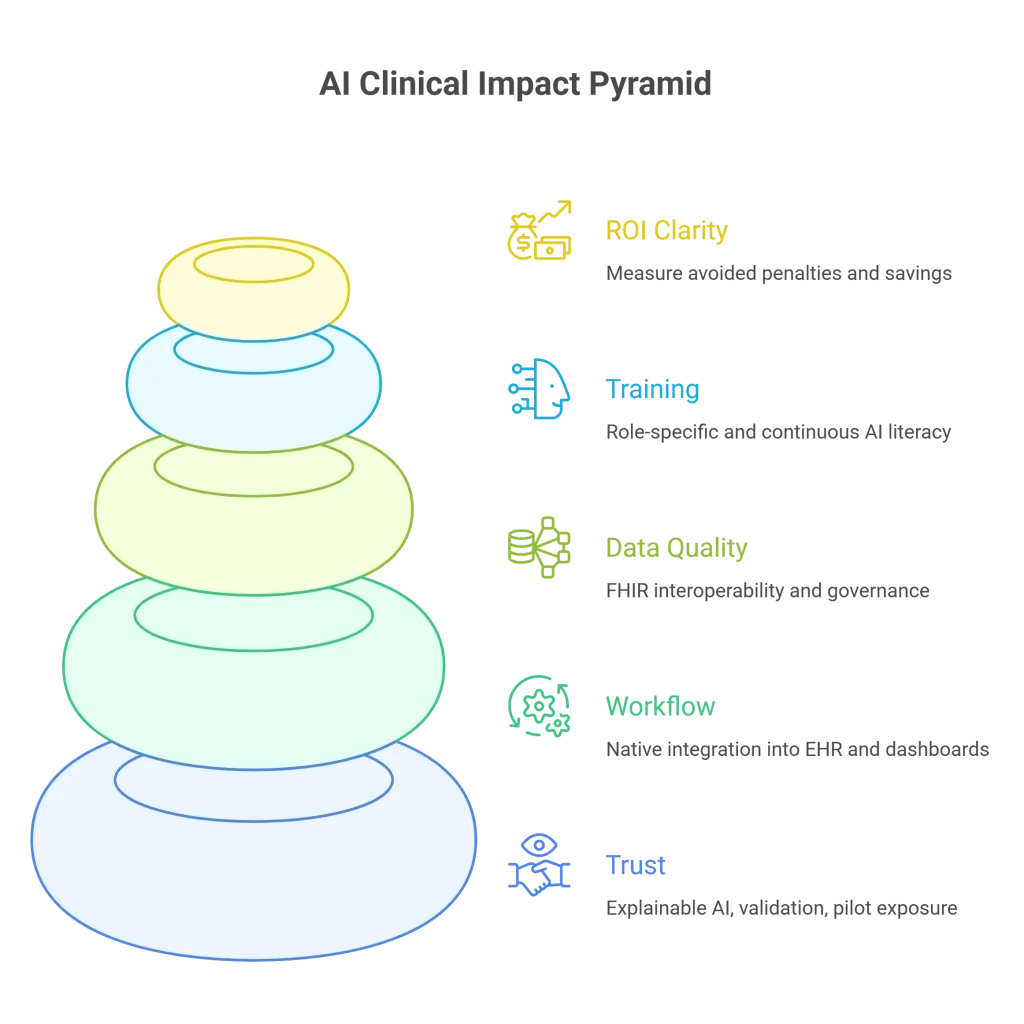
Clinician trust. Scepticism of unexplainable AI. Solution: Explainable AI, peer-reviewed validation, pilot-first exposure.
Workflow integration. Tools requiring separate interfaces see low adoption. Solution: Embed AI inside EHR, PACS, and ED dashboards natively.
Data quality and interoperability. Fragmented IT ecosystems limit AI accuracy. Solution: FHIR-based integration. Data governance before AI procurement.
Training and AI literacy. Clinicians lack training to evaluate AI outputs. Solution: Role-specific, continuous training. AI literacy as a core competency.
Cost and ROI visibility. No clear financial framework. Solution: Frame ROI in avoided penalties, FTE savings, diagnostic error reduction, and quality bonuses.
How Should Hospitals Measure the Clinical Impact of AI?
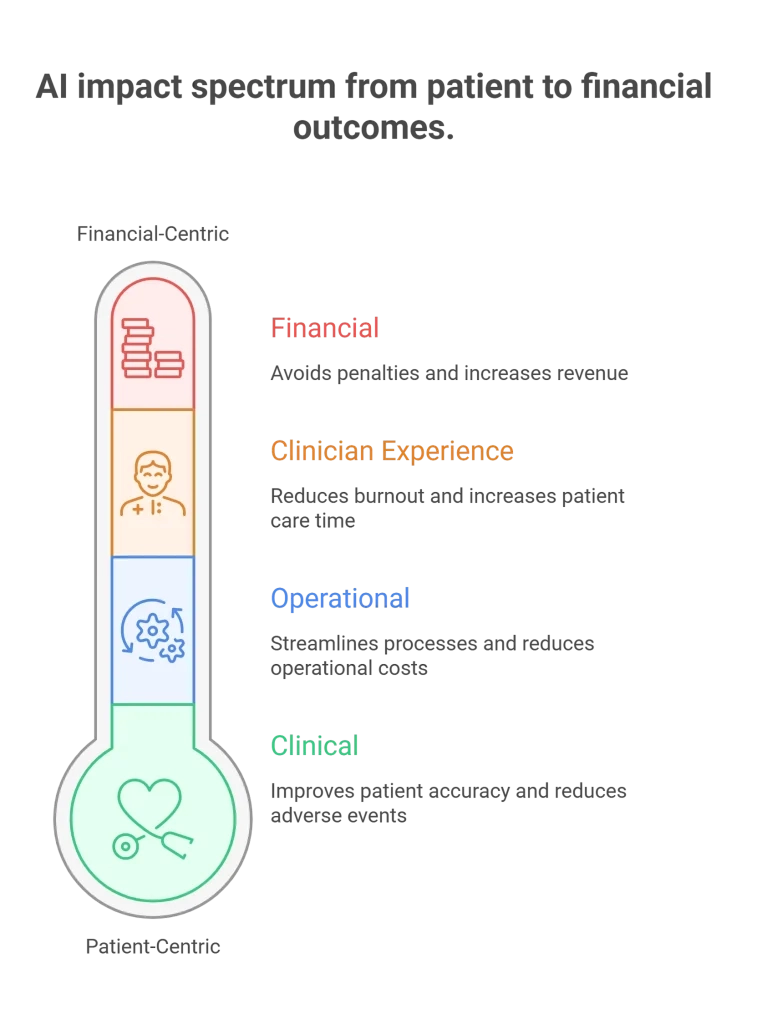
Clinical outcomes: Diagnostic accuracy (sensitivity/specificity), time-to-diagnosis, preventable adverse events, and readmission rates.
Operational efficiency: Documentation time saved per clinician/day, prior-auth processing time, no-show rate delta, referral turnaround.
Financial impact: Avoided readmission penalties, malpractice cost avoidance, admin FTE savings, and quality-incentive bonuses.
Clinician experience: Burnout scores (pre/post), after-hours charting reduction, direct patient care time per shift.
Use A/B testing, control cohorts, and baselines. Report outcomes, not just activity.
Ethical Considerations in AI-Doctor Collaboration
Data privacy: Every AI tool processing PHI must meet HIPAA standards: encryption, access controls, audit trails, and signed BAAs.
Bias: Non-representative training datasets produce less accurate results for underrepresented populations. Require diversity audits and continuous monitoring.
Human oversight: The human-in-the-loop model must be enforced by system design and reinforced through training.
Prompt engineering role in healthcare also matters here, since carefully designed prompts help keep AI within safe boundaries and reduce the risk of misleading or incomplete recommendations.
Transparency: Clinicians need to understand why an AI reached a recommendation. Black-box models face lower adoption and higher medicolegal risk.
For a deeper technical analysis of GenAI architectures and the regulatory landscape, see: Is Generative AI in Healthcare Reality or Hype?
The Future of AI in Medicine
AI-enabled blood tests and biomarkers for early disease identification from a single blood draw.
Improved robotic systems for minimally invasive surgery, including micro-robotics for targeted drug delivery.
Digital twins are creating virtual patient replicas to simulate treatment outcomes before real-world application.
AI-powered clinical trial matching connects patients to eligible trials based on genomic profile and diagnosis.
Explore Quad One’s full suite of AI in healthcare solutions, connecting CRM, WhatsApp bots, and clinical workflow tools.
Conclusion
AI for doctors transforms healthcare through improved diagnostics, personalised treatments, streamlined workflows, and enhanced engagement. The hospitals that invest in AI collaboration today with proper governance, measurement, and human-in-the-loop design will define the standard of care tomorrow.
Book a demo with Quad One to see how our AI-powered platform connects diagnostics, engagement, documentation, and hospital CRM in one system.
External References
Artificial intelligence in healthcare
Doctors and Artificial Intelligence
AI hospital CRM systems are advanced patient relationship management platforms that use machine learning, predictive analytics, and generative AI to automate patient engagement, personalise care interactions, and reduce administrative burden. Unlike traditional CRMs that simply store patient records, AI-powered systems forecast patient needs, flag at-risk individuals, and continuously adapt communications based on clinical and behavioural data.
Smart healthcare is evolving quickly, and AI-driven CRM systems are changing how hospitals connect with patients. By combining AI with traditional CRM tools, hospitals can offer more personalised and efficient care. These systems make it easier to manage appointments, send reminders, and respond to patient queries in real time. They also help reduce manual work for staff while improving patient engagement. Overall, AI-powered CRM is helping hospitals create a more connected, responsive, and patient-focused healthcare experience.
Smart Healthcare: The Rise of AI-Driven CRM in Hospitals
Healthcare is becoming smarter as hospitals adopt AI-driven CRM systems. By combining automation with patient data, these tools enable more personalized, timely, and efficient care. They simplify appointment management, improve real-time communication, and reduce staff workload while enhancing patient engagement. Overall, AI-powered CRM is helping hospitals deliver more connected and patient-focused experiences.
What Is an AI Hospital CRM?
An AI Hospital CRM is a modern patient relationship management system that uses artificial intelligence to improve how hospitals interact with patients. Unlike traditional CRM platforms that mainly store patient data and track interactions, AI-powered CRMs go a step further by actively analyzing data, automating communication, and supporting smarter decision-making.
At its core, an AI Hospital CRM connects multiple systems such as Electronic Health Records (EHR), appointment scheduling, billing, and communication channels into one unified platform. This allows hospitals to get a complete view of each patient and deliver more personalized, timely, and efficient care.
With AI integrated into the system, hospitals can automate routine processes like appointment reminders, follow-ups, and patient queries. It also helps staff prioritize tasks, identify patient needs, and improve overall engagement. In simple terms, an AI Hospital CRM doesn’t just manage relationships.It enhances them by making every interaction more intelligent and meaningful.
How Does Generative AI Improve Hospital CRM?
Generative AI is reshaping hospital CRM by making patient interactions more natural, responsive, and efficient, while also taking over time-consuming routine tasks.
What Are the Key Benefits of an AI Hospital CRM?
- Personalized patient communication tailored to individual needs and preferences
- Automated responses and follow-ups for faster, consistent engagement
- Intelligent summarisation of medical data for quick insights and better decision-making
It also powers conversational tools like WhatsApp bots, allowing patients to book appointments, ask questions, and receive updates instantly, making healthcare access simpler, faster, and more intuitive.
What Is the Role of Predictive Analytics in Hospital CRM?
Predictive analytics brings a proactive approach to hospital CRM by helping healthcare providers anticipate patient needs rather than simply reacting to them. By analyzing historical and real-time data, AI can identify patterns and predict future outcomes, enabling hospitals to act at the right time.
For example, predictive models can identify patients who are likely to miss appointments, allowing hospitals to send timely reminders or reschedule in advance. It can also flag patients at risk of readmission or complications, helping care teams intervene early and improve outcomes.
Beyond risk prediction, predictive analytics helps personalize patient journeys. It enables hospitals to recommend the right treatments, follow-ups, and communication strategies based on individual patient profiles. This level of personalization not only improves care quality but also enhances patient satisfaction.
How Will IoT and Wearables Transform Hospital CRM?
The integration of IoT devices and wearable technology is taking hospital CRM to the next level by introducing real-time, continuous patient data into the system. Devices such as fitness trackers, heart rate monitors, and glucose sensors can now collect and transmit health data directly to healthcare providers.
This constant flow of information allows hospitals to monitor patients beyond the clinical setting. Instead of relying only on periodic visits, doctors can track patient health in real time and detect early signs of potential issues.
At the centre of this shift is the AI hospital CRM, a system that goes beyond traditional patient relationship management by embedding predictive analytics, risk stratification, and automated care coordination directly into hospital workflows. For hospitals operating under value-based payment models, bundled payments, or Accountable Care Organisation (ACO) contracts, an AI-driven CRM is no longer a nice-to-have; it is operational infrastructure and effectively acts as an AI compliance and regulatory guide for healthcare by aligning workflows with evolving standards.
What Are the Key Challenges of Traditional Hospital CRM?
Traditional hospital CRM systems often struggle to meet the expectations of modern healthcare due to their limited capabilities and lack of flexibility. While they are useful for storing patient data and tracking interactions, they fall short when it comes to delivering personalized and real-time experiences.
One of the biggest challenges is the lack of integration. Many traditional systems operate in silos, making it difficult to access and share data across departments. This can lead to delays, miscommunication, and incomplete patient information.
Another major limitation is the reliance on manual processes. Tasks like appointment scheduling, follow-ups, and data entry often require significant human effort, increasing the risk of errors and inefficiencies.
Personalization is also a weak point. Traditional CRMs typically use generic communication methods that fail to engage patients effectively. In today’s digital world, patients expect timely, relevant, and personalised interactions, which older systems struggle to provide.
The differences between legacy systems and AI-driven platforms make it clear how hospital CRM improves patient experience across every interaction.
How Quad One’s AI Hospital CRM Delivers This Today
While technologies like Generative AI, predictive analytics, and IoT-driven care are often seen as future innovations, Quad One is already bringing these capabilities into everyday hospital operations. Its AI Hospital CRM is designed to make patient engagement more intelligent, proactive, and seamless across every touchpoint.
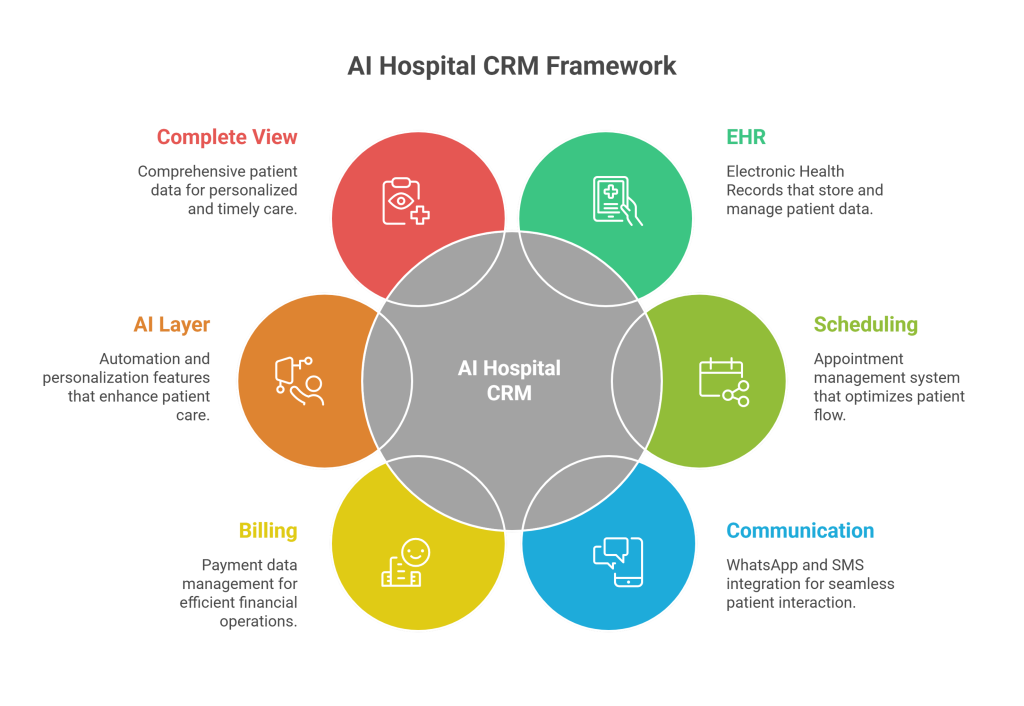
With built-in Generative AI, hospitals can automate conversations, send personalized messages, and respond to patient queries instantly across channels like WhatsApp, SMS, and email. This ensures consistent communication while reducing the workload on staff. At the same time, predictive analytics works in the background to identify trends such as patients likely to miss appointments or those who may require additional care, allowing teams to take timely action.
Quad One also supports integration with connected health systems and wearable devices, enabling real-time data to be part of patient interactions. This helps providers stay informed and deliver more proactive, continuous care. By eliminating manual processes and connecting data across departments, Quad One not only improves efficiency but also enhances the overall patient experience, with hospital CRM patient privacy and compliance built into every workflow rather than treated as an afterthought.
| Aspect | Traditional CRM | AI Hospital CRM |
| Data | Siloed, limited integration | Unified, Integrated data. |
| Communication | Generic, one-way | Personalized, two-way |
| Automation | Mostly manual | AI-driven automation |
| Response Time | Delayed | Instant |
| Personalization | Basic | Advanced |
| Engagement | Reactive | Proactive |
CONCLUSION:
Technologies like Generative AI, predictive analytics, and IoT integration are driving this shift in a meaningful way, and AI in CRM for value-based care is becoming a central enabler of better outcomes and smarter reimbursement.
By adopting intelligent CRM solutions like Quad One, healthcare providers can bring all these capabilities together into a single, unified system. This not only improves patient engagement through more relevant and timely interactions but also simplifies internal workflows and reduces operational strain. Ultimately, it allows hospitals to move beyond basic patient management and deliver truly personalized, connected, and high-quality care experiences that meet the demands of modern healthcare.
External References
Healthcare CRM Software Transformation with AI
AI-Enabled Customer Relationship Management Platforms for Patient Services in Health Care
