
The UAE’s healthcare sector is stepping into a new era, one shaped by digital innovation, intelligent systems, and deeply connected care. By 2026, the shift toward AI-driven ecosystems, integrated health platforms, and patient-centric models is no longer just emerging; it’s becoming the backbone of how modern healthcare operates. Technologies like telemedicine, remote monitoring, predictive analytics, and automated workflows are helping providers make faster decisions, improve diagnostic accuracy, and deliver more seamless patient experiences.
At the heart of this transformation are healthcare IT companies ranging from global leaders to specialised regional players, each contributing in different ways. Some bring large-scale system integration and enterprise expertise, while others focus on cloud-native development, localised compliance, or cost-effective innovation. Together, they are enabling healthcare providers to move beyond reactive treatment models toward proactive, continuous, and data-driven care.
The Rise of Digital Healthcare in the UAE (2026)
The UAE has rapidly positioned itself as a global leader in healthcare technology, driven by strong government initiatives, growing private investment, and widespread digital adoption. By 2026, the healthcare ecosystem is expected to be highly integrated and intelligent, where seamless data exchange, virtual care, and personalised treatment journeys become the norm rather than the exception.
Healthcare applications, in particular, have evolved far beyond basic functionality. Today, they act as intelligent platforms combining teleconsultation, remote monitoring, AI-assisted diagnostics, and personalised care pathways. This shift is making healthcare more accessible, efficient, and proactive, ultimately improving outcomes while enhancing patient engagement.
Leading Healthcare IT Companies in the UAE
A diverse mix of global enterprises and regional specialists is powering this transformation. Each company brings its own strengths, depending on the scale, complexity, and specific needs of healthcare organisations.
Quad One Technologies
Quad One Technologies is steadily emerging as a strong player in the UAE’s healthcare IT space, known for its AI-first approach and automation-led solutions. With over two decades of experience, the company focuses on building intelligent, future-ready systems by blending artificial intelligence, machine learning, and data analytics with real-world clinical workflows.
- AI-first approach with 20+ years of industry experience
- Combines AI, machine learning, and data analytics with clinical workflows
- Focuses on proactive, data-driven care delivery
- Streamlines patient engagement and operational efficiency
- Optimizes clinical data management for healthcare providers
- Positioned as a long-term digital health partner in the UAE
Build AI-powered healthcare IT solutions with Quad One Technologies.
Zymr
Zymr stands out for its expertise in cloud-native development and digital health product engineering. The company builds scalable, secure, and compliant healthcare solutions, including patient engagement platforms, clinical data systems, and AI-powered applications.
- Specialises in cloud-native healthcare product engineering
- Builds scalable, secure, and compliance-ready solutions
- Covers patient engagement platforms and clinical data systems
- Delivers AI-powered applications tailored to health tech needs
- Flexible delivery model suited for both startups and established providers
- Strong fit for organisations scaling across the GCC market
Cerner (Oracle Health)
Now part of Oracle Health, Cerner has a well-established presence in the UAE healthcare ecosystem. Its Millennium platform is widely adopted across large hospital networks and government health systems.
- Part of Oracle Health with a strong UAE market presence
- The Millennium platform was widely adopted across hospitals and government systems
- Robust EHR capabilities with high interoperability standards
- Integrates with national health exchanges — Malaffi and Nabidh
- Supports data standardisation across multi-facility organisations
- Best suited for large-scale healthcare networks requiring enterprise-grade solutions
Intelhealth
IntelHealth differentiates itself with a strong regional focus. Its healthcare information systems and clinical software are designed specifically for Gulf environments, featuring Arabic-first interfaces and built-in compliance with UAE regulations.
- Deep regional focus tailored for Gulf healthcare environments
- Arabic-first interfaces designed for local usability
- Built-in compliance with UAE regulatory standards
- Strong familiarity with DHA and HAAD requirements
- Ideal for organisations seeking locally adapted, not generic, solutions
- Reliable choice for navigating UAE-specific healthcare regulations
Accenture
Accenture brings a powerful mix of strategic consulting and large-scale execution capabilities. In the UAE, it plays a key role in driving digital transformation across both public and private healthcare sectors.
- Combines strategic consulting with large-scale digital execution
- Active across both public and private UAE healthcare sectors
- Expertise in AI integration, cloud migration, and system modernisation
- Capable of managing complex, long-term transformation programs
- Delivers end-to-end solutions from vision to implementation
- Best suited for organisations undertaking enterprise-wide transformation
Warba Systems
Warba Systems offers a strong regional advantage with solutions designed specifically for the Gulf healthcare landscape. Its platforms support Arabic-language workflows, local insurance integration, and regulatory compliance.
- Purpose-built solutions for the Gulf healthcare market
- Supports Arabic-language workflows and local insurance integration
- Ensures regulatory compliance across the UAE health authorities
- Hands-on understanding of regional operational challenges
- Practical and dependable partner for localised healthcare needs
- Strong track record with providers that value regional expertise
Cognizant
Cognizant has expanded its healthcare footprint in the Middle East with a comprehensive suite of services spanning payer systems, provider operations, analytics, and revenue cycle management.
- Comprehensive healthcare services across payer and provider systems
- Expertise in analytics and revenue cycle management
- Manages complex, multi-stakeholder healthcare environments
- Expanding Middle East presence with proven delivery capabilities
- Valuable for large hospital groups and insurance providers
- Suited for end-to-end digital transformation at scale
Philips Healthcare
Philips Healthcare occupies a unique space by bridging medical hardware and digital health software. Its offerings include imaging systems, patient monitoring, and AI-powered diagnostics, all connected within a unified ecosystem.
- Uniquely bridges medical hardware and digital health software
- Offers imaging systems, patient monitoring, and AI diagnostics
- All solutions operate within a connected, unified ecosystem
- Enables seamless integration between clinical equipment and IT
- AI-powered tools enhance diagnostic accuracy and clinical decision-making
- Preferred partner for hospitals seeking hardware-software integration
Innowise
Innowise is gaining traction for its strong engineering capabilities and cost-effective delivery models. The company specialises in custom healthcare application development, including telemedicine platforms, analytics tools, and AI-driven solutions.
- Strong engineering capabilities with cost-effective delivery
- Specialises in custom healthcare application development
- Builds telemedicine platforms, analytics tools, and AI solutions
- Ideal for startups and mid-sized healthcare organisations
- Delivers high-quality solutions without enterprise-level costs
- Growing reputation for flexible and scalable development models
Wipro
Wipro has established itself as a reliable partner for large-scale healthcare IT initiatives in the UAE. Its expertise spans hospital information systems, data management, and digital transformation programs.
- Reliable partner for large-scale healthcare IT in the UAE
- Expertise across hospital information systems and data management
- Proven digital transformation methodologies and frameworks
- Backed by strong regional teams with local market knowledge
- Solid choice for government entities and large healthcare providers
- Experienced in managing complex, multi-year IT implementation programs
AI and automation are also playing a critical role. From assisting in diagnostics to automating administrative workflows, these technologies are reducing the burden on healthcare professionals while improving efficiency. This allows clinicians to spend more time focusing on what truly matters: patient care.
Ultimately, healthcare is shifting from a reactive model to a continuous, personalised care journey where prevention, early detection, and long-term engagement take priority.
How to Choose the Right Healthcare IT Services Company
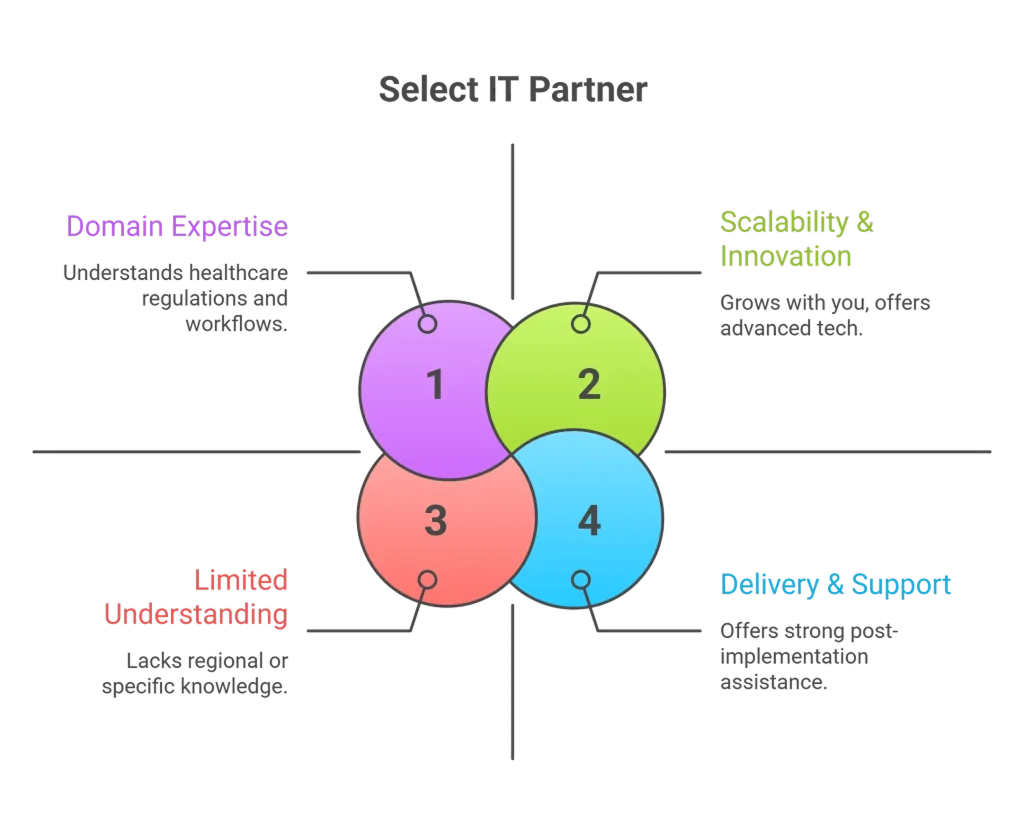
Choosing the right healthcare IT partner is a strategic decision that directly impacts efficiency, scalability, and patient outcomes.
Start by evaluating domain expertise. Healthcare is highly regulated, so it’s essential to work with a partner that understands compliance requirements, data security, and clinical workflows.
Next, consider scalability and technology capabilities. Your partner should be able to grow with your organisation while offering expertise in areas like cloud computing, AI, data analytics, and system integration.
Regional understanding is especially important in the UAE. Companies familiar with local regulations, insurance systems, and language requirements can significantly reduce implementation challenges.
It’s also important to assess their delivery model and support structure. Strong post-implementation support, transparent communication, and a collaborative approach are key indicators of a reliable partner.
Finally, think beyond cost. The goal is to find a partner that offers long-term value, a balance of quality, innovation, and cost-efficiency.
What’s Actually Shifting in Care Delivery
Healthcare IT companies are fundamentally transforming how care is delivered, experienced, and managed. What was once a fragmented, reactive system is now becoming proactive, connected, and patient-centric.
One of the biggest shifts is the move toward real-time, data-driven care. With integrated systems and health information exchanges, providers can access patient records instantly, enabling faster and more accurate decision-making. This reduces delays, minimises errors, and improves overall care quality.
Another major transformation is the rise of virtual care and remote monitoring. Patients no longer need to rely solely on in-person visits. Through teleconsultations, wearable integrations, and mobile health apps, care can now happen anytime and anywhere, improving accessibility, especially for chronic disease management.
AI and automation are also playing a crucial role. From AI-powered diagnostics to automated administrative workflows, healthcare IT is reducing the burden on medical staff while improving efficiency. This allows healthcare professionals to focus more on patient care rather than operational tasks.
Ultimately, these advancements are shifting healthcare from a reactive model to a continuous, personalised care journey, where prevention, early detection, and long-term engagement take centre stage.
Post-implementation support, clear communication, and a collaborative approach are key indicators of a strong partnership.
Finally, align on budget and long-term value. The cheapest option isn’t always the best. Focus on partners who offer a balance of quality, innovation, and cost-efficiency.
Why Partnering with a Top Healthcare IT Services Company Matters
Working with a leading healthcare IT company is no longer just about technology; it’s about strategy and long-term growth.
Top-tier providers bring proven frameworks, deep industry expertise, and access to advanced technologies that can accelerate digital transformation. Instead of building everything from scratch, organisations can leverage established platforms and best practices.
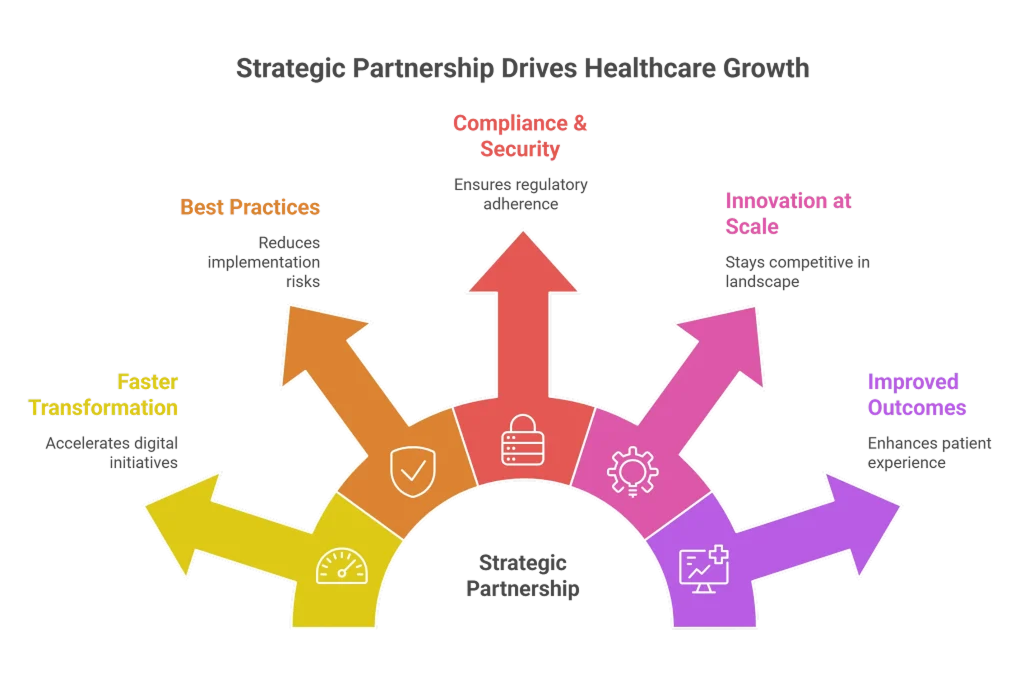
Strategic Impact:
Partnering with a leading healthcare IT company is not just a technical choice. It’s a strategic decision that shapes long-term growth and innovation.
Faster Digital Transformation:
Top-tier providers bring proven frameworks, industry expertise, and advanced technologies, helping organisations accelerate transformation without building from scratch.
Access to Best Practices:
Established platforms and tested methodologies reduce risk and ensure smoother implementation.
Regulatory Compliance & Security:
Experienced partners ensure adherence to healthcare regulations and strong data security, protecting sensitive patient information and maintaining trust.
Innovation at Scale:
Continuous investment in AI, predictive analytics, and interoperability helps organisations stay competitive in a rapidly evolving landscape.
Improved Patient Outcomes:
The right partner enables faster diagnoses, personalised treatment plans, and seamless communication, enhancing overall patient experience and care quality.
Healthcare IT Companies Comparison: Core Strengths & Best Fit.
| Company | Best For | Core Strength | Unique Edge |
|---|---|---|---|
| Quad One | AI-driven providers | AI-first healthcare systems | 20+ yrs clinical + AI expertise |
| Zymr | GCC startups | Cloud-native engineering | Fast scaling delivery |
| Cerner | Enterprise hospitals | Deep EHR systems | Malaffi + Nabidh integration |
| Intelhealth | UAE providers | Arabic-first healthcare software | UAE regulation-ready |
| Accenture | Large transformation projects | Strategy + execution | Enterprise consulting depth |
| Warba Systems | Local Gulf rollout | Regional healthcare expertise | Gulf-native workflows |
| Cognizant | Hospitals + insurers | End-to-end healthcare ops | Payer + provider expertise |
| Philips Healthcare | Device-heavy hospitals | Hardware + software integration | Imaging + diagnostics |
| Innowise | Budget-conscious teams | Custom development | Cost-effective engineering |
| Wipro | Government + enterprise | Reliable implementation | Strong regional delivery |
Conclusion
The future of healthcare in the UAE is being built right now, and technology is leading the way. Healthcare IT services companies are at the centre of this transformation, driving a shift toward more connected, efficient, and patient-focused systems. From global technology leaders to specialised regional players, each brings unique strengths that are helping shape a smarter, more integrated healthcare ecosystem.
As healthcare continues to evolve in 2026 and beyond, choosing the right IT partner will become increasingly critical for organisations aiming to stay competitive. Those who invest in the right technologies and partnerships today will be better positioned to deliver smarter care, improve patient outcomes, and meet the rising expectations of modern healthcare consumers.
External references
Top Healthcare Software Development Companies in Dubai
HealthTech SaaS Startups in United Arab Emirates
Hospitals and clinics today increasingly rely on healthcare CRM software to manage patient communication, automate appointment reminders, support telehealth workflows, and improve long-term patient engagement.
However, managing patient data, communication, appointments, and internal workflows across multiple systems can quickly become complex and overwhelming. Disconnected platforms often lead to inefficiencies, delays, and missed opportunities to engage patients effectively. For healthcare providers, this not only impacts operational efficiency but also the quality of care delivered.
This is where Healthcare CRM systems come in. These platforms act as a centralized hub, helping providers organize patient information, automate communication, track interactions, and streamline workflows. From sending appointment reminders and managing patient queries to enabling targeted outreach and follow-ups, CRM systems make it easier to deliver consistent and personalized care at scale.
What is Healthcare CRM?
A Healthcare CRM is a software solution designed to manage patient interactions, data, and communication in a centralized platform. Unlike traditional CRMs used in sales, healthcare CRMs focus on improving patient experience, care coordination, and operational efficiency.
It brings together everything from appointment history and medical interactions to follow-ups and engagement to help healthcare providers offer more informed and personalized care.
Benefits of CRM in the Healthcare Industry
Implementing a CRM system in healthcare offers several advantages that directly impact both providers and patients.
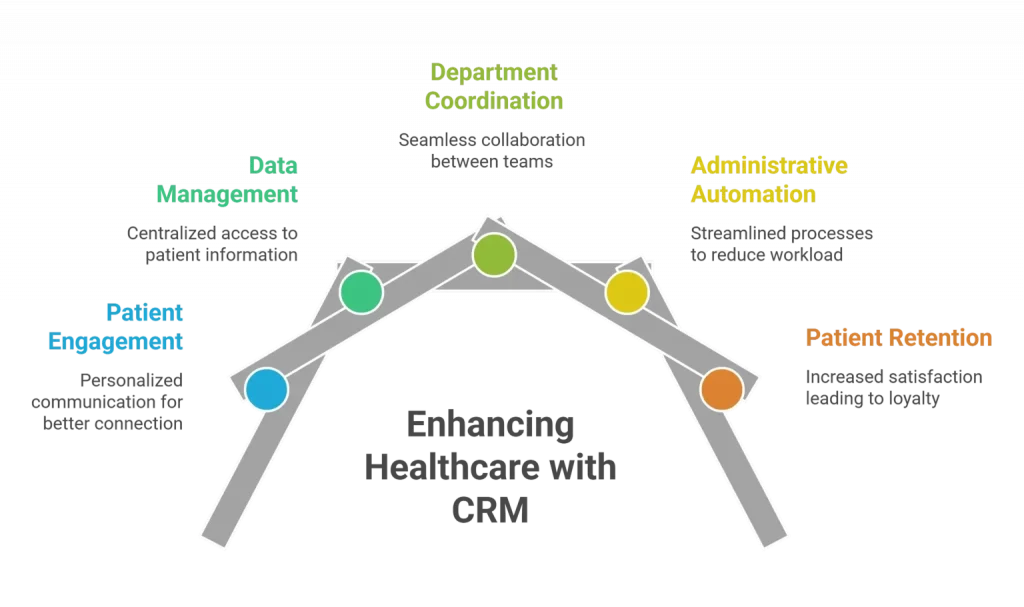
- Improved patient engagement through personalized communication
- Centralized data management for better accessibility
- Enhanced coordination between departments
- Reduced administrative workload through automation
- Higher patient retention and satisfaction
Overall, a CRM helps healthcare providers shift toward proactive and continuous patient care.
What Exactly Does Healthcare CRM Software Do?
Before evaluating any platform, it’s worth being clear on the core functions you should expect:
- Centralized patient records – All contact details, interaction history, appointment records, and notes in one place
- Automated appointment scheduling and reminders – Reduce no-shows with SMS, email, or WhatsApp notifications
- Lead and inquiry management -Capture patient inquiries from multiple channels and route them efficiently
- Post-care follow-ups – Automated check-ins after treatments or procedures
- EHR/EMR integration – Sync clinical data without double entry
- Analytics and reporting – Track engagement metrics, campaign performance, and team productivity
- Multi-channel communication – Email, SMS, WhatsApp, phone, all managed from a single dashboard
- HIPAA-compliant data handling – Non-negotiable for any healthcare organization in regulated markets
Top 10 Healthcare CRM
In today’s digital healthcare landscape, managing patient relationships efficiently is just as important as delivering quality care. A reliable CRM can help streamline communication, improve engagement, and simplify daily operations.
Here’s a curated list of the top healthcare CRM solutions that are making it easier for providers to stay connected, organized, and patient-focused.
1. Quad One Healthcare CRM
Quad One is one of the few CRMs built entirely around the healthcare workflow rather than adapted from a generic sales platform. This makes a meaningful difference in the terminology, the features, and the logic, all of which reflect how healthcare organizations actually operate.
Key Features
• Automated appointment scheduling and multi-channel reminders (SMS, email, WhatsApp)
• End-to-end patient journey tracking from first inquiry to post-treatment follow-up
• Lead management with source tracking for new patient acquisition
• WhatsApp Business integration for real-time patient communication
• Department-wise workflow management
• Customizable reports and engagement dashboards
Strengths
• Healthcare-native design with no need to adapt generic CRM features
Key Features
• Strong automation for routine patient touchpoints
• Suited for both single-specialty clinics and multi-department hospitals
• Shorter implementation time compared to enterprise-grade platforms
2. Salesforce Health Cloud
Salesforce Health Cloud is the gold standard for large healthcare systems that need a highly configurable, feature-rich platform. Built on Salesforce’s CRM infrastructure, it delivers AI-driven insights, unified patient profiles, and sophisticated care coordination tools.
Key Features
• Unified patient profile consolidating clinical and non-clinical data
• AI-powered insights via Salesforce Einstein for predictive care
• Patient journey mapping and milestone tracking
• Care team collaboration tools with role-based access
• HIPAA-compliant data architecture
Strengths
• Unmatched depth of customization and configurability
• Powerful AI and analytics capabilities
• Extensive third-party integration ecosystem
3. Microsoft Dynamics 365
Microsoft Dynamics 365 is a natural choice for providers already using Microsoft 365, Teams, or Azure. The seamless integration across these platforms means your CRM, email, collaboration tools, and cloud infrastructure all work in sync, significantly reducing friction for staff.
Key Features
• Native integration with Outlook, Teams, SharePoint, and Azure
• Patient engagement workflows and automated follow-ups
• Advanced analytics through Power BI
• AI-assisted insights and predictive modeling
• Customizable workflows using Power Automate
• Secure, cloud-based data management with Azure compliance tools
Strengths
• Exceptional interoperability within the Microsoft ecosystem
• Familiar interface reduces staff training time
• Powerful analytics and reporting through Power BI
4. Zoho CRM
Zoho CRM is the go-to choice for healthcare providers who need solid CRM functionality without the enterprise price tag. It’s affordable, easy to set up, and offers a wide range of features that cover most day-to-day patient management needs.
Key Features
• Patient record management and contact tracking
• Automated follow-up sequences and reminders
• Multi-channel communication (email, phone, social)
• Workflow automation for routine administrative tasks
Strengths
• Very competitive pricing, strong value for the feature set
• Intuitive interface with a manageable learning curve
• Wide range of integrations through Zoho Marketplace
5. HubSpot CRM
HubSpot has built its reputation on simplicity. It’s one of the easiest CRMs to get up and running, making it a smart starting point for organizations making their first move away from spreadsheets and scattered inboxes.
Key Features
• Contact and patient record management
• Email marketing and automation sequences
• Appointment scheduling integration
• Live chat and communication tracking
Strengths
• Extremely user-friendly, minimal training required
• Strong free tier makes it accessible for tight budgets
• Excellent library of integrations with third-party tools
6. LeadSquared
LeadSquared positions itself at the intersection of CRM and marketing automation, making it particularly effective for hospitals and specialty clinics actively growing their patient base. It’s built to capture inquiries from every channel and convert them into confirmed appointments efficiently.
Key Features
• Multi-channel lead capture (web forms, ads, phone, social media)
• Automated lead distribution and routing to the right teams
• Patient journey tracking from first touchpoint to appointment
• SMS, email, and WhatsApp automation for follow-ups
• Campaign analytics and ROI reporting
Strengths
• Exceptional lead management and conversion tracking
• Built-in marketing automation reduces dependence on separate tools
• Strong reporting on acquisition channels and campaign performance
7. Freshsales
Freshsales brings AI-driven automation to patient relationship management in a package that doesn’t require a large technical team to operate. It automates the routine so your staff can focus on what actually requires a human touch.
Key Features
• AI-powered lead scoring and contact prioritization
• Built-in phone, email, and chat communication tools
• Automated workflow sequences for follow-ups and reminders
• Visual deal/pipeline management adapted for patient journeys
• Detailed activity tracking and engagement analytics
Strengths
• Strong AI automation that reduces manual workload meaningfully
• Clean, modern interface with good mobile support
• Built-in communication tools mean fewer third-party add-ons are needed
8. Pipedrive
Pipedrive’s defining characteristic is its visual pipeline. This drag-and-drop board makes it easy to see where every patient or lead sits in your workflow at any given moment. Healthcare teams use this logic to track patients through inquiry, consultation, treatment, and follow-up stages.
Key Features
• Visual kanban-style pipeline for tracking patient or lead status
• Customizable stages to match your specific workflow
• Automated activity reminders and follow-up prompts
• Email integration and communication tracking
• Reporting on conversion rates and team performance
Strengths
• Exceptionally easy to use, teams adopt it quickly with minimal training
• Visual pipeline gives immediate clarity on workflow bottlenecks
• Lightweight and fast doesn’t feel bloated or over-complicated
9. Keap
Keap (formerly Infusionsoft) is built for small businesses, combining contact management with marketing automation in a single, cohesive platform. For independent practitioners or small group practices, it helps a lean team punch above its weight.
Key Features
• Contact and patient management with detailed interaction history
• Automated email and SMS sequences for appointment reminders and follow-ups
• Built-in marketing automation with campaign builder
• Payment and invoice integration
• Lead capture forms and landing page builder
• Scheduling integration for appointment booking
Strengths
• Combines CRM and marketing automation, reducing tool sprawl
• Easy to set up automated patient communication campaigns
• Good choice for solo practitioners or small teams without dedicated IT support
10. Creatio CRM
Creatio takes a low-code approach that sets it apart from most CRMs on this list. Instead of adapting a fixed feature set to your processes, you can build and modify workflows directly within the platform, no developer required. This makes it particularly valuable for healthcare organizations with non-standard operational models.
Key Features
• Low-code workflow builder for custom process design
• Case management for complex, multi-step patient interactions
• Omnichannel communication management
• AI-assisted analytics and process recommendations
• Integration capabilities with EHR, billing, and third-party systems
Strengths
• Exceptional flexibility to build workflows that match exactly how your team operates
• Low-code design means customization doesn’t require a development team
• Strong case management tools for complex patient journeys.
Below is the tabular Column, which states the major difference among these Healthcare Companies
Healthcare CRM Software Comparison: Features, AI & Best Use Cases
| Platform | Profile | Best for | Core strength | Automation & AI | Standout advantage | Key limitation |
|---|---|---|---|---|---|---|
| Quad One | Healthcare-native | Clinics and hospitals wanting a no-adaptation CRM | End-to-end patient journey with WhatsApp, SMS, and email reminders | Automates reminders, follow-ups, and department workflows | Only CRM built around healthcare from the ground up | Fewer third-party integrations than enterprise rivals |
| Salesforce Health Cloud | Enterprise | Large health systems needing deep customization | Unified patient profile across clinical and non-clinical data | Einstein AI for predictive care and next-best actions | Most configurable platform available | High cost and admin-heavy |
| Microsoft Dynamics 365 | Microsoft ecosystem | Organizations already using Microsoft tools | Patient workflows synced with Teams and Outlook | Power Automate + Microsoft AI insights | Familiar interface reduces training time | Weak fit outside Microsoft ecosystem |
| Zoho CRM | SMB / budget | Cost-conscious clinics | Records, follow-ups, and communication tools | Workflow automation with lighter AI | Strong value for money | Not healthcare-specific |
| HubSpot CRM | SMB / budget | First-time CRM adopters | Email automation and scheduling | Light AI + email sequences | Easy onboarding and free tier | Gets expensive at scale |
| LeadSquared | Marketing-first | Growing clinics focused on acquisition | Multi-channel lead capture and routing | Built-in WhatsApp, SMS, email automation | Strong lead-to-appointment conversion | Overkill for low-growth clinics |
| Freshsales | AI-led | Automation-focused teams | AI-scored leads and prioritization | Automated sequences and AI scoring | Built-in phone, email and chat | Less advanced than Salesforce |
| Pipedrive | Visual pipeline | Teams needing stage visibility | Drag-and-drop workflow boards | Automated reminders | Very fast adoption | Limited clinical workflow depth |
| Keap | SMB / budget | Independent practitioners | CRM + marketing + billing | Campaign automation | Reduces tool sprawl | Can feel limiting as teams grow |
| Creatio CRM | Low-code | Custom workflow organizations | Low-code process builder | AI recommendations and alerts | Highly customizable | Setup takes time |
Conclusion:
In today’s fast-evolving healthcare environment, adopting a robust CRM system is no longer optional; it’s essential for delivering efficient, patient-centered care. From managing complex patient data and streamlining daily operations to enhancing engagement and enabling personalized services, healthcare CRM solutions play a critical role in improving both clinical and operational outcomes.
The right CRM not only simplifies workflows but also empowers healthcare providers with real-time insights, better communication tools, and stronger marketing capabilities. When combined with evolving digital solutions like telehealth and telemedicine, CRM systems help create a more connected, responsive, and accessible healthcare ecosystem.
External References
Top 5 CRM Software For Healthcare
In today’s digital-first healthcare landscape, patient communication is more important than ever. As patients expect faster and more convenient interactions, healthcare providers are turning to WhatsApp chatbots to automate communication, reduce workload, and improve patient engagement. From appointment booking and reminders to instant support and follow-ups, WhatsApp chatbots help hospitals and clinics deliver faster, smoother, and more efficient patient experiences at scale.
The best WhatsApp chatbot platforms for healthcare in 2026 are Quad One, Happilee, WATI, ManyChat, and AiSensy. Among these, Quad One is purpose-built for healthcare, offering AI-powered appointment booking, symptom triage, EHR integration, and multi-language support. Other platforms work well for general communication but lack healthcare-specific automation. This guide compares all five on features, AI capability, and integration depth.
Why use a WhatsApp Chatbot? What difference does it make?
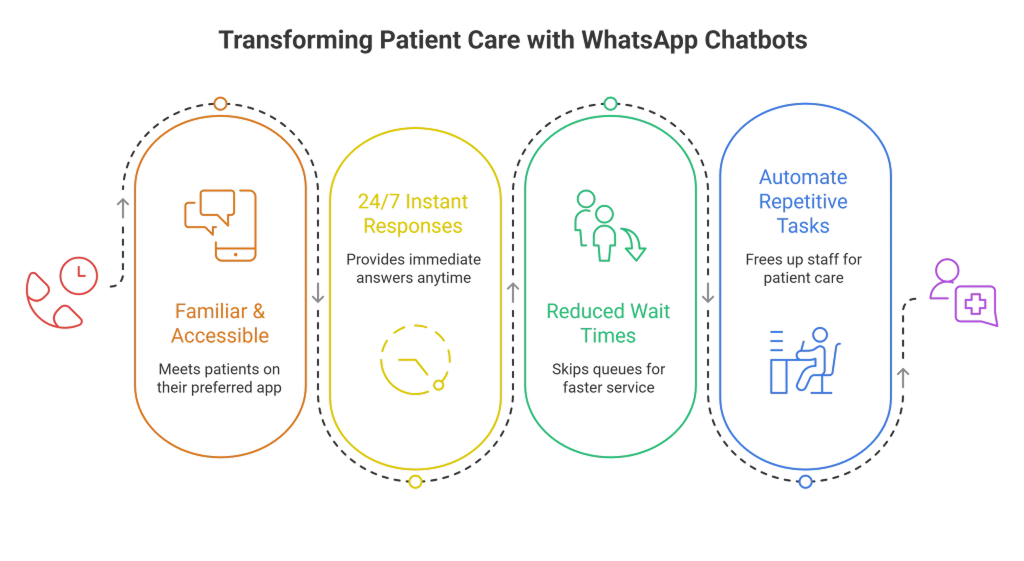
- WhatsApp meets patients where they are already familiar, easy to use, and always accessible.
- Ideal for quick interactions like booking appointments, getting updates, or asking basic questions
- Eliminates long wait times and phone calls
- Patients get instant responses 24/7
- Reduces staff workload by automating repetitive tasks like scheduling and follow-ups
- Brings speed, efficiency, and consistency to healthcare communication
- Improves patient satisfaction through faster, smoother interactions
Top 5 Best WhatsApp Chatbot Platforms in 2026
When it comes to healthcare, patient communication is a top priority. It acts as the gateway to the entire care journey, from initial inquiries to post-treatment follow-ups. In today’s digital world, using a universal platform like WhatsApp makes this communication even more effective, as it allows patients to connect with providers through an app they already use daily.
In 2026, WhatsApp chatbots are transforming this experience by enabling instant, automated, and personalized interactions. From appointment scheduling and reminders to handling patient queries and follow-ups, these solutions help healthcare providers streamline operations and improve patient engagement.
With several platforms offering advanced healthcare-specific features, choosing the right one is crucial.
1. Quad One AI WhatsApp Chatbot
The Quad One AI WhatsApp Chatbot is designed specifically for the healthcare industry, making it a highly practical and effective solution for hospitals, clinics, and diagnostic centers. Unlike general chatbot platforms, it focuses on solving real-world healthcare challenges such as managing patient interactions, reducing administrative workload, and improving communication efficiency.
Patients can easily book appointments, receive reminders, access reports, and get instant responses to their queries all within WhatsApp. This creates a seamless and familiar experience, eliminating the need for multiple apps or complicated systems.
One of its biggest strengths is its ability to understand natural language and respond in a conversational, human-like manner. It can guide patients based on symptoms, direct them to the right department, and support multiple languages, making it accessible to a broader audience.
Key Features
- AI-powered conversational chatbot with natural language understanding
- Appointment booking, rescheduling, and automated reminders
- Symptom-based guidance and smart patient triaging
- Multi-language support for diverse patient populations
- Integration with EHR/CRM systems for real-time data access
2. Happilee
Happilee is a well-rounded platform that combines simplicity with powerful features, making it suitable for a wide range of healthcare providers. Whether you are a small clinic or a large hospital, it offers the flexibility needed to manage patient communication effectively.
It enables teams to automate conversations, organize patient data, and personalize interactions without requiring deep technical knowledge. This makes it an excellent choice for organizations that want to adopt chatbot technology quickly and efficiently.
Key Features
- No-code/low-code chatbot builder for easy setup and deployment
- Automated patient conversations and response workflows
- Patient data management with organized interaction history
- Personalization capabilities for tailored patient communication
3. WATI
WATI is ideal for healthcare providers who handle a large number of patient interactions daily. Built on the official WhatsApp Business API, it focuses on improving response efficiency and team collaboration.
Healthcare teams can manage multiple conversations through a shared inbox, ensuring that every patient query is handled promptly. This is especially useful for larger hospitals where coordination between departments is critical.
Key Highlights
- Centralized inbox for team collaboration
- Easy chatbot setup with no coding required
- Broadcast messaging for reminders and updates
- Integration with CRM and hospital systems
WATI is a great choice for organizations that prioritize structured communication and need to manage high volumes without compromising on quality.
4. ManyChat
ManyChat is perfect for healthcare providers looking to expand beyond WhatsApp and manage communication across multiple platforms. It supports channels like Instagram and Facebook Messenger, allowing for a more connected patient engagement strategy.
Key Features
- Multi-channel messaging across WhatsApp, Instagram, and Facebook Messenger
- Visual flow builder for creating automated conversation journeys
- Automated campaigns for patient engagement and follow-ups
- Audience segmentation for targeted communication
5. AiSensy
AiSensy focuses on AI-powered engagement and is well-suited for healthcare providers looking to scale their communication efforts.
Key Features
- Smart AI chatbot responses
- Bulk messaging for campaigns and alerts
- Integration with external tools
- Analytics for performance tracking
WhatsApp Chatbot Comparison: Which Platform Is Right for Your Healthcare Practice?
With multiple WhatsApp chatbot platforms available, it’s important to choose one that aligns with your goals. While some tools focus on ease of use or marketing, others, like Quad One, are designed specifically for healthcare workflows. Here’s a quick comparison to help you decide.
| Features | Quad One | Happilee | WATI | Manychat | Aisensy |
| Suitable for | Best for healthcare organizations | Good for quick setup | Suitable for large teams | Works across multiple channels | Ideal for bulk campaigns |
| AI / NLP | Offers advanced AI capabilities | Provides basic AI features | Provides basic AI features | Has moderate AI capabilities | Offers advanced AI features |
| No-code builder | Does not have a no-code builder | Has a no-code builder | Has a no-code builder | Has a no-code builder | Has a no-code builder |
| Appointing booking | Fully supports appointment booking | Supports partially | Supports partially | Does not support | Does not support |
| Symptom triage | Supports symptom triage | Not available | Not available | Not available | Not available |
| EHR / CRM integration | Fully supports integration | Limited integration | Good integration support | Limited integration | Limited integration |
How to Choose the Best WhatsApp Chatbot Platform for Your Business
Selecting the right chatbot platform depends on your specific requirements. Larger healthcare organizations may need advanced automation and integrations, while smaller clinics may focus on ease of use and affordability.
Start by identifying your goals, whether it’s improving patient engagement, reducing manual workload, or scaling communication. Then evaluate platforms based on usability, integration capabilities, scalability, and overall value.
The best solution is one that fits naturally into your workflow and enhances patient experience without adding unnecessary complexity.
Conclusion
As healthcare embraces digital transformation, WhatsApp chatbots are becoming essential for faster communication, stronger patient engagement, and smoother daily operations. From appointment scheduling and reminders to basic support and follow-ups, they enhance every stage of the patient journey while reducing administrative burden for providers.
The Quad One AI WhatsApp Chatbot stands out with its healthcare-focused automation, offering features like smart appointment management, personalized communication, and seamless workflow integration. While other platforms support general use cases, Quad One is purpose-built for healthcare, helping organizations deliver more efficient, connected, and patient-centric care.
External References
Top 10 WhatsApp Chatbot Providers
10 Best AI Chatbots for Healthcare
In a digital-first healthcare environment, patients expect fast, simple, and familiar ways to connect with providers. Messaging platforms have become a natural extension of patient communication, and WhatsApp has emerged as one of the most widely used channels across age groups.
When combined with artificial intelligence, a WhatsApp conversational bot can streamline patient interactions, reduce administrative workload, and improve patient experience while still keeping clinical decisions in the hands of healthcare professionals.
What Is an AI WhatsApp Bot in Healthcare?
An AI WhatsApp bot in healthcare is a smart conversational tool that interacts with patients on WhatsApp using artificial intelligence. It helps automate routine tasks like answering questions, scheduling appointments, sending reminders, and providing updates.
By using a familiar platform, these bots make healthcare communication more accessible, faster, and more efficient, improving overall patient engagement.
Definition and Core Capabilities
An AI WhatsApp bot in healthcare is a conversational assistant that interacts with patients through WhatsApp using natural language processing (NLP) and automation.
These bots can perform tasks such as:
- Appointment scheduling and management
- Answering patient queries instantly
- Symptom-based guidance
- Sending reminders and notifications
- Providing location-based healthcare information
By automating routine communication, these bots help healthcare providers deliver faster and more consistent patient support.
Why Healthcare Providers Are Adopting WhatsApp Bots
Healthcare organizations handle thousands of repetitive queries daily, from appointment requests to follow-up instructions. Traditional communication channels like call centers often struggle to scale.
AI-powered WhatsApp bots help providers:
Reduce call center workload: Routine patient requests such as appointment booking, reminders, and general inquiries can be managed automatically by the bot, allowing staff to focus on more important tasks.
Provide 24/7 patient support: Patients can receive assistance anytime, improving accessibility and ensuring their queries are addressed even beyond regular working hours.
Enhance response speed: Automated responses deliver quick replies to patient queries, helping improve overall satisfaction and engagement.
Enable easy digital care access: By connecting with healthcare systems, WhatsApp bots allow patients to interact with providers and access services easily through a platform they already use.
Why WhatsApp Is Becoming a Preferred Healthcare Communication Channel
WhatsApp is emerging as a preferred communication channel in healthcare because of its wide adoption, simplicity, and real-time connectivity. Since patients are already familiar with the platform, it offers an easy and convenient way to connect with healthcare providers without the need for additional apps or complicated processes. With features like instant messaging, media sharing, and automation, providers can communicate more quickly and efficiently.
Patient Familiarity and High Engagement:
WhatsApp is already a part of everyday life for millions of people. Because patients are so familiar with the platform, communicating with healthcare providers through WhatsApp feels simple and convenient. Instead of navigating complicated patient portals or waiting on phone calls, patients can just send a message the same way they would when chatting with friends or family.
Secure, Real-Time Messaging for Care Delivery:
WhatsApp also supports encrypted messaging and real-time communication, making it a dependable channel for patient interactions. When combined with AI technology, healthcare providers can respond to patient queries instantly while still ensuring secure and efficient communication.
How Does WhatsApp Chatbot Integration Work?
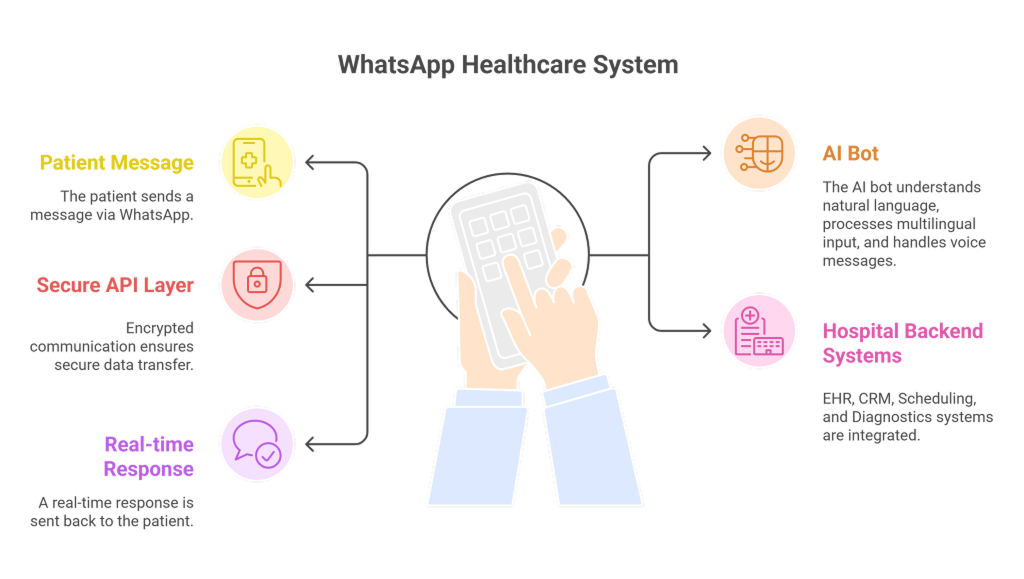
WhatsApp chatbot integration connects a chatbot to WhatsApp via APIs, enabling automated responses for queries, appointments, and updates. When linked with backend systems, it delivers accurate and efficient communication.
Integration With Hospital and Clinical Systems
A healthcare WhatsApp chatbot becomes truly effective when connected to backend hospital systems. Through secure APIs, the bot can communicate with hospital databases and service platforms.
This enables real-time actions such as appointment booking or retrieving patient records.
EHR, CRM, and Scheduling System Connectivity
AI chatbots can integrate with:
- Electronic Health Records (EHR)
- Patient relationship management systems (CRM)
- Appointment scheduling platforms
- Diagnostic and laboratory systems
These integrations ensure that patient interactions in chat are synchronized with hospital workflows.
Data Flow, Privacy, and Compliance Considerations
Healthcare data must be handled with strict privacy and security standards. Chatbot systems are typically designed with:
- Encrypted communication
- Role-based access control
- Secure API integrations
- Compliance with healthcare data regulations
This helps maintain patient confidentiality while enabling efficient digital communication.
Key Benefits of AI WhatsApp Chatbots in Healthcare
Unlike traditional methods, patients no longer have to wait in long queues to complete basic formalities, which saves significant time and effort. Digital tools allow many of these processes to be handled quickly and conveniently. They also play an important role in doctor consultations and appointment bookings, making the entire process faster and more efficient. In addition, patients can receive timely reminders, access important information, and communicate with healthcare providers more easily, improving the overall care experience.
These technologies also play an important role in improving doctor consultations and appointment management. Patients can easily book, reschedule, or cancel appointments without needing to call the hospital or visit in person. This makes the scheduling process faster, more organized, and more efficient for both patients and healthcare providers.
Natural, Real-Time Conversations That Reduce Patient Effort
Many people think of AI as something highly technical or complicated, but modern AI systems are designed to make communication simpler and more natural for patients. Instead of requiring users to follow complex instructions or navigate multiple menus, AI-powered chatbots can understand everyday language. Patients can type their questions the way they normally would in a conversation, and the system can interpret the message and provide the appropriate response. This makes interactions feel more intuitive and comfortable, especially for patients who may not be familiar with complex digital platforms.
AI can also understand messages written in different languages and respond with relevant information in real time. Whether a patient is asking about appointment availability, doctor schedules, or general healthcare guidance, the system can quickly process the request and provide helpful answers. This reduces the effort patients need to spend searching for information or waiting for support, creating a smoother and more convenient healthcare communication experience.
Intelligent Symptom Triage via AI Chatbot Symptom Checker
Intelligent Symptom Triage is a system that evaluates patient symptoms, recognizes possible health conditions, and determines how urgent the care might be. Analyzing and categorizing symptoms, it helps guide patients toward the appropriate next step, such as self-care, booking a doctor’s appointment, or seeking immediate medical help.
An AI Chatbot Symptom Checker is a chat-based tool that allows patients to describe their symptoms. The AI reviews the information, asks additional questions if needed, and identifies potential health concerns while offering basic guidance on whether medical advice should be sought.
Location-Based Guidance to Nearby Healthcare Services
Patients can quickly locate the nearest healthcare facilities through the chatbot.
Example:
“Which center is closest for a blood test?”
The bot identifies nearby diagnostic centers and shares available services.
Comprehensive Appointment Management
Booking, Rescheduling, and Cancellations
Patients can manage appointments directly through WhatsApp.
Example:
“What appointments do I have next week?”
The bot lists scheduled appointments and provides options to reschedule or cancel.
Automated Reminders and Confirmations
Automated notifications help reduce missed appointments.
Example:
“Reminder: Your consultation starts in 1 hour.”
This keeps patients informed and improves hospital scheduling efficiency.
Proactive Engagement Through Timely Notifications
Healthcare bots can proactively send reminders and updates, including:
- Appointment reminders
- Pre-visit instructions
- Medication reminders
- Preventive care notifications
These automated communications improve patient adherence and continuity of care.
Multilingual Communication for Inclusive Care
Conversational bots can support multiple languages, allowing patients to interact in their preferred language.
Example:
“मुझे डॉक्टर की अपॉइंटमेंट चाहिए”
(Hindi: I need a doctor’s appointment)
The bot responds in Hindi with available appointment options.
This improves accessibility for diverse patient populations.
Follow-Up and Continuity With Preferred Providers
Bots can remind patients to schedule follow-ups with previously consulted doctors.
Example:
“Would you like to book again with Dr. Anamika?”
This supports long-term patient care and continuity.
Voice-Friendly Access for Improved Accessibility
Patients can send voice messages instead of typing. Voice assistance is available.
Example:
Voice message: “Book me with Dr. Rakesh next Monday.”
The bot transcribes the request and completes the booking.
This feature is especially useful for elderly patients or users who are less comfortable with typing.
Clear Recovery and Escalation Flows
Human Handoff When Clarification Is Needed
If a message is unclear, the bot can ask clarifying questions or escalate the conversation to human support.
Example:
Patient: “Change my appointment”
Bot: “Would you like to reschedule or cancel your appointment?”
This ensures smooth interaction even when user input is ambiguous.
Handling Multiple Requests in a Single Conversation
Advanced conversational bots can handle multiple requests within a single message.
Example:
“Reschedule my appointment for tomorrow and send me the doctor’s available timings.”
The bot processes both requests at once updating the appointment and sharing the doctor’s available time slots within the same interaction.
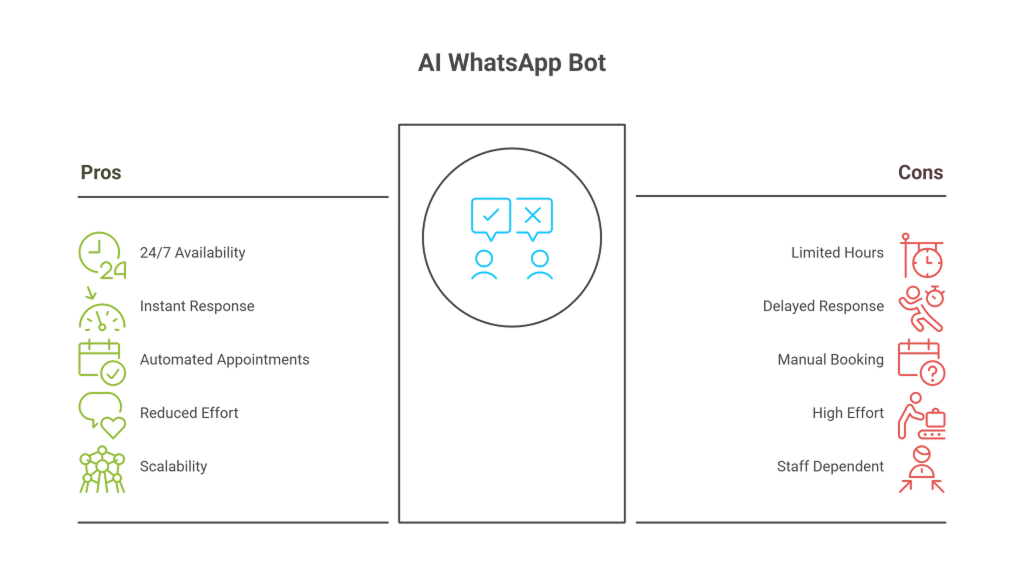
AI WhatsApp Bot vs Traditional Patient Communication
Comparison Table
| Aspects | AI Whatsapp Bot | Traditional Communication |
| Availability | 24/ 7 | Limited hours |
| Response | Instant | Delayed |
| Access | WhatsApp chat | Calls / visits |
| Appointments | Automated | Manual |
| Scalability | Handles many patients | Staff-dependent |
| Efficiency | Less admin work | More manual work |
How to Implement an AI WhatsApp Bot in Healthcare
Implementing an AI WhatsApp bot in healthcare starts with a clear approach to ensure communication is secure, efficient, and easy for patients. It includes choosing the right platform, connecting it with existing systems like CRM or hospital software, and defining key use cases such as appointments, queries, and updates.
With the right setup, healthcare providers can simplify interactions, reduce manual effort, and offer faster, more convenient communication through a platform patients already use.
Step-by-Step Implementation Checklist
- Define patient use cases
Identify tasks the bot should automate, such as appointment scheduling or symptom triage. - Choose an AI chatbot platform
Select a conversational AI platform with healthcare integration capabilities. - Integrate clinical and scheduling systems
Connect the chatbot with hospital management systems, EHRs, and appointment platforms. - Configure compliance and data security
Ensure encryption, access control, and regulatory compliance. - Train AI workflows and fallback logic
Develop conversation flows and escalation mechanisms. - Test patient journeys
Validate interactions across different scenarios before deployment. - Launch and monitor performance
Track chatbot usage, accuracy, and patient satisfaction metrics.
Key KPIs for AI Healthcare Chatbots
Tracking the right KPIs is essential to measure the effectiveness of AI healthcare chatbots. These metrics help providers understand performance, improve user experience, and ensure the chatbot is delivering real value. By focusing on key KPIs, organizations can optimize chatbot efficiency and drive better outcomes.
KPI Benchmark Table
| KPI | PURPOSE |
| Patient Satisfaction Score (CSAT) | Measures patient experience |
| Appointment Conversion Rate | Tracks successful bookings |
| Reduction in Call Center Load | Indicates operational efficiency |
| Cost per Patient Interaction | Evaluates financial impact |
| Response Time Improvement | Measures Communication Speed |
The Future of AI WhatsApp Chatbots in Healthcare
AI-powered chatbots will play a bigger role in healthcare by enabling more personalized, real-time interactions and supporting features like remote monitoring and predictive insights. This will help providers improve efficiency, decision-making, and overall communication.
Predictive Care and Preventive Engagement
Future AI systems will analyze patient behavior and health data to proactively suggest preventive care, screenings, or follow-up visits.
Deeper AI-Driven Clinical Support
With advances in generative AI and predictive analytics, chatbots may assist clinicians with patient summaries, care coordination, and decision support while maintaining strict clinical oversight.
Conclusion
AI-powered WhatsApp chatbots are transforming healthcare communication by making patient interactions faster, more accessible, and highly scalable. From appointment scheduling and symptom guidance to proactive notifications and multilingual support, these conversational systems help healthcare organizations deliver better patient experiences while reducing administrative workload.
For hospitals, telemedicine platforms, and healthcare IT leaders, implementing a WhatsApp chatbot for healthcare is becoming a key component of modern digital health infrastructure. With strong ROI potential and improved patient engagement, conversational AI is set to play a central role in the future of healthcare delivery.
Read this blog to know about the WhatsApp chatbot implementation guide for hospitals
Artificial Intelligence is rapidly redefining healthcare, making medical systems smarter, faster, and more patient-focused. What once began as small experiments is now becoming part of everyday healthcare, helping doctors detect diseases earlier, reduce documentation work, and improve hospital operations.
In 2026, the focus is not just on innovation but on using artificial intelligence in ways that deliver real value. Technologies like predictive analytics, remote patient monitoring, digital twins, and AI assistants are helping providers offer more personalized care while reducing administrative workload, gradually shifting healthcare toward a more proactive and data-driven approach.
Artificial intelligence in healthcare is revolutionizing medicine by enabling earlier disease detection, precise management, monitoring, and prevention. Integrated into clinical practice, AI tools analyze complex data from imaging scans, labs, and genetics, spotting subtle patterns humans might miss to shift healthcare from reactive treatment to predictive, precision care.
Why Artificial intelligence in healthcare Matters in 2026
The possibilities AI brings to healthcare are both extensive and game-changing. As innovation advances, AI is moving beyond a supportive role and actively transforming how medical care is provided, personalized, and continuously enhanced.
The future of artificial intelligence in healthcare is built on smart, patient-centric, and data-driven innovation. As these technologies advance, AI will evolve from being a supportive assistant to becoming a core driver of next-generation medical care and system-wide transformation.
| AI Area Impact | Description |
| Enhanced Early Detection. | Artificial intelligence Analyses Medical Images and data to detect early diseases. |
| Smart Clinical Decision Assistance. | AI enables faster, informed clinical decisions. |
| Digitally Driven Smart Hospitals. | Digitally Driven Smart Hospitals use AI and digital technologies for smarter. |
The Evolving Future of Artificial Intelligence in Healthcare
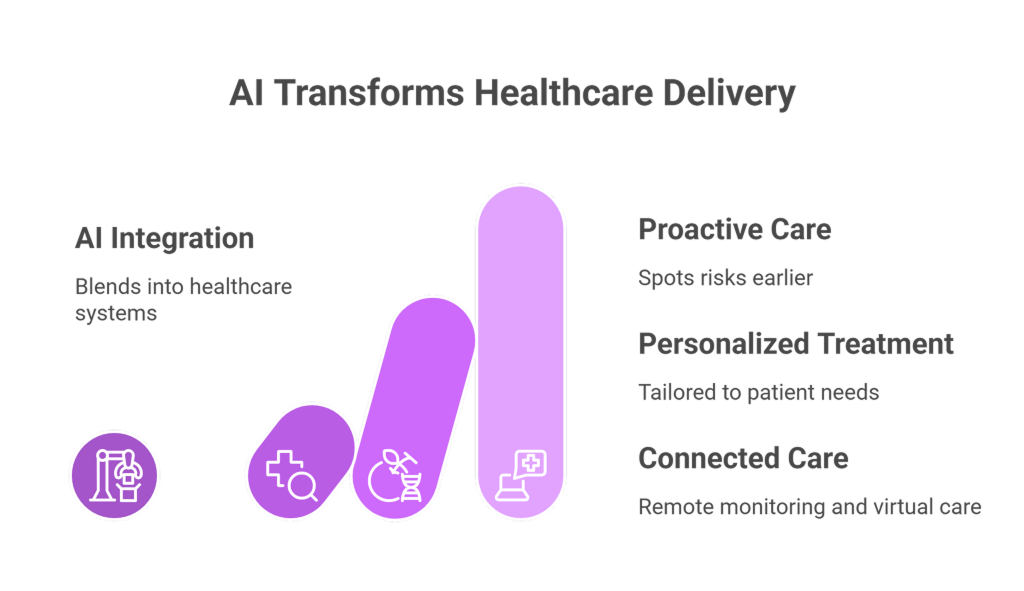
Artificial Intelligence is becoming a natural part of everyday healthcare. Instead of being a separate tool used occasionally, AI is slowly blending into hospital systems, clinical routines, and patient communication platforms, quietly supporting decisions behind the scenes.
The future of healthcare will be more proactive than reactive. With artificial intelligence analyzing real-time data, doctors can spot potential risks earlier, prevent complications, and create treatment plans that are more personalized to each patient’s needs.
Healthcare will also feel more connected and convenient. Through AI-powered remote monitoring and virtual care, patients can receive ongoing support from the comfort of their homes reducing unnecessary hospital visits while improving long-term health outcomes.
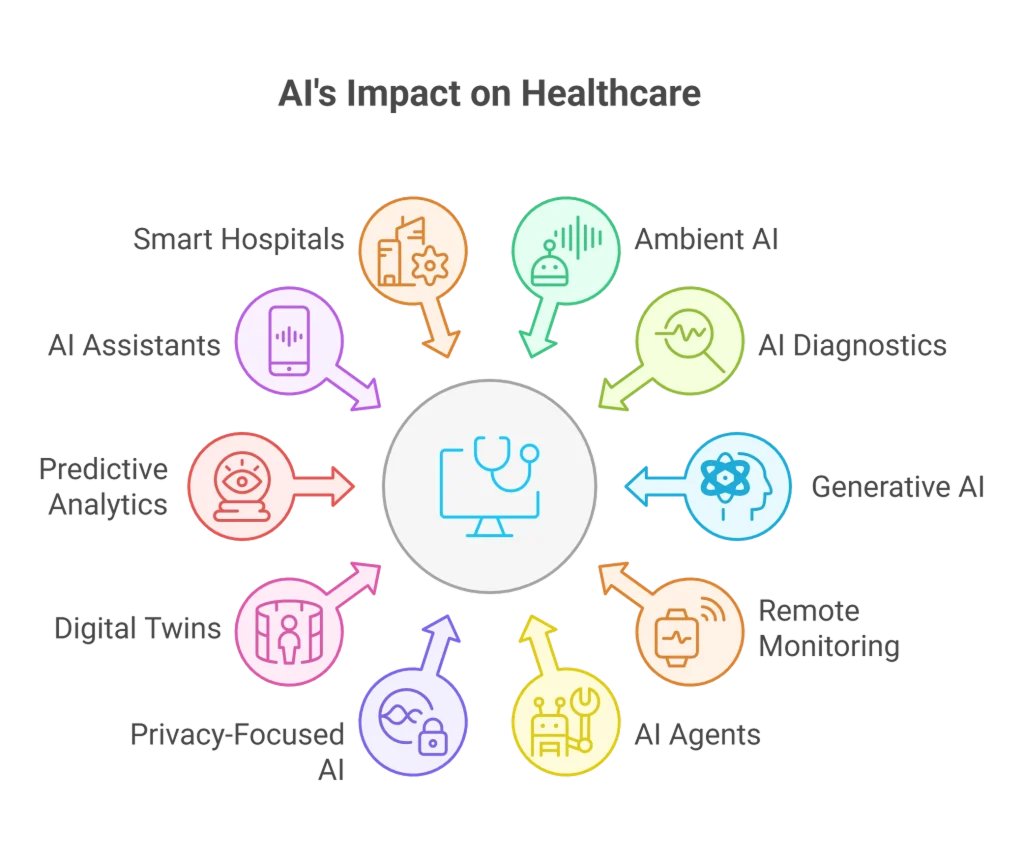
Top 10 AI Healthcare Trends in 2026
Artificial Intelligence in healthcare is evolving from limited trials and standalone applications into enterprise-wide solutions. In 2026, the emphasis is on scaling these technologies responsibly, delivering measurable clinical and financial impact, and embedding AI seamlessly into both care delivery and operational workflows.
1. Ambient AI for Clinical Documentation
AI tools are making clinical documentation much easier by automatically capturing conversations between doctors and patients and turning them into organized medical notes. Working quietly in the background and leveraging prompt engineering in healthcare, these systems help reduce the time clinicians spend on paperwork, allowing them to focus more on listening to patients and providing better care
2. AI-Driven Medical Diagnostics
Artificial intelligence is helping doctors detect diseases earlier and with greater accuracy by analyzing medical images, pathology slides, and large amounts of clinical data. From spotting signs of cancer to identifying heart and eye conditions, AI-powered tools support clinicians in making quicker and more informed decisions about patient care.
3. Generative AI in Drug Discovery
Generative AI is helping researchers discover new medicines faster. It can predict how different molecules might work, simulate how drugs interact in the body, and identify promising treatment options. By speeding up these early research steps, artificial intelligence can reduce the time and cost needed to develop new therapies and bring them to patients sooner.
4. AI-Powered Remote Patient Monitoring
With the help of artificial intelligence and wearable devices, healthcare providers can monitor patients’vital signs even when they are at home. These systems continuously track health data and can alert doctors if something unusual appears. This makes it easier to catch potential health problems early and manage chronic conditions more effectively.
5. AI Agents for Healthcare Operations
AI agents are helping hospitals and clinics handle everyday administrative tasks more efficiently. They can assist with appointment scheduling, patient communication, billing, and medical coding. By taking care of routine tasks, these tools reduce the workload for staff and allow healthcare professionals to focus more on patient care.
6. Privacy-Focused AI Technologies
Since healthcare data is extremely sensitive, new AI technologies are being designed with privacy in mind. Approaches like federated learning allow organizations to train AI models while keeping patient data secure. This means hospitals can collaborate and improve AI systems without directly sharing confidential information.
7. Digital Twins and Personalized Medicine
Digital twin technology creates a virtual model of a patient using their medical history, genetic information, and lifestyle data. Doctors can use this model to better understand how a disease might progress and test different treatment options. This helps make healthcare more personalized and tailored to each individual patient.
8. Predictive Healthcare Insights
Healthcare providers can now identify potential health risks earlier with the help of artificial intelligenceand predictive analytics. By analyzing past patient data, lifestyle habits, and medical indicators, these tools can estimate the chances of diseases such as diabetes, heart disease, or hospital readmissions. This allows healthcare teams to take action sooner and focus more on prevention rather than treating conditions after they occur.
9. AI Medical Assistants
Smart conversational assistants are reshaping how patients interact with healthcare providers. Powered by AI, they can answer health-related questions, assist with symptom checks, remind patients about medications, and help schedule appointments. This instant, accessible support improves patient experience while reducing administrative pressure on healthcare staff.
10. Smart Hospital Operations
Artificial intelligence is becoming an important part of improving how hospitals operate. It helps healthcare organizations use their resources more effectively, reduce administrative burden, and enhance overall service delivery. By analyzing data such as patient flow, bed availability, staff schedules, and equipment usage, AI enables hospitals to make more informed and efficient operational decisions.
Typical Use Cases of AI in Healthcare
Artificial intelligence is transforming healthcare through a wide range of real-world applications that improve accuracy, efficiency, and patient outcomes. Some of the most common use cases of AI in healthcare include:
1. Medical Imaging and Diagnostics
AI-powered tools analyze X-rays, MRIs, and CT scans to detect diseases such as cancer, tumors, and fractures with high accuracy. This enables faster diagnosis and reduces the risk of human error.
2. Predictive Analytics
AI uses patient data to predict potential health risks, enabling early intervention and preventive care. Hospitals use predictive models to identify high-risk patients and reduce readmission rates.
3. Drug Discovery and Development
AI accelerates the drug discovery process by analyzing large datasets to identify potential compounds, reducing time and cost significantly.
4. Remote Patient Monitoring
Wearable devices powered by AI track patient vitals in real time, allowing healthcare providers to monitor patients remotely and respond quickly to health issues.
5. Clinical Decision Support Systems
AI assists doctors by providing data-driven insights and treatment recommendations, helping improve clinical decision-making and patient care.
From Promises to Proven ROI
ROI mainly focuses on the real value AI brings to the table rather than false expectations. Instead of viewing AI through a grand or futuristic lens, the real measure of its impact lies in what it delivers in real time, such as cost reduction, improved efficiency, and faster outcomes. The emphasis is not on exaggerated promises but on practical, measurable results. What truly matters is how AI supports daily operations by reducing human workload, streamlining processes, and enabling quicker decisions, ultimately proving its value through the tangible benefits it delivers
The Push for Organizational Readiness Is Growing
This actually assesses how ready the organization is to embrace the changes that will come as AI becomes the center of everything. It reflects how prepared the organization is to adapt to these changes. There are a few prerequisites that enable it to function to its full potential, such as strong technical foundations, proper employee training, and the flexibility to adapt whenever needed.
AI-human collaboration is taking shape
There is a common misconception that artificial intelligence can do things humans cannot and will eventually replace them, but this is not entirely true. In reality, AI and the human brain work best when they go hand in hand toward a common goal.
AI excels at processing large volumes of data within milliseconds and performing repetitive or rule-based tasks with high accuracy. On the other hand, humans bring context, critical thinking, creativity, and empathy, which are essential for meaningful decision-making and patient-centered approaches. When combined in this way, artificial intelligence and human expertise complement and support each other, creating a balanced system that improves efficiency and accuracy.
Creating AI projects that actually scale
Organizations often have small projects that lack the proper environment and supporting criteria needed for growth, which keeps them limited or underperforming. When AI comes into the picture, it helps elevate these projects by introducing better workflows, clearer data structures, and stronger support systems. By managing larger workloads and improving overall productivity, AI helps uplift the project and drive better outcomes.
AI in Healthcare Statistics (2026)
The adoption of AI in healthcare is rapidly increasing, driven by the need for efficiency, accuracy, and better patient outcomes. Here are some key statistics highlighting its impact:
- The global AI in healthcare market is expected to reach over $100 billion by 2026, driven by increased adoption across hospitals and research institutions.
- More than 70% of healthcare organizations are expected to integrate AI into their workflows by 2026.
- AI-powered diagnostics can improve accuracy by up to 30–40%, especially in imaging and early disease detection.
- Hospitals using AI-driven automation have reported 20–25% improvement in operational efficiency.
- Predictive analytics powered by AI can reduce hospital readmissions by up to 15–20%.
These statistics highlight how AI is shifting healthcare from a reactive model to a more proactive and data-driven system.
Future of Adoption of AI in Healthcare: Conclusion
Artificial intelligence has already made a significant impact in healthcare, clearly demonstrating the difference between systems that operate with AI support and those that do not. Its integration is helping improve efficiency, enhance decision-making, and streamline healthcare processes, showing the growing value of AI in modern medical environments.
AI is steadily redefining healthcare by advancing diagnostics, strengthening clinical decision-making, and streamlining operations. As its adoption accelerates, regulators across the U.S., EU, India, and the Middle East are introducing stricter frameworks to ensure patient safety, safeguard data, and promote responsible, ethical use.
Today, AI compliance in healthcare, including healthcare chatbot compliance and implementation, is built on core elements like proven system performance, strong data management, algorithm transparency, and ongoing human oversight. While each region has its own regulatory approach, they all emphasize risk-based frameworks, continuous evaluation, and accountability.
At the same time, organizations need to manage key risks including algorithm bias, lack of transparency, data privacy issues, performance degradation over time, and overreliance on automation. A clear and structured approach to governance, compliance, and ethical AI development is essential for healthcare providers, pharmaceutical companies, and startups.
AI in Healthcare Compliance: How to Identify and Manage Risk
As AI becomes an integral part of modern healthcare systems, the conversation is shifting from simple adoption to deeper accountability and governance. It’s no longer just about implementing AI solutions, but about ensuring they are safe, transparent, and aligned with clinical standards. Healthcare providers must carefully evaluate how these systems make decisions, how data is handled, and how outcomes are monitored over time.
At the same time, navigating evolving regulations and ethical considerations is becoming increasingly important. From data privacy and security to bias mitigation and explainability, organizations need strong frameworks to ensure AI-driven care remains reliable and patient-centric. This becomes even more critical with tools like WhatsApp chatbot patient data privacy compliance, where real-time patient communication must still meet strict regulatory and confidentiality standards.
The Growing Role of AI in Healthcare
Artificial Intelligence is rapidly reshaping healthcare, powering everything from early diagnosis and clinical decision support to predictive analytics and operational efficiency. As adoption accelerates, regulatory bodies across the globe are stepping in to ensure that innovation does not come at the cost of patient safety, data integrity, or ethical responsibility.
Between 2024 and 2025, major regulatory developments across the United States, European Union, India, and the Middle East have begun redefining how AI systems are designed, validated, and deployed in healthcare environments.
Regulatory Pressures
With AI playing a bigger role in care delivery, regulators are raising expectations around transparency, risk management, and compliance. Organizations are now expected to clearly demonstrate how AI systems are developed, validated, and monitored throughout their lifecycle, ensuring they remain safe, reliable, and aligned with evolving regulatory standards.
A Shift Toward Structured AI Governance
Healthcare regulators are no longer viewing AI as experimental technology. Instead, it is now treated as a critical component of care delivery that requires strict oversight, transparency, and lifecycle management.
Modern AI compliance in healthcare is built on four core pillars:
- Safety and validation: AI systems must meet clinical standards and demonstrate reliable performance.
- Data governance: Strong data privacy, security, and compliance with evolving protection laws are essential.
- Algorithmic accountability: Developers must ensure transparency in how models are trained, tested, and updated.
- Human oversight: Final clinical decisions must always remain under human control.
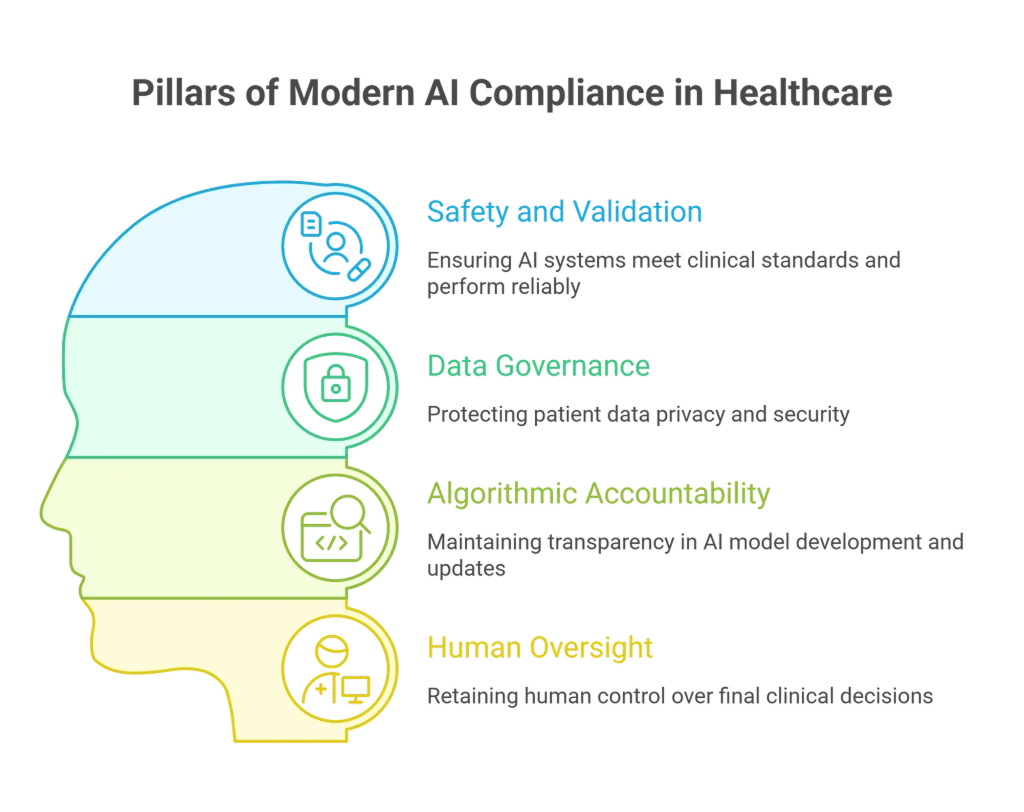
These principles are now central to procurement, product development, and risk management strategies across healthcare organizations.
United States: Evolving AI Oversight
In the U.S., regulatory efforts are led by evolving frameworks for AI-enabled medical devices. New approaches focus on managing adaptive algorithms that continue learning after deployment.
Recent developments include:
- Predefined update frameworks that allow AI systems to evolve without repeated approvals
- Lifecycle-based monitoring covering design, validation, and real-world performance
- Increased focus on transparency in AI-driven clinical tools
Although there is no single AI-specific law, compliance with data privacy regulations remains critical. Authorities now emphasize that AI systems including third-party tools must follow strict data protection, de-identification, and transparency standards.
At the same time, individual states are introducing laws around bias prevention, explainability, and patient consent, creating a layered regulatory landscape.
European Union: Risk-Based Regulation
The European Union has taken a structured, risk-based approach by classifying most healthcare AI systems as “high-risk.” This means stricter requirements for both developers and healthcare providers.
Key expectations include:
- Robust risk management and quality systems
- Detailed documentation of model performance
- Built-in human oversight to prevent over-reliance on automation
- Continuous monitoring and incident reporting
In parallel, new frameworks for health data sharing are enabling secure access to large datasets for AI training, while maintaining strict privacy safeguards. This balance supports innovation without compromising patient rights.
India: Strengthening Ethical and Legal Foundations
India is building a strong regulatory base focused on privacy, ethics, and accountability.
Recent developments include:
- Data protection laws enforcing consent-driven data usage and stricter storage controls
- Ethical AI guidelines promoting fairness, transparency, and human involvement
- Draft regulations for AI-based medical software, introducing risk classifications and validation requirements
These measures are pushing healthcare providers and startups to adopt secure, compliant, and ethically sound AI practices.
Middle East: Innovation with Data Control
Countries in the Middle East are advancing AI adoption while maintaining strict control over sensitive health data.
Key trends include:
- Regulatory frameworks emphasizing clinical validation and transparency
- Mandatory reporting and monitoring of AI system performance
- Strong data localization and protection requirements
This approach ensures patient trust while supporting rapid digital transformation in healthcare.
Identifying AI Risks in Healthcare
As AI becomes deeply embedded in healthcare systems, identifying and managing risks is critical. Common risk areas include:
- Bias in algorithms: Poor data diversity can lead to unequal outcomes
- Lack of transparency: Black-box models can reduce clinical trust
- Data privacy risks: Mishandling sensitive health data can lead to compliance violations
- Performance drift: AI systems may become less accurate over time without monitoring
- Overdependence on automation: Reduced human oversight can impact clinical judgment
Global Alignment on Core Principles
Despite regional differences, global regulations are converging around shared priorities:
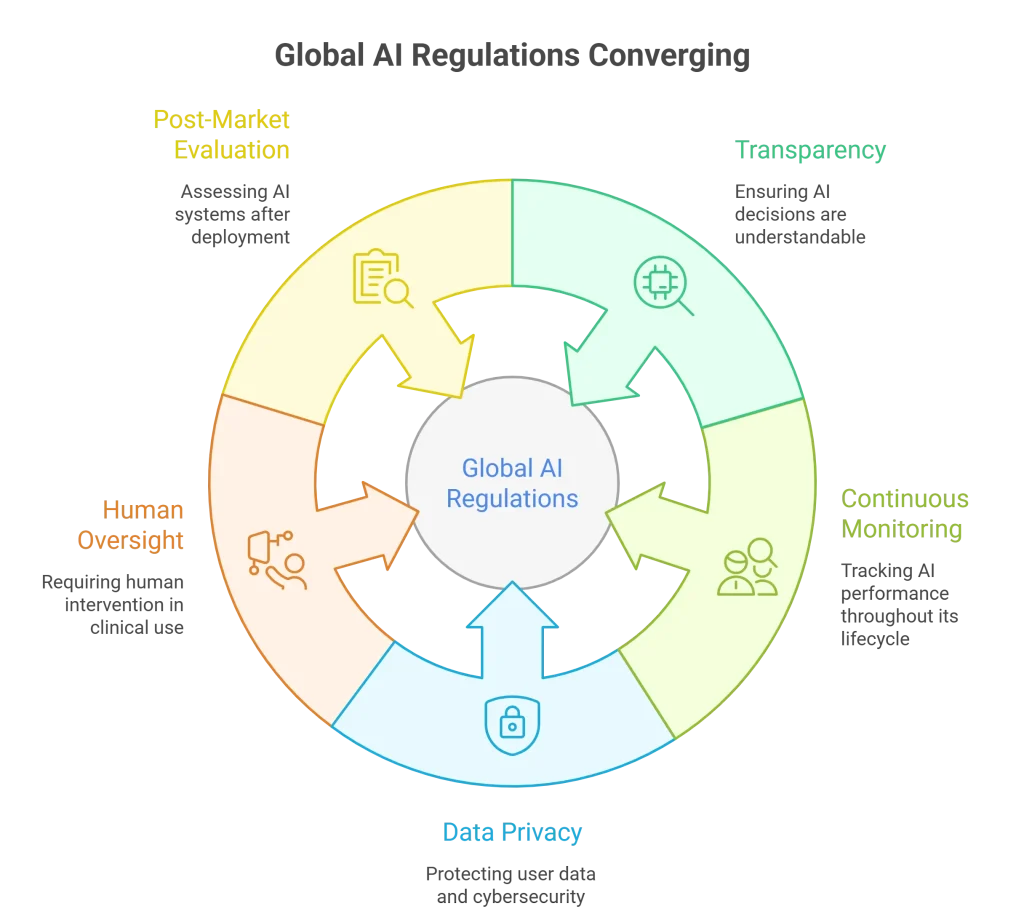
- Transparency and explainability in AI decisions-AI systems should provide clear and understandable insights into how decisions are made, helping build trust and support better clinical judgment.
- Continuous monitoring throughout the AI lifecycle-AI models need regular monitoring and updates to maintain accuracy, adapt to new data, and reduce risks of errors or bias.
- Strong data privacy and cybersecurity practices-Protecting patient data is essential, requiring strong security measures like encryption and secure access controls to prevent breaches.
- Mandatory human oversight in clinical use-AI should support, not replace, healthcare professionals, ensuring all decisions are reviewed and validated by humans.
- Ongoing post-market evaluation of AI systems– AI should support, not replace, healthcare professionals, ensuring all decisions are reviewed and validated by humans.
Strategic Approach to Managing AI Risk
Managing AI risk in healthcare calls for a proactive and well-defined approach. It involves spotting potential risks early, maintaining compliance throughout the lifecycle, and continuously monitoring systems for accuracy, safety, and ethical use. With the right strategy in place, organizations can build trust, minimize uncertainty, and scale AI solutions with confidence.
For Healthcare Providers
- Internal governance: Establish committees and policies to evaluate AI tools, monitor performance, and ensure ethical, safe use. This includes clear controls on how hospital CRM ensures patient privacy through secure data storage, access controls, and audit trails.
- Regulatory compliance: Follow local and global standards for data privacy, clinical safety, and algorithm accountability.
- Clinician training: Educate healthcare professionals to interpret AI outputs correctly and use them as decision-support, not a replacement.
For Medical Device and Pharma Companies
- Embed compliance into product design and development
- Maintain detailed documentation for audits and validation
- Use diverse datasets to reduce bias and improve accuracy
For medical device and pharma companies, it’s important to build compliance into AI tools right from the start, making sure they meet all regulatory and ethical standards. Keeping thorough records of design, data, and performance makes audits and validation easier. Using diverse, representative datasets also helps ensure the AI is accurate, fair, and works well for all types of patients.
For Startups and Innovators
- Follow privacy-first design principles
- Build transparent and ethical AI systems
- Collaborate with regulators and healthcare providers for compliant innovation
From Compliance to Competitive Advantage
The wave of AI regulation is not slowing innovation it is shaping it responsibly. By focusing on transparency, fairness, and patient protection, regulators are building a framework for sustainable growth.
For healthcare organizations, compliance is no longer optional. It directly impacts trust, scalability, and market access. Those who proactively align with evolving regulations will be better positioned to unlock AI’s full potential while ensuring safe, ethical, and effective patient care. This also shapes the future of AI in hospital CRM, where compliant, intelligent systems will drive more personalized, coordinated, and privacy-aware patient engagement.
Conclusion
AI regulation in healthcare is not a barrier but a foundation for responsible innovation. As global standards continue to evolve, organizations that prioritize compliance, transparency, and ethical practices will gain a competitive edge.
By embedding risk management and governance into AI strategies, healthcare stakeholders can build trust, ensure patient safety, and unlock the full potential of AI creating a future where technology and care work seamlessly together.
WhatsApp chatbots protect patient data through end-to-end encryption (Signal Protocol), AES-256 storage encryption, role-based access controls, and HIPAA-aligned deployment via certified Business Solution Providers (BSPs). When combined with consent workflows and BAA-signed vendors, healthcare organizations can operate WhatsApp chatbots in compliance with HIPAA, GDPR, and regional regulations.
WhatsApp Chatbot Patient Data Privacy: HIPAA Compliance, Encryption & Security Best Practice
Healthcare communication is rapidly shifting toward digital-first experiences, and platforms like WhatsApp are at the center of this transformation. While AI-powered WhatsApp chatbots improve patient access through instant support, appointment booking, and real-time updates, they also raise an important question -how secure is patient data?
Ensuring privacy, compliance, AI compliance and regulatory, and security is critical when handling sensitive healthcare information. This blog explores how WhatsApp chatbots align with global data protection standards and best practices.
Read this blog to learn what you should know about WhatsApp chatbots.
Why Does Patient Data Privacy Matter in Healthcare Messaging?
Patient data is among the most sensitive types of personal information. It includes medical history, diagnoses, test results, and personal identifiers. Any breach can lead to serious consequences such as identity theft, legal penalties, and loss of trust.
In healthcare messaging:
- Conversations often contain confidential medical details
- Patients expect secure, private communication channels
- Regulations strictly govern how data is stored and shared
Protecting this data is not just a legal requirement, it’s essential for maintaining patient trust and delivering responsible care.
How Does WhatsApp’s End-to-End Encryption Protect Healthcare Data?
One of the key security features of WhatsApp is end-to-end encryption (E2EE). This means:
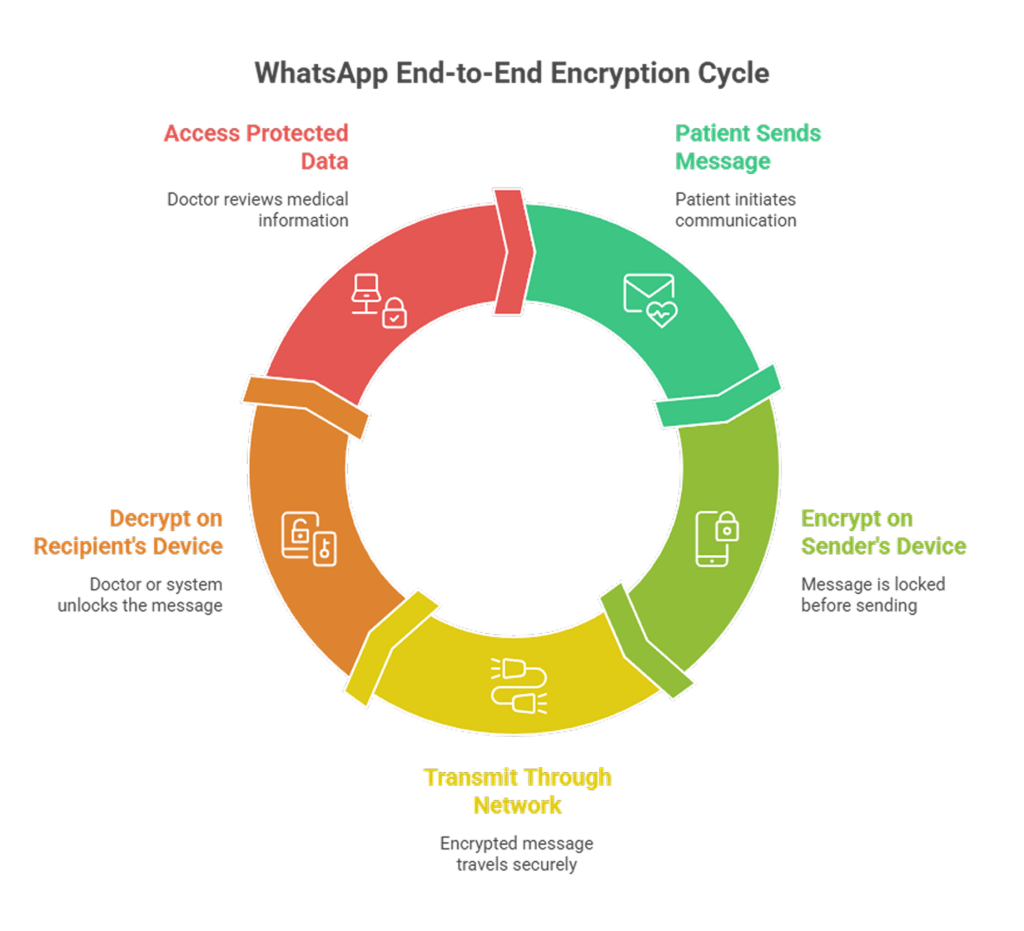
- Messages are encrypted on the sender’s device
- Only the recipient can decrypt and read them
- Even WhatsApp itself cannot access the content
For healthcare providers, this ensures:
- Secure transmission of patient information
- Protection against unauthorized interception
- Safer communication compared to traditional SMS or email
However, encryption alone is not enough data handling practices on the provider’s side also play a major role.
Is WhatsApp HIPAA Compliant for Healthcare Chatbots?
HIPAA sets strict standards for protecting patient health information in the U.S.
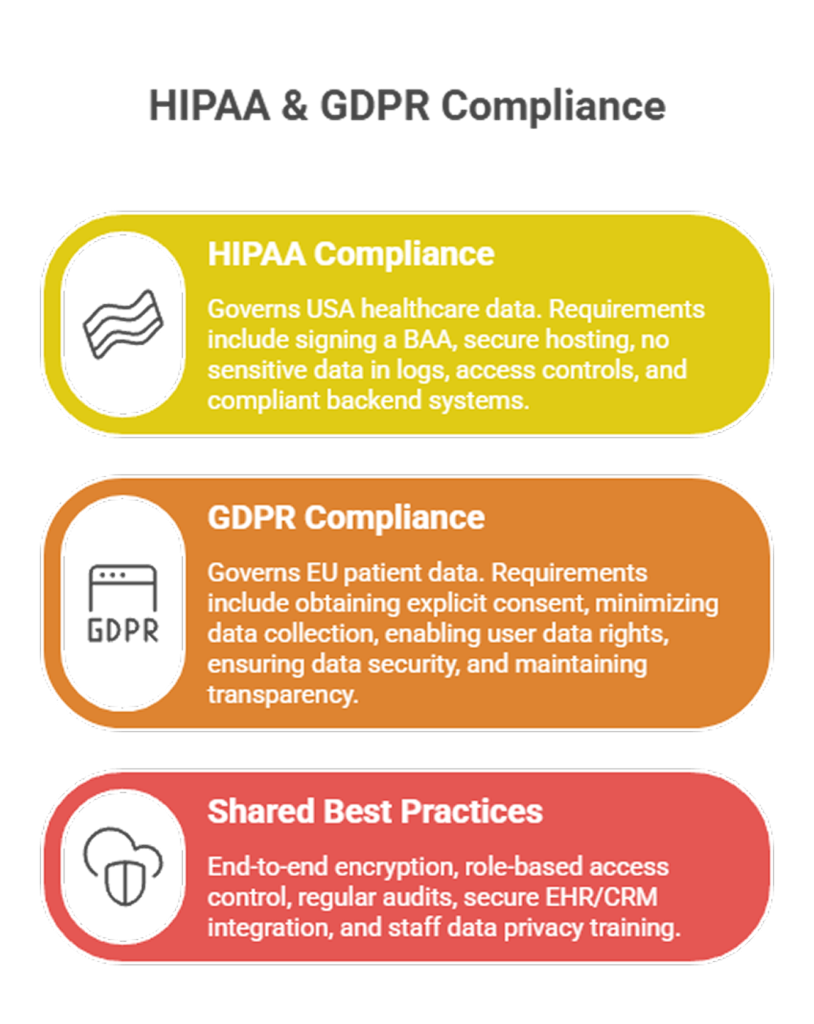
By default, WhatsApp is not fully HIPAA compliant because:
- It does not provide a Business Associate Agreement (BAA)
- Data storage and audit controls are limited
- Compliance depends on how the solution is implemented
That said, healthcare organizations can build HIPAA-aligned solutions by:
- Using secure hosting environments
- Avoiding storage of sensitive data in chat logs
- Implementing access controls and audit trails
- Integrating compliant backend systems
How Do You Make a WhatsApp Healthcare Chatbot GDPR Compliant?
GDPR governs data privacy across the European Union and emphasizes user consent and transparency.
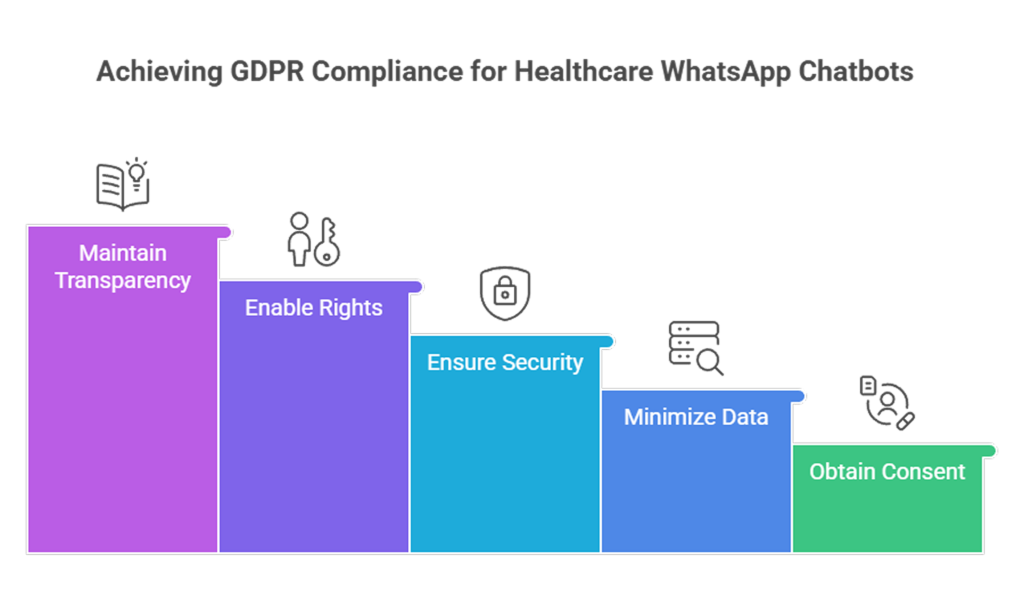
To ensure GDPR compliance, healthcare chatbots must:
1. Obtain Explicit Consent
Before any interaction starts, patients should clearly consent to how their data will be collected, stored, and used. This consent must be clear, specific, and voluntarily given, rather than assumed or pre-selected. Healthcare providers should use simple consent prompts within platforms like WhatsApp to ensure patients fully understand their choices and have the option to withdraw consent at any time.
2. Minimize Data Collection
Healthcare chatbots should adhere to the principle of data minimization by collecting only the information necessary to serve a specific purpose. Unnecessary personal or medical details that are not directly relevant should be avoided. This approach helps reduce privacy risks and supports compliance with regulations such as GDPR.
3. Ensure Data Security
Robust security measures are essential to protect sensitive patient data. These include:
- End-to-end encryption to secure communications
- Secure APIs for safe system integrations
- Encrypted databases along with protected cloud storage
- Ongoing security audits and continuous monitoring
Together, these measures help prevent unauthorized access, data breaches, and misuse of information.
4. Enable User Rights
Patients should be given complete control over their personal data, which helps build trust and transparency in digital healthcare interactions. This includes the ability to:
- Access their data: Patients should be able to review the information collected about them whenever needed.
- Request corrections: They should have the option to update or fix any inaccurate or outdated details.
- Request deletion: Patients can request the removal of their data, exercising their “right to be forgotten” under regulations like GDPR.
Ensuring these rights not only empowers patients but also promotes responsible and ethical data management.
5. Maintain Transparency
Transparency is essential for building trust in healthcare communication systems. Providers should clearly explain:
- What data is being collected
- Why it is being collected
- How it will be stored, used, and protected
- Who can access the data
Privacy policies should be written in simple, easy-to-understand language and made readily available, Keeping patients informed at every step fosters confidence and supports regulatory compliance.
Best Practices for Secure WhatsApp Healthcare Chatbots
To build a safe and compliant chatbot, healthcare providers should:
- Use the official WhatsApp Business API
- Integrate with secure EHR/CRM systems
- Implement role-based access controls
- Regularly audit and monitor data usage
- Train staff on data privacy protocols
These steps ensure that chatbot solutions are not only efficient but also secure and trustworthy.
CONCLUSION:
AI-powered WhatsApp chatbots are transforming patient access by offering faster, more convenient communication. However, with this innovation comes the responsibility to protect sensitive healthcare data.
By aligning with standards like HIPAA and GDPR, and following strong security practices, healthcare providers can confidently deliver digital experiences that are both efficient and secure.
The future of healthcare communication lies in balancing innovation with privacy and getting both right is key to long-term success.
Key takeaways: AI medical coding uses NLP, machine learning, and computer-assisted coding (CAC) to automate ICD-10 and CPT code assignment, reducing coding errors by up to 40%, cutting claim denials by up to 50%, and delivering measurable ROI across healthcare revenue cycle management.
The healthcare industry continues to evolve rapidly, driven by technological advancements that aim to enhance patient care, optimize operational workflows, and improve the financial health of healthcare organizations. Among these breakthroughs, artificial intelligence (AI) is playing an increasingly transformative role in medical coding, and the results are measurable.
As of mid-2026, AI-powered tools are reshaping the way healthcare organizations approach medical coding, billing, and revenue cycle management (RCM). This article examines how AI is transforming medical coding, the key technologies driving this transformation, and the practical implications for medical coders, HIM professionals, and healthcare executives.
of medical bills contain at least one coding error
of claim denials are caused by coding issues
reduction in coding errors with AI-powered systems
of hospitals already use AI in their revenue cycle
What Is AI Medical Coding?
AI medical coding is the use of artificial intelligence, specifically natural language processing (NLP), machine learning (ML), and predictive analytics, to automatically translate clinical documentation into standardized alphanumeric codes used for billing, insurance claims, and health data reporting.
Medical coding is the process of converting healthcare diagnoses, procedures, services, and equipment into universal codes drawn from systems such as:
- ICD-10-CM/PCS International Classification of Diseases, 10th Edition, is used to classify diagnoses and inpatient procedures.
- CPT (Current Procedural Terminology) codes for outpatient procedures and physician services.
- HCPCS Level II codes for supplies, equipment, and services not covered by CPT.
Traditionally, this has been a labor-intensive, error-prone process requiring certified coders to manually review physician notes, discharge summaries, and electronic health records (EHRs). AI medical coding automates this workflow, dramatically reducing manual effort while improving accuracy and coding compliance.
Key AI Technologies Driving Medical Coding Automation
1. Natural Language Processing (NLP) in Medical Coding
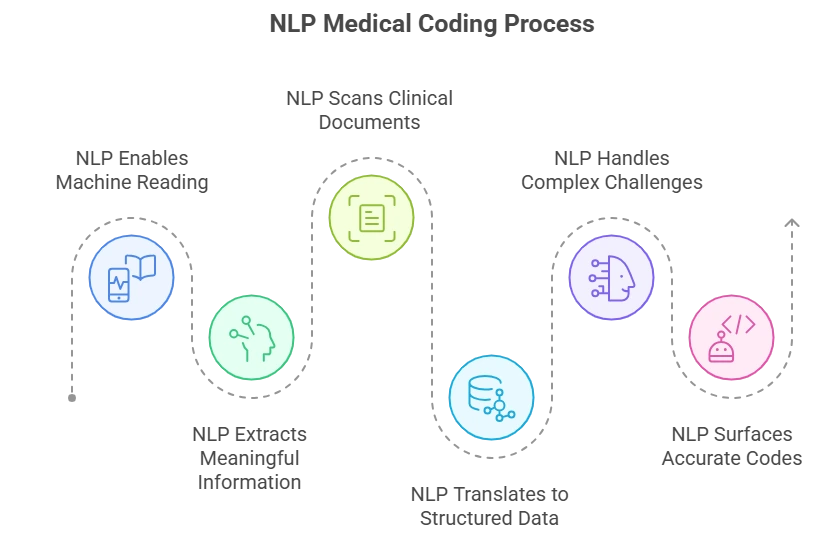
Natural language processing is the backbone of AI medical coding. NLP enables machines to read, interpret, and extract meaningful information from unstructured clinical text, a task that previously required trained human expertise.
In practice, NLP medical coding tools automatically scan physician notes, radiology reports, operative summaries, and EHR entries to identify key clinical terms and translate them into structured, codable data. This significantly reduces the manual burden of sifting through documentation while improving the consistency and accuracy of code assignment.
Advanced NLP systems also handle clinical abbreviations, negation (e.g., “no evidence of pneumonia”), and contextual disambiguation challenges that earlier rule-based coding tools struggled with. Quad One’s AI Medical Coding Application leverages NLP to process complex documentation and surface the most accurate ICD-10 and CPT codes in real time.
2. Computer-Assisted Coding (CAC) and EHR Integration

Computer-assisted coding (CAC) systems use AI algorithms to analyze clinical documentation and suggest appropriate medical codes, functioning as an intelligent co-pilot for human coders. CAC helps coders select the correct ICD-10 and CPT codes, eliminating much of the manual lookup and cross-referencing that slows traditional workflows.
Modern CAC tools integrate directly with EHR platforms and RCM systems, ensuring a seamless flow of information across the healthcare organization. With the ability to process large documentation volumes in real time, CAC enhances coding productivity, reduces claim rejections, and optimizes revenue cycle performance.
3. Machine Learning for Continuous Coding Improvement
Unlike static rule-based systems, machine learning models improve over time. As they are exposed to more clinical data and coding decisions, ML algorithms refine their predictive capabilities learning to recognize patterns that human coders might miss, especially in complex multi-diagnosis or multi-procedure cases.
ML in medical coding enables real-time code suggestions, predicts the likelihood of specific codes being accepted by payers, and identifies anomalies that may indicate documentation gaps or compliance risks. A large hospital system that integrated an ML-driven coding platform reported a 30% reduction in coding errors within the first year of deployment.
4. Predictive Analytics for Denial Management and Compliance
Predictive analytics represents one of the most powerful applications of AI in revenue cycle management. By analyzing historical coding and claims data, predictive models can anticipate which codes are likely to trigger denials, flag documentation deficiencies before claim submission, and identify patterns of non-compliance before they escalate into audits.
For example, AI-driven predictive coding can alert coders to a chronic condition requiring a more specific ICD-10 code, or flag a high-value procedure where documentation does not adequately support medical necessity, both situations that would otherwise result in a denied claim and costly rework.
Benefits of AI in Revenue Cycle Management and Medical Coding
AI-powered medical coding technologies use machine learning to automate the assignment of standardized codes (like ICD-10 and CPT) to patient diagnoses, procedures, and treatments. By analyzing clinical notes, EHRs, and billing data with high accuracy, they reduce errors, speed up reimbursements, ensure compliance, and free coders for complex tasks boosting efficiency in healthcare revenue cycles.
Natural Language Processing (NLP) in Medical Coding
One of the most powerful applications of AI in medical coding is Natural Language Processing (NLP). NLP is a branch of AI that enables machines to comprehend, interpret, and produce human language in a manner that is both meaningful and contextually accurate. In the context of medical coding, NLP is utilized to process and extract relevant information from unstructured clinical data, including physician notes, discharge summaries, and electronic health records (EHRs).
NLP medical coding tools can automatically scan patient records and translate clinical language into standardized codes, significantly reducing the need for manual coding. This not only increases efficiency but also minimizes human error, a common issue in traditional coding methods. The integration of NLP into coding workflows enhances coding compliance, reduces administrative burdens, and ensures that medical billing is accurate and up-to-date with the latest regulations.
Computer-Assisted Coding (CAC)
Another AI-powered technology transforming medical coding is Computer-Assisted Coding (CAC). CAC systems use AI algorithms to analyze clinical documentation and suggest appropriate medical codes based on the data. These systems serve as a form of support for human coders, offering coding suggestions and enhancing coding accuracy. They streamline the process by assisting coders in selecting the correct ICD-10 and CPT codes, which helps eliminate human error while speeding up the entire coding workflow.
CAC tools often integrate with EHR systems and revenue cycle management (RCM) platforms, ensuring a seamless flow of information across healthcare organizations. With the ability to process vast amounts of data in real time, CAC enhances coding productivity, reduces claim rejections, and optimizes revenue cycle management.
Machine Learning and Predictive Analytics in Coding
Machine learning (ML) is another AI technology that has great potential in medical coding. Unlike traditional algorithms that are programmed with specific instructions, ML systems can learn from data over time, improving their predictive capabilities as they are exposed to more clinical data.
In the context of medical coding, machine learning algorithms are trained to recognize patterns in clinical data and predict the most likely codes based on historical coding patterns and clinical guidelines. For example, predictive analytics coding can anticipate and prevent coding errors before they occur, reducing claim denials and ensuring that accurate codes are submitted in a timely manner.
By continuously analyzing past coding data, ML tools can offer real-time suggestions and even predict the likelihood of specific codes being accepted by insurers, helping healthcare organizations avoid costly rework and delays.
The Benefits of AI in Medical Coding
Improved Coding Accuracy and Reduced Error Rates
AI medical coding systems reduce coding errors by cross-referencing clinical documentation against coding guidelines, payer rules, and compliance standards in real time. These systems can identify potential errors before claims are submitted, preventing denials and audit exposure that are expensive to remediate after the fact.
Faster Claims Processing and Reimbursement
By automating the bulk of routine code assignment, AI dramatically shortens the time from patient encounter to clean claim submission. This accelerates reimbursement cycles, improves cash flow, and reduces the accounts receivable (AR) backlog that burdens many coding departments.
Significant Cost Savings and Administrative Efficiency
The reduction in coding errors leads to fewer denied claims, less rework, and reduced appeals costs. Healthcare organizations adopting AI in their revenue cycle report administrative cost reductions of up to 25%, along with a 30% average ROI driven by faster reimbursements and reduced staffing requirements for routine coding tasks.
Enhanced HIPAA Compliance and Audit Readiness
AI coding platforms generate comprehensive audit trails for every code assignment, documenting the clinical evidence, guidelines referenced, and coder decisions. This traceability is invaluable during OIG audits, payer reviews, or Recovery Audit Contractor (RAC) investigations, and is a prerequisite for demonstrating coding compliance..
AI vs. Manual Medical Coding: A 2026 Comparison
| Factor | Manual Coding | AI Medical Coding |
|---|---|---|
| Coding speed | Minutes per chart; bottleneck at high volumes | Seconds per chart; scales instantly |
| Error rate | Up to 80% of bills contain errors | Up to 40% reduction in error rates |
| Claim denial rate | 42% of denials linked to coding issues | Up to 50% reduction in first-pass denials |
| Compliance monitoring | Periodic manual audits, reactive | Real-time, proactive compliance checks |
| ICD-10/CPT updates | Requires manual retraining and guidebook updates | AI models updated continuously with new code sets |
| Scalability | Linear requires more staff for higher volumes | AI models are updated continuously with new code sets |
| Complex cases | ✔ Human judgment essential | AI flags for human review; hybrid model required |
| Audit trail | Manual documentation; incomplete | ✔ Auto-generated, traceable for every code |
| Cost | High labor cost; grows with volume | Upfront integration cost; lower per-encounter cost at scale |
Will AI Replace Medical Coders in 2026?
This is the most common question from coding professionals, and the evidence is clear: AI will not replace medical coders, but it will fundamentally change what they do.
The emerging standard in 2026 is the human-AI hybrid coding model. AI systems autonomously handle high-volume, routine coding tasks, standard office visits, common diagnoses, and straightforward procedures while human coders focus on complex cases requiring clinical judgment, CDI (clinical documentation improvement) queries, denial appeals, and compliance oversight.
According to a 2026 survey, 79% of healthcare professionals believe AI will significantly transform their roles, but the overwhelming consensus is augmentation rather than replacement. Coders who embrace AI tools are becoming more productive and more strategically valuable, shifting from code lookup to coding leadership, audit defense, and quality assurance.
Importantly, regulatory bodies, including the OIG and CMS, continue to insist on human-in-the-loop oversight for AI-generated codes, particularly in high-risk billing areas. This means certified medical coders remain essential to the healthcare revenue cycle for the foreseeable future.
ROI of AI Medical Coding: What the Data Shows
By automating the medical coding process and reducing the reliance on manual labor, AI in medical coding contributes to significant cost savings for healthcare organizations. The reduction in coding errors results in fewer claim denials, less rework, and fewer delays in reimbursement, all of which can lead to reduced administrative overhead and improved operational efficiency.
Furthermore, AI’s ability to analyze clinical data in real time can help identify inefficiencies in coding workflows, leading to streamlined processes and greater cost reduction in the long run. This is particularly important in an era of value-based care, where healthcare organizations are under increasing pressure to deliver high-quality care while controlling costs.
Real-World Applications of AI in Medical Coding
The business case for AI medical coding has moved from theoretical to measurable. Here is what healthcare organizations are reporting in 2026:
average ROI for organizations using AI in revenue cycle
reduction in first pass claim denials
faster documentation and coding turnaround
reduction in administrative overhead costs
One mid-sized hospital that deployed a predictive analytics coding platform eliminated a 10.5-day coding backlog and increased coder productivity by 60% within four months. Another large health system reduced coding errors by 30% after integrating an ML-driven coding platform across its inpatient documentation workflow.
The total addressable savings are substantial: analysts estimate that AI automation across the healthcare revenue cycle could unlock more than $122 billion annually in administrative savings for U.S. providers, the largest share of which comes from smarter, faster medical coding.
How to Implement AI Medical Coding in Your Organization
Assess your current coding workflow and error profile. Audit your first-pass denial rate, coding error rate, AR days, and coder throughput. Identify which encounter types generate the most rework. This baseline determines where AI will have the highest impact and gives you benchmarks to measure ROI.
Select a vendor with proven EHR integration and compliance capabilities. Prioritize AI coding platforms with documented accuracy benchmarks, open APIs for your EHR (Epic, Cerner, eClinicalWorks, etc.), HIPAA-compliant data handling, and a Business Associate Agreement (BAA). Ask for references from healthcare organizations of similar size and specialty mix.
Integrate with your EHR and revenue cycle management platform. Work with your IT and RCM teams to connect the AI coding engine to your document management and billing systems. Define confidence thresholds above which the AI auto-assigns codes and below which a human coder reviews and configures escalation rules for complex or high-value cases.
Train coding staff on AI-assisted workflows and exception review. Upskill coders in reviewing AI-flagged exceptions, using audit dashboards, and applying explainable AI logic to compliance documentation. The transition from manual coding to AI-assisted coding is a cultural shift; leadership buy-in and clear change management are as important as the technology itself.
Challenges and Considerations for AI Medical Coding Adoption
Data Quality and Training Data Bias
AI models are only as good as the data they are trained on. Inaccurate, incomplete, or historically biased coding data can produce unreliable predictions. Healthcare organizations should audit their historical coding data before training or deploying an AI system, and work with vendors who regularly retrain their models on updated code sets (particularly as ICD-11 adoption approaches).
EHR Integration and Legacy System Compatibility
Many hospitals and practices still operate on older EHR platforms with limited API capabilities. Ensuring that an AI coding tool integrates seamlessly without disrupting existing workflows and without requiring a full EHR replacement is a common implementation challenge. Cloud-based solutions with standardized HL7 FHIR integration have made this significantly easier in 2026.
HIPAA Compliance and Patient Data Security
AI coding systems handle highly sensitive patient health information (PHI). Robust access controls, encryption at rest and in transit, comprehensive audit logging, and a fully executed BAA with the vendor are non-negotiable requirements. Healthcare organizations should also define data retention and deletion policies in alignment with HIPAA and state-specific regulations.
Change Management and Coder Adoption
Shifting from manual to AI-assisted coding requires a cultural change. Coders may be resistant to trusting AI recommendations, particularly early in deployment when the model is still learning organization-specific patterns. Ongoing training, transparent AI logic (“explainable AI”), and visible performance metrics build the confidence needed for broad adoption.
The Future of AI Medical Coding Beyond 2026
As NLP and large language models (LLMs) continue to mature, the future of medical coding is moving toward fully autonomous coding for high-confidence encounter types, with real-time documentation feedback to clinicians, reducing CDI queries and improving documentation quality at the point of care.
Key trends shaping the next phase of AI medical coding include:
- ICD-11 transition readiness: AI systems will be critical in managing the expanded ICD-11 code set, which has over 55,000 unique codes compared to ICD-10’s 14,000.
- Ambient clinical intelligence: AI tools that listen to physician-patient conversations in real time and pre-populate documentation for coding review.
- Predictive revenue cycle analytics: Expanding from coding to broader RCM functions, prior authorization, payer negotiations, and patient financial services.
- Blockchain for coding data integrity: Emerging use of blockchain to create immutable audit trails and improve interoperability across payer and provider systems.
Healthcare organizations that begin their AI medical coding journey now will be best positioned to scale as these technologies mature. For medical coders, the opportunity is not to resist automation but to become the expert layer that oversees, validates, and improves it.
Overcoming Regulatory and Compliance Challenges
As AI technologies in healthcare continue to evolve, regulatory bodies must ensure that AI-powered coding systems comply with existing coding standards, such as ICD-10, CPT, and HCPCS codes. Additionally, Healthcare AI systems must be rigorously tested and validated to ensure that they produce accurate and reliable coding results.
Training and Adaptation for Medical Coders
While AI can significantly enhance coding processes, human coders will continue to be essential for handling complex cases that require clinical judgment. The future of medical coding will likely involve greater collaboration between AI and human coders. Training healthcare professionals to work effectively with AI tools will be crucial for maximizing the benefits of these technologies.
Conclusion: Embracing AI Medical Coding in 2026
AI medical coding is no longer a future promise; it is a present reality delivering measurable results across healthcare organizations of every size. From NLP-powered documentation analysis to ML-driven denial prevention and predictive compliance monitoring, the technologies are mature, proven, and deployable today.
For medical coders, HIM professionals, and revenue cycle leaders, the question is no longer whether to adopt AI medical coding; it is how quickly you can integrate it into your workflows before competitors and peers pull ahead.
Quad One’s AI Medical Coding Application is purpose-built for healthcare organizations seeking to improve coding accuracy, reduce claim denials, and accelerate reimbursements. Our solution integrates seamlessly with your existing EHR and billing infrastructure, backed by certified coding expertise and real-time compliance monitoring.
Telemedicine is booming in the healthcare industry, rapidly transforming how care is delivered, accessed, and experienced. What started as a convenient alternative has now become a core part of modern healthcare systems. With continuous advancements in digital technology, improved internet connectivity, and the growing demand for faster, more accessible care, telemedicine is reaching new heights in 2026. Patients today expect quick consultations, minimal waiting times, and the ability to connect with healthcare providers from the comfort of their homes, and telemedicine is making all of this possible.
These shifts highlight the future of telemedicine and key trends shaping healthcare, where virtual care becomes a default option rather than an exception.
Below are ten key telemedicine trends that are currently shaping the healthcare industry and redefining how care is delivered, making it more accessible and efficient
How Telemedicine Works
The rise of telemedicine and e-consultation has made virtual visits a routine part of care. A standard online doctor consultation typically involves:
- Booking via a virtual care platform or app
- Secure audio/video communication with the clinician
- e-Prescription and digital documentation
- Follow-up or referral, sometimes aided by AI-powered diagnostics
- Data capture via wearables or remote devices for RPM
Behind the scenes, virtual care platforms integrate with EHRs, billing systems, and real-time information access APIs, ensuring seamless interoperability across the care ecosystem.
1. Real Patient Monitor ( RPM )
Remote Patient Monitoring (RPM) refers to the use of connected digital devices that allow healthcare providers to track a patient’s health data in real time, without requiring frequent hospital visits. These devices are especially helpful for managing chronic conditions such as heart disease, diabetes, and hypertension, where continuous observation is important.
2. AI Virtual Consultations
With AI becoming a part of almost every aspect of healthcare, it is simplifying the entire consultation process from initial interactions to symptom detection and even treatment guidance. Patients can now access care more easily, while doctors benefit from quicker insights and streamlined workflows.
3. Integration with Electronic Health Record ( EHR)
Electronic Health Records (EHRs) are now being integrated with telemedicine platforms, creating a unified system that maintains comprehensive patient data securely and intact across virtual and in-person care. This integration ensures all patient information from visit notes and vitals to prescriptions is centralized, eliminating fragmented records and enabling real-time access for providers.
4. Expansion of Mental Health Services
Telemedicine extends beyond routine patient appointments and guidance into specialized sectors like mental health services. In this field, patients receive professional counseling through virtual platforms with timely scheduled sessions, demonstrating measurable improvements in accessibility, engagement, and overall mental well-being.
5. Mobile Health Applications
Mobile health applications bring healthcare directly into the hands of patients, making it more accessible and convenient than ever. These apps allow users to book consultations, track their health metrics, and access medical reports all in one place.
Many of these apps also integrate voice assistants, streamlining appointment booking and allowing patients to schedule or reschedule visits using simple voice commands.
6. Cloud-Based Telemedicine Platforms
Cloud-based technology is used in Telemedicine for the storage and security of data, enabling healthcare providers to manage patient information efficiently and securely. It allows medical records like patient histories, reports, and prescriptions to be stored in a centralized digital system instead of traditional methods.
7. AR/VR for Training & Remote Care
AR/VR for Training & Remote Care is a growing telemedicine trend where immersive technologies help healthcare professionals learn, practice, and deliver care remotely. By combining real-world views with digital guidance or simulated environments, these tools improve accuracy, enhance training, and enable expert support from anywhere, making healthcare more interactive and accessible.
8. Advancing Regulations in Digital Healthcare
Advancing Regulations in Digital Healthcare refers to the ongoing updates in policies that support safe and effective telemedicine use. With clearer guidelines, better data protection, and improved insurance coverage, these regulations help make digital healthcare more accessible and widely accepted.
9. Personalised and Predictive Care
Telemedicine is increasingly moving toward personalized care by using patient data, AI, and analytics to provide treatments to individual needs. Predictive insights help identify potential health risks early, enabling preventive care rather than reactive treatment. This approach enhances patient outcomes and reduces frequent hospital visits.
10. 5G-Enabled Telemedicine Services
5G-enabled telemedicine services use high-speed internet to deliver faster, more reliable, and seamless healthcare experiences. They support services such as smooth video consultations, quick sharing of patient data, and real-time communication between doctors and patients without delays. With its low latency and high data capacity, 5G also enables continuous remote monitoring through connected devices and improves the accuracy and speed of diagnoses.
How Telemedicine Improves Patient Care
Telemedicine is making healthcare more accessible, efficient, and convenient for both patients and providers. It removes barriers like distance and long wait times, allowing people to receive care from the comfort of their homes, especially in rural or underserved areas. It also helps reduce costs, enables quicker consultations, and makes it easier to connect with specialists. With features like remote monitoring and digital records, patients can better manage chronic conditions while staying more engaged in their healthcare, while also reducing the risk of infections from in-person visits.
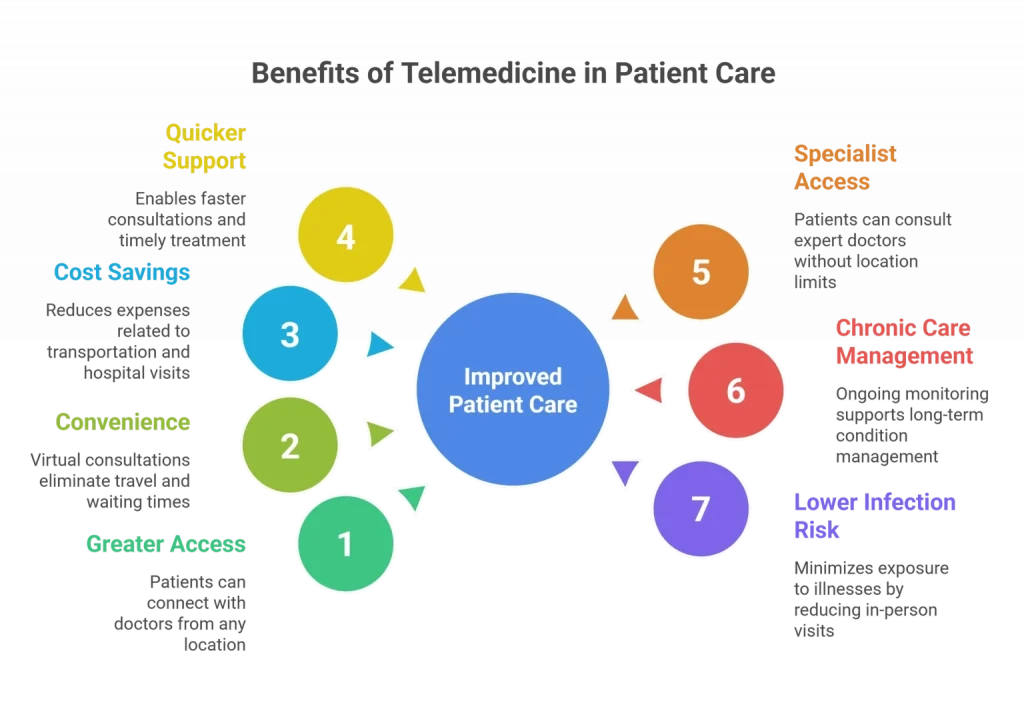
Greater Access to Care: Patients can connect with doctors from any location, which is especially beneficial for those in rural or underserved areas.
Convenience & Time Efficiency: Virtual consultations eliminate the need for travel and reduce waiting times.
Cost Savings: Helps cut down expenses related to transportation, hospital visits, and infrastructure.
Quicker Medical Support: Enables faster consultations, leading to early diagnosis and timely treatment.
Easy Access to Specialists: Patients can consult expert doctors without being limited by location.
Improved Chronic Care Management: Ongoing monitoring supports better management of long-term conditions like diabetes and heart disease.
Lower Risk of Infection: Reduces the need for in-person visits, minimizing exposure to illnesses.
Telemedicine Technology Challenges
As telemedicine continues to grow in adoption, it brings along several technological challenges that need to be addressed. Issues such as data security, limited digital access, technical reliability, and integration with existing systems can impact the effectiveness of virtual care. Addressing these concerns is essential to ensure telemedicine remains accessible, efficient, and trustworthy for both patients and healthcare providers.
System Fragmentation and Lack of Standardization
One of the biggest challenges in telemedicine is system fragmentation and the lack of standardization. As digital health solutions have grown rapidly, many healthcare providers use different platforms that don’t always work well together. This leads to disconnected systems where patient data is stored in various formats, making it difficult to share, access, and maintain consistent records. Without common standards, it becomes harder to deliver seamless and coordinated care.
Security and Platform Integration
Protecting patient data is a major concern in telemedicine. Healthcare platforms must ensure strong data privacy and security while also integrating smoothly with systems like Electronic Health Records (EHRs). Building secure and well-connected systems requires advanced cybersecurity measures and reliable technical frameworks to prevent data breaches and ensure safe information exchange.
Meeting Consumer Expectations for a Digital-First Experience
Today’s patients expect healthcare services to be as smooth and convenient as other digital experiences, like online banking or shopping. They look for easy-to-use platforms, quick access to doctors, and minimal technical issues. However, consistently delivering such a seamless and user-friendly experience across different devices and networks can be challenging for healthcare providers.
Identifying Telehealth Use Cases
Not every medical condition can be effectively managed through telemedicine. It is important for healthcare providers to clearly identify which cases are suitable for virtual care and which require in-person visits. Defining these use cases helps ensure patients receive the right type of care at the right time without compromising quality.
Telehealth Staffing Challenges
Adopting telemedicine also requires healthcare professionals to adapt to new technologies and workflows. This can be challenging without proper training and support. Providers need to become comfortable with digital tools, remote consultations, and virtual patient management to deliver effective care in a telehealth environment.
Conclusion
Telemedicine has quickly become a key part of modern healthcare, changing how care is delivered and experienced. Technologies like AI, remote monitoring, and digital platforms are making healthcare more accessible, efficient, and convenient for both patients and providers.
At the same time, challenges such as data security, system integration, and staffing need to be managed carefully. As technology continues to evolve and regulations improve, telemedicine is set to grow even further, making healthcare more connected, patient-focused, and easier to access in the future.
AI chatbot patient engagement is changing the way patients communicate with healthcare providers. With WhatsApp bots, hospitals can quickly assist patients with tasks such as booking appointments, sending reminders, and answering basic health queries. These chatbots offer 24/7 support, share follow-up information and updates, and make patient communication easier and more accessible. They also help reduce administrative workload for healthcare teams, allowing organizations to deliver more efficient and patient-centered care.
Healthcare is undergoing a significant digital transformation, especially in the way patients communicate with healthcare providers. One of the most impactful developments in this shift is the rise of AI-powered WhatsApp conversational bots, which are redefining how patients access healthcare services.
These solutions use Conversational AI to enable real-time, personalized communication through WhatsApp, a platform that millions of people already use every day. By introducing a WhatsApp bot for patient communication, healthcare organizations can provide faster support, improve accessibility, and simplify interactions between patients and providers.
In this article, we explore how AI-powered WhatsApp chatbots are improving AI chatbot patient engagement, reducing operational inefficiencies, and enhancing the overall patient experience. We will also examine real-world implementations, technical considerations, and practical strategies for healthcare providers planning to adopt this technology.
Bridging the Healthcare Communication Gap with Conversational AI
Healthcare providers have long struggled to manage patient communication efficiently. Traditional methods such as phone calls, appointment desks, and manual follow-ups often result in long wait times, overloaded staff, and delayed responses.
Conversational AI offers a modern solution to these challenges. By introducing automation through messaging platforms like WhatsApp, healthcare organizations can streamline interactions and respond to patients instantly.A WhatsApp bot for patient communication can handle routine tasks such as appointment scheduling, reminders, and general inquiries. This not only reduces administrative pressure on healthcare staff but also improves the patient experience by providing quicker responses and easier access to services.
Since WhatsApp is widely used across the world, patients can interact with healthcare providers through an app they are already comfortable using. This makes the transition to AI-driven communication smooth and convenient.
Understanding AI WhatsApp Chatbots in Healthcare
An AI WhatsApp chatbot for healthcare is a virtual assistant powered by technologies such as Natural Language Processing (NLP) and Machine Learning (ML). These technologies allow the chatbot to understand patient queries and provide meaningful responses.
The chatbot typically integrates with hospital systems such as Electronic Health Records (EHR), Electronic Medical Records (EMR), and Customer Relationship Management (CRM) platforms. This integration allows the bot to provide personalized assistance and support effective AI chatbot patient engagement through real-time interactions.
Core Functions of AI WhatsApp Healthcare Bots
AI-powered WhatsApp healthcare bots are designed to streamline patient communication and improve service delivery through automated, real-time interactions. These bots handle a range of essential tasks, from answering patient queries to managing appointments and sending timely updates.
By leveraging conversational AI, they help healthcare providers reduce manual workload, enhance patient engagement, and ensure quicker, more efficient responses. Understanding their core functions highlights how these bots support both patients and providers in delivering a smoother healthcare experience.
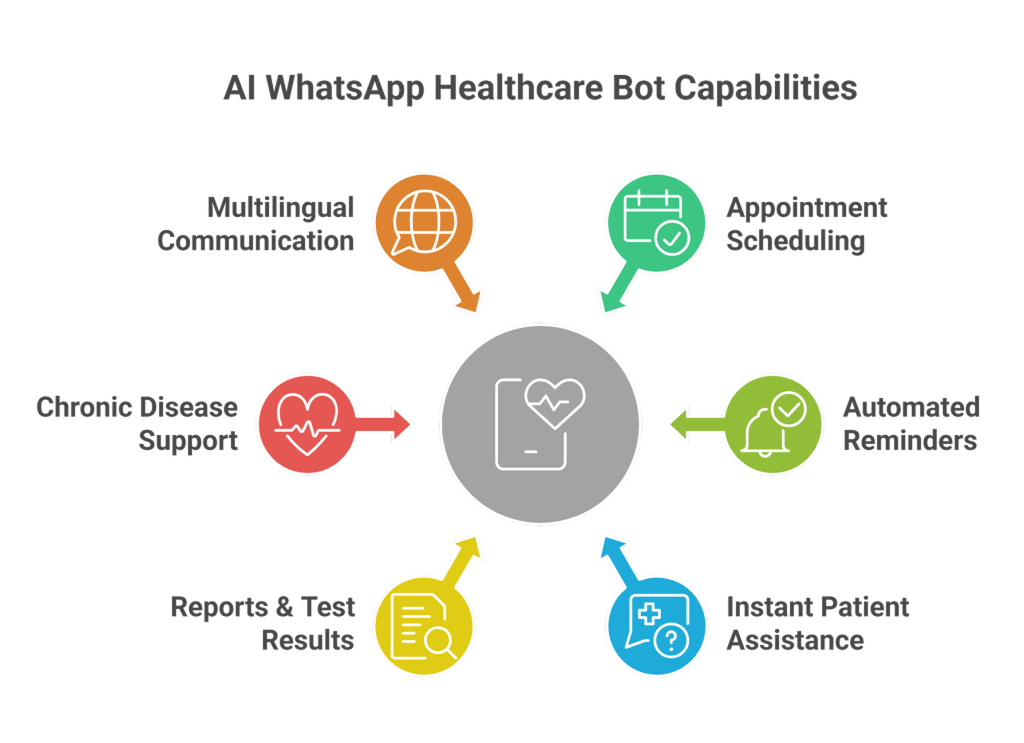
Appointment Scheduling
Patients can easily book, reschedule, or cancel appointments through simple chat interactions with the bot.
Automated Reminders and Notifications
The chatbot sends appointment reminders, medication alerts, and preventive care notifications to ensure patients stay informed and prepared.
Instant Patient Assistance
A WhatsApp bot for patient communication can answer common healthcare questions, provide symptom guidance, and offer general health information instantly.
Access to Reports and Test Results
Patients may receive diagnostic reports and follow-up instructions directly within the chat interface.
Chronic Disease Support
Chatbots can assist patients managing long-term conditions by sending medication reminders, wellness tips, and symptom tracking prompts.
How Do AI WhatsApp Bots Improve Real-Time Patient Interaction?
AI WhatsApp chatbots significantly improve AI chatbot patient engagement by enabling instant and continuous communication between patients and healthcare providers.
Instead of waiting on phone lines or contacting hospitals during limited office hours, patients can interact with a chatbot anytime through WhatsApp. This ensures faster responses and greater convenience.
During the COVID-19 pandemic, many healthcare institutions used chatbots to manage patient queries, provide vaccine information, and conduct preliminary symptom checks. These implementations demonstrated how conversational AI can support real-time patient interaction at scale.
By providing immediate responses and round-the-clock availability, AI chatbots help healthcare organizations maintain strong and consistent communication with patients.
The Benefits of AI Chatbot Patient Engagement in Healthcare
In this section, we look at the top benefits of AI WhatsApp bots in healthcare, showing how AI chatbots are changing how providers connect with patients by offering quick, personalized interactions.
24/7 Accessibility for Patients
AI-powered chatbots enable patients to reach healthcare services at any time of the day. This continuous accessibility improves patient satisfaction and ensures people can receive assistance whenever they need it.
Greater Operational Efficiency
Automation allows healthcare organizations to manage a large number of routine inquiries without overwhelming administrative teams.
For example, the International Medical Center (IMC) in Saudi Arabia handled more than one million chatbot conversations in a single year, significantly reducing the burden on their call center operations.
Stronger Patient Relationships
Consistent communication through WhatsApp improves AI chatbot patient engagement by keeping patients informed and involved in their healthcare journey. Appointment reminders, follow-ups, and health tips encourage patients to stay proactive about their care.
At American Hospital Dubai, the implementation of a chatbot resulted in a 70-fold increase in patient interactions, demonstrating the effectiveness of conversational communication.
Multilingual Communication
A WhatsApp bot for patient communication can easily support multiple languages. This feature is especially valuable in regions with diverse populations, where language barriers often affect access to healthcare services.
By automatically switching languages, chatbots make healthcare information accessible to a broader range of patients.
What Do Real-World Results Show About WhatsApp Bots in Healthcare?
Real-world deployments highlight the growing success of AI chatbot patient engagement strategies.
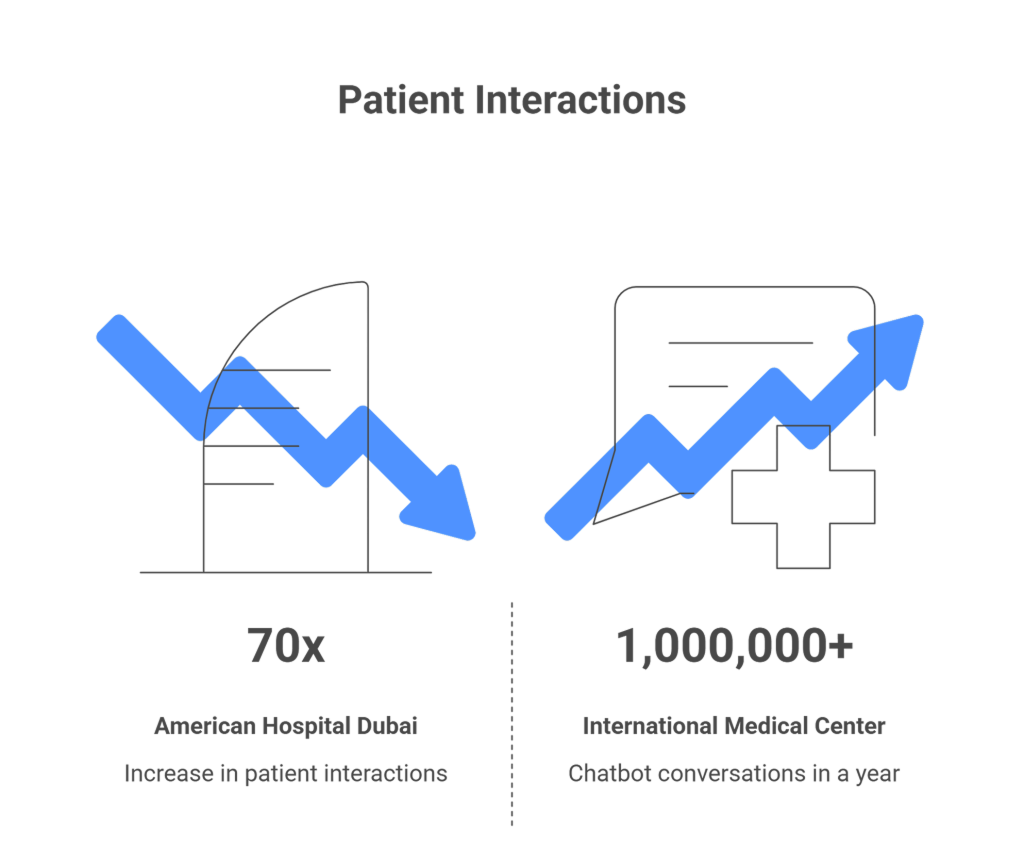
Hospitals and Healthcare Networks
Several hospitals have implemented WhatsApp bots to streamline patient communication.
For example, American Hospital Dubai (AHD) introduced a chatbot to manage appointment bookings, test result notifications, and general inquiries. Within the first six months, the hospital experienced a dramatic increase in patient interactions while reducing call center workload.
Similarly, the International Medical Center in Saudi Arabia automated over one million patient conversations, improving efficiency and simplifying service access.
Private Clinics and Health-Tech Companies
Smaller healthcare providers are also benefiting from conversational AI.
In India, Taal Clinic recorded a 50% increase in patient engagement after implementing automated WhatsApp reminders and follow-ups. Health-tech platforms across the Middle East have also used chatbot solutions to automate appointment scheduling and reduce contact center traffic by up to 70%.
Government and Public Health Initiatives
Public healthcare systems have also adopted chatbots for large-scale communication.
The Dubai Health Authority introduced a WhatsApp bot during the COVID-19 pandemic to manage symptom checks, health alerts, and vaccine scheduling. Similarly, Saudi
These initiatives demonstrate how conversational AI can support efficient healthcare communication during public health emergencies.
How Does WhatsApp Bot Integration Work with EHR Systems?
To deliver personalized services, a WhatsApp bot for patient communication must connect with existing hospital systems.
Integration with EHR and CRM platforms allows the chatbot to retrieve relevant patient information, including appointment schedules, treatment updates, and diagnostic reports. This enables the bot to provide accurate and context-aware responses.
Ensuring Data Security and Compliance
Healthcare data requires strict protection, making it essential to understand how WhatsApp chatbots protect patient data privacy. Chatbot systems must comply with data protection standards such as HIPAA, GDPR, and regional healthcare regulations.
WhatsApp provides end-to-end encryption, while chatbot platforms often add extra security measures such as two-factor authentication (2FA) or OTP verification to protect patient information, further strengthening how WhatsApp chatbots protect patient data privacy.
Voice-Based Interaction Capabilities
Some advanced chatbots now support voice interaction. Patients can speak their queries rather than typing them, making healthcare communication more accessible for elderly users or individuals with disabilities.
Strategic Recommendations for Healthcare Providers
As healthcare organizations increasingly adopt digital solutions, a well-defined strategy becomes crucial for achieving success and long-term impact. Strategic guidance helps providers align technology with patient expectations, compliance requirements, and operational objectives.
With the right approach, healthcare providers can fully leverage digital tools to enhance patient engagement and improve efficiency. This section highlights key considerations to support effective implementation and sustainable results.
Promote Cross-Team Collaboration
Successful implementation of a WhatsApp bot for patient communication requires coordination between IT teams, compliance specialists, and patient service departments. Early collaboration ensures the solution fits within hospital workflows and regulatory requirements.
Continuously Improve the Chatbot Experience
Healthcare providers should track key performance metrics such as chatbot response accuracy, patient satisfaction, and appointment conversions. Insights from these metrics can help improve the chatbot and expand its capabilities over time.
Conclusion
AI-powered WhatsApp chatbots are transforming how patients communicate with healthcare providers. By improving AI chatbot patient engagement and enabling an efficient WhatsApp bot for patient communication, these technologies make healthcare more accessible, responsive, and convenient.
From reducing operational workload to improving chronic disease management and patient engagement, conversational AI offers clear benefits across the healthcare ecosystem.
By adopting a strategic and phased implementation approach, healthcare organizations can leverage WhatsApp chatbots to improve patient access, strengthen communication, and enhance overall healthcare delivery.
